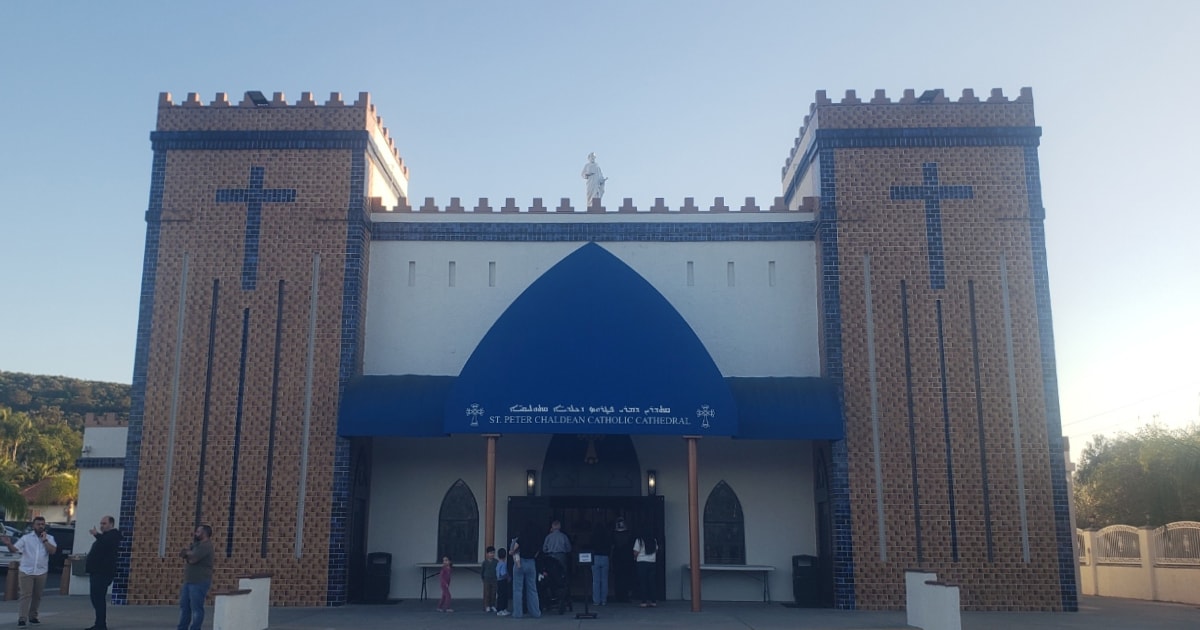

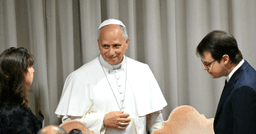
Bishop Emanuel Shaleta, head of the Chaldean Catholic Eparchy of St Peter the Apostle of San Diego, is at the centre of a criminal investigation into alleged embezzlement.
The San Diego County Sheriff’s Office confirmed that the bishop was detained on March 3 at San Diego International Airport as he attempted to leave the United States for Rome. According to a statement released by the sheriff’s department, Bishop Shaleta faces eight counts of embezzlement, eight counts of money laundering and a further charge connected with aggravated white-collar crime.
Police said the bishop was transported to the San Diego Central Jail following his arrest and is currently being held on bail set at $125,000. The sheriff’s office said investigators had originally been contacted in August last year by a representative of the Church, an approach which led to a formal inquiry and ultimately to criminal charges.
The arrest follows a month of reporting by The Pillar, which first disclosed that the bishop was the subject of a Vatican-ordered investigation and that concerns had been raised by members of the cathedral finance council regarding irregular financial transactions.
According to documents reviewed by The Pillar, concerns began to emerge in November 2024 when parish finance council members at St Peter’s Chaldean Cathedral in El Cajon noticed unusual patterns in the parish’s banking activity. The cathedral owns a social hall which is leased to an outside management company for approximately $33,990 each month, with the rent usually paid by cheque directly to the parish.
However, finance council members discovered that one rent payment had been deposited from a different parish account, specifically one used to provide financial assistance to the poor. The discovery prompted further examination of previous transactions.
Records reviewed by The Pillar indicated that a number of monthly rent payments had been replaced by cheques drawn from the charity account and signed by the bishop. According to documentation examined by the outlet, Shaleta explained that he had instructed the management company to pay the rent to him in cash so that he could distribute money directly to needy families.
Further review of bank records suggested that the arrangement had been repeated for several months. According to financial documents cited by The Pillar, eight months of rent payments were reportedly received in cash and later replaced by cheques written from the parish charity fund.
It was reported that financial records suggested at least $427,345 in cash had passed through this system, with the parish accounts subsequently balanced by transfers from the fund designated for charitable assistance. Sources familiar with the investigation told The Pillar that additional questionable transactions could raise the total amount involved to significantly higher levels, although investigators have not confirmed a final figure.
At the same time, the Vatican initiated its own canonical inquiry into the allegations. The investigation was ordered by the Dicastery for the Eastern Churches and delegated to Archbishop José Gomez of Los Angeles, whose archdiocese provided canonists and legal experts to examine financial records and interview witnesses.
In public remarks delivered at the cathedral in February, Bishop Shaleta rejected the accusations that he had mishandled Church funds. Addressing parishioners at the conclusion of Sunday liturgy, he insisted that his conduct had been transparent.
“I have never in my priestly life or episcopal life abused any of the Church’s money,” he said. “On the contrary, I have done my best to preserve and manage the donations of the Church properly.”
The bishop told his congregation that some of the funds given directly to him had been intended for charitable purposes and distributed accordingly. “One donor from the community gave me money to give to the poor and to the needy,” he said. “He told me, ‘I trust you, Bishop, and I will not ask for any receipts — give this money to the poor that you know.’”
He also suggested that the allegations were driven by opposition to his leadership, telling parishioners that critics had “other agendas” and accusing unnamed figures of spreading rumours about his financial conduct.
In addition to the financial allegations, documents examined during the Vatican inquiry included claims concerning the bishop’s personal conduct. A private investigator’s report submitted to Church authorities described repeated late-night border crossings from San Diego into Tijuana, Mexico.
The report stated that the bishop’s vehicle had been observed in a parking area reserved for visitors to the Hong Kong Gentlemen’s Club, an establishment frequently described in local reporting as operating as a brothel. The investigation was carried out by retired FBI agent Wade Dudley, who told The Pillar that his work involved documenting observations rather than offering conclusions.
“We saw his car parked in a parking lot that was exclusively for patrons of Hong Kong,” Dudley said. “We’ve seen him walking to the border and across the border, and we have seen him get picked up by a third-party rideshare that exclusively takes customers to that establishment.”
The Chaldean Diocese issued a statement on March 6 addressing the arrest, saying: “Some members of the Diocese of St Peter, San Diego, USA, have filed complaints concerning Bishop Emmanuel Shaleta in relation to the mishandling of certain diocesan funds and allegations of inappropriate relationships.”
The statement continued: “All perspectives are being taken seriously and require careful review, proper documentation and time so that the truth may be fully and fairly discerned.”