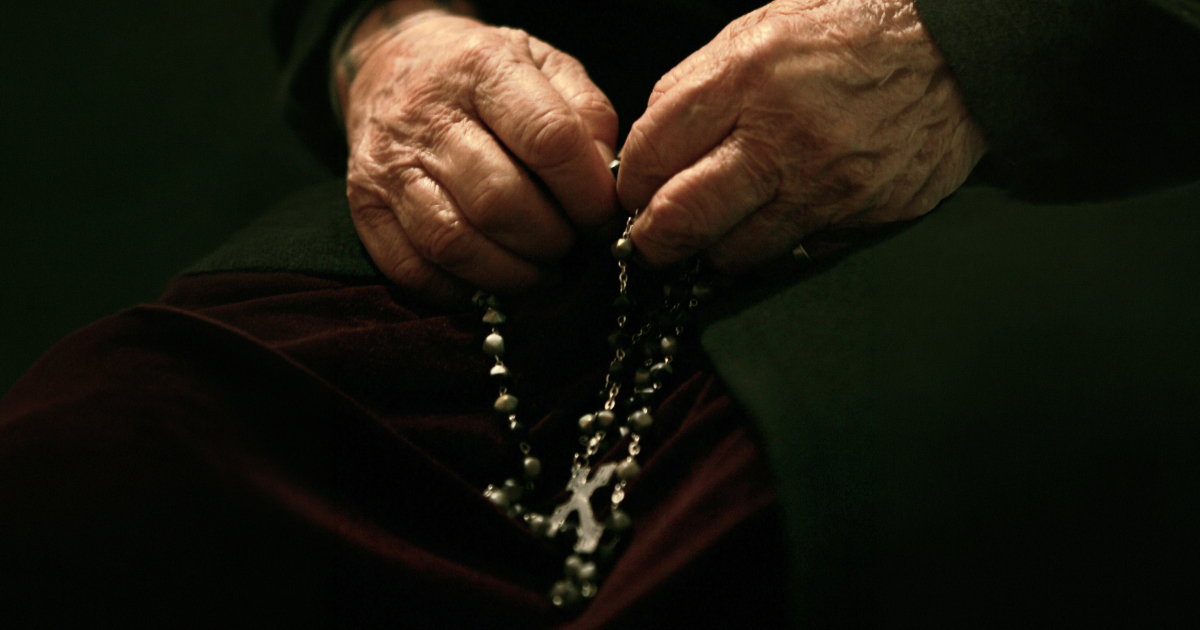


Pope Leo sent a moving message to the world’s oldest priest on the occasion of his 110th birthday. The supercentenarian, Fr Bruno Kant, was told in a message by the Holy Father: “I was very pleased to learn that on February 26 you will celebrate your 110th birthday, and I send you my warmest congratulations and blessings.” He also thanked him for his “long-standing, faithful and devoted priestly service”.
Bishop Michael Gerber, Bishop of Fulda, the diocese in which Fr Kant is incardinated, said the Vatican had also confirmed that Fr Kant is the oldest living priest.
Born in Werblin, Saxony, Germany, now the Polish village of Wierzbno, on February 26, 1916, Fr Kant’s family was forced to flee their home during the First World War. Fr Kant first felt the call to the priesthood at the age of nine, but the turmoil of 1930s Europe interrupted the normal process of priestly formation. During the Second World War, Fr Kant was drafted to fight against the Soviet Union and was taken into captivity. He did not return to Germany until 1948, where he described seeing his mother again as “the most beautiful day of his life”. Ordained on July 23, 1950, the Eighth Sunday after Pentecost and the feast of St Apollinaris, by Bishop Johann Baptist Dietz, his first assignment was to the rural towns of Blankenau and Schwarzbach.
On June 20, 1960, he received his most significant appointment as parish priest of the parish of Marbach, where he served for more than three decades. Retiring in 1991, he moved to the parish of Eichenzell where he continued his priestly ministry. Fr Kant was also given the honorary title of Geistlicher Rat, meaning “Spiritual Counsellor”, which is given to distinguished clergymen in the German-speaking world.
Celebrating his birthday has become something of a tradition in the area of Eichenzell, with parishioners and well-wishers turning out to honour more than 75 years of priestly service and to share in his favourite dessert, Black Forest gâteau.
Now on his 10th pontificate, Fr Kant has lived through two world wars, the Second Vatican Council, the reunification of Germany and, more recently, the upheaval of the German Synodal Way. Even into advanced age, Fr Kant remained active for as long as his health allowed. Reports in recent years indicated that he continued to assist pastorally well past his 100th birthday. He is said to have stopped driving only at the age of 102 and continued visiting the sick for as long as he was physically able.
At 110 years and 331 days, Fr Kant is considered the oldest known living Catholic priest in history. Fr Nicholas Kao Se Tseien, a Chinese Trappist priest who lived in Hong Kong and died in 2007, died at the age of 110 years and 330 days. He became well known for his “Healthy Seven Nos”, which taught no smoking, no anger, no alcohol, no overeating, constant exercise, constant prayer and no rudeness, as well as his devotion to the Blessed Virgin Mary. St Narcissus of Jerusalem, Patriarch of Jerusalem, is reported to have lived until the age of 117, though this is considered less reliable than the documented age of Fr Nicholas Kao Se Tseien.
A cluster of other priests came close to the age of 110. Fr Konrad Fuchs, also from Germany, died in November 2006 aged 109 years and 29 days. Fr Jacques Clemens, a Belgian priest, died on March 7, 2018 aged 108 years and 239 days, as did the French priest Fr Alexandre Kayser, who died aged 108 years and 18 days, and the Polish-born Redemptorist Fr Paulin Wilczynski, who emigrated to the United States and died aged 108 years and 209 days.
In recent years, popes have also marked the birthdays of notable Catholic figures whose lives have had an impact on the Church’s intellectual or pastoral life. Pope Francis, for example, sent a personal letter to the Peruvian Dominican priest and theologian Fr Gustavo Gutiérrez, the father of Liberation Theology, on the occasion of his 90th birthday, thanking him for his “theological service” and for drawing attention to the plight of the poor.