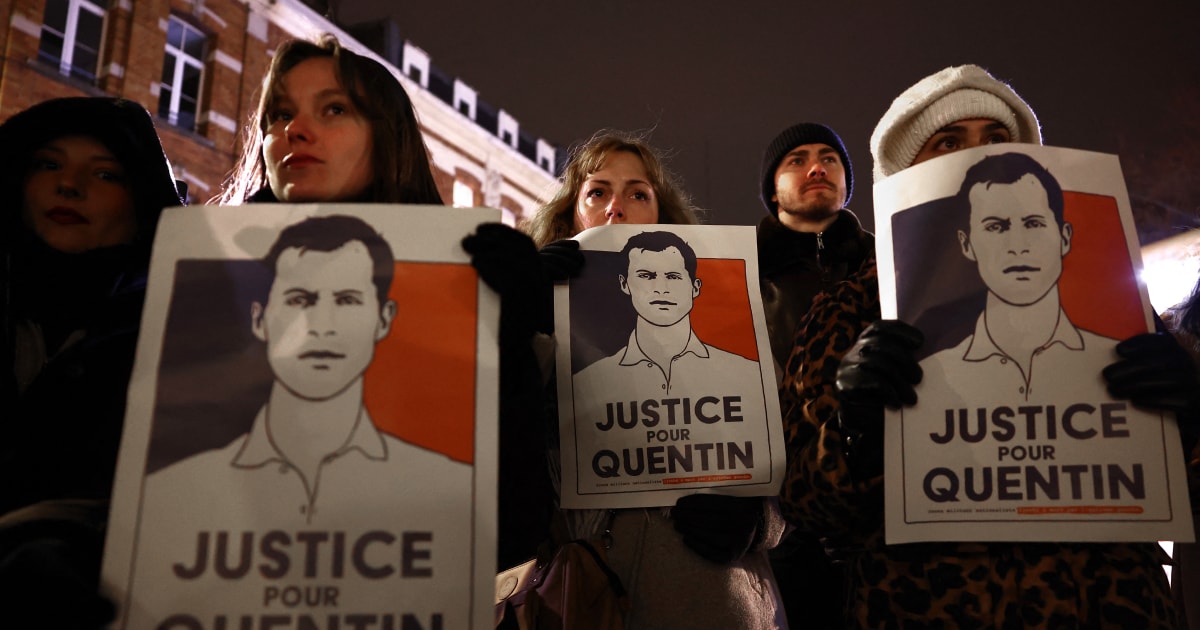


The killing of a 23-year-old Catholic convert and pro-life activist in Lyon has sent shockwaves through France, prompting a national outcry and a major criminal investigation.
Quentin Deranque died in hospital in Lyon on February 14, two days after he was violently assaulted following a pro-Palestinian conference organised by La France Insoumise at the Lyon Institute of Political Studies, commonly known as Sciences Po Lyon. The event was hosted by Rima Hassan, a Member of the European Parliament affiliated with the party.
The Lyon public prosecutor’s office initially opened an investigation for aggravated manslaughter before indicating that the inquiry was being directed towards a charge of voluntary homicide, alongside aggravated group violence. An autopsy carried out on February 16 concluded that the majority of the blows were to Deranque’s head, resulting in injuries described as “beyond all therapeutic resources and fatal in the short term”.
According to the prosecutor, after leaving the vicinity of Sciences Po Lyon, members of an informal security detail linked to the Nemesis collective were overtaken by around 20 masked and hooded individuals who attacked them. Most of the group reportedly managed to flee, but Deranque and two other men were said to have been cornered and thrown to the ground. At least six individuals are believed to have beaten him.
Deranque, described by his lawyer Fabien Rajon as a peaceful young man with no criminal record, had attended the conference intending to demonstrate alongside the Nemesis collective, founded in 2019 to defend what it describes as the rights of women in Western societies against certain strands of contemporary feminism. Rajon told local media that his client was the victim of what he characterised as a “methodically prepared ambush” carried out by organised and trained individuals who were armed and superior in number.
In the days following the attack, investigators reportedly identified several suspected participants, some of whom were said to be known to intelligence services because of previous ties to the Jeune Garde antifasciste, a movement dissolved by the government in 2025. Interior Minister Laurent Nuñez stated on February 15 that the Jeune Garde collective appeared “clearly” to be involved in the death, based on witness testimony.
Between February 17 and 18, 11 people – eight men and three women aged between 21 and 25, with the exception of one woman in her forties – were arrested and taken into custody. One of those detained is understood to be listed on the S-file, a register of individuals considered a potential threat to national security. Among those arrested were two parliamentary assistants to Raphaël Arnault, a deputy for La France Insoumise in the National Assembly. One of them was apprehended by the Lyon Research and Intervention Brigade on suspicion of providing means to evade capture.
On February 16, Yaël Braun-Pivet, President of the National Assembly, suspended Arnault’s access to the Palais Bourbon, stating that his presence could cause disturbances to public order. One of the parliamentary assistants concerned withdrew from his duties for the duration of the investigation while denying responsibility for Deranque’s death.
Nemesis claimed to have recognised members of the Jeune Garde among the attackers. Its leader, Alice Cordier, said she had identified an individual filming Deranque on the ground, but it later emerged that the person named had been abroad at the time. Reports indicated that threats and harassment were directed at the family of the individual wrongly accused.
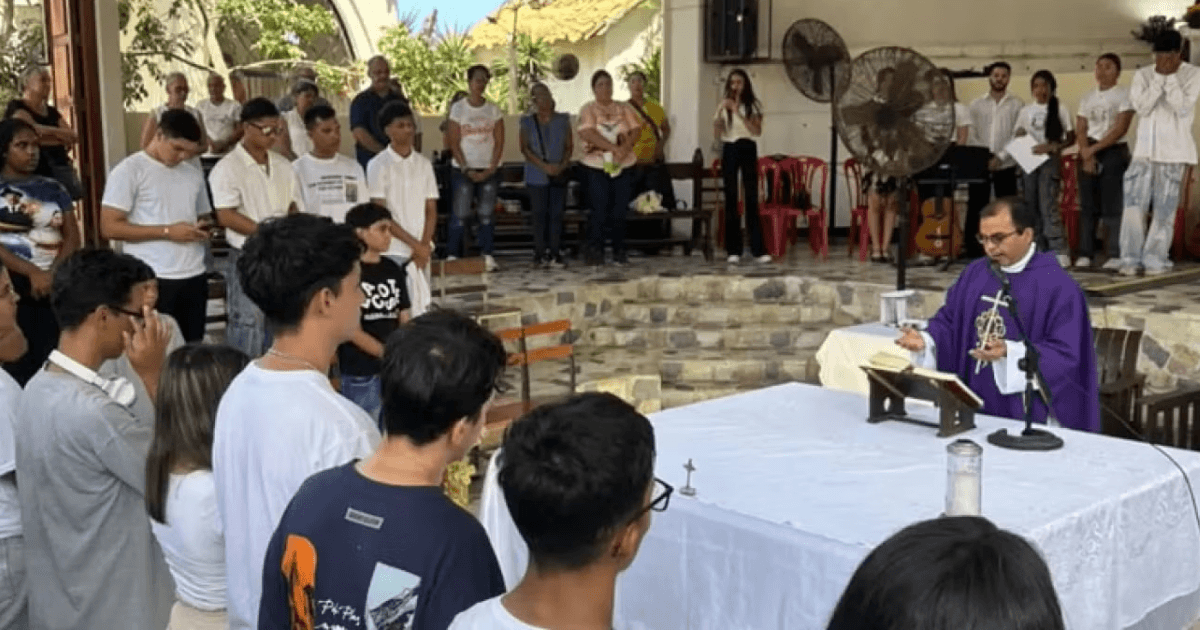
Deranque had converted to Catholicism and was a member of St George Parish in Lyon. He also attended Mass with the Priestly Fraternity of St Peter, a clerical society dedicated to the celebration of the Traditional Latin Mass.
A memorial service was held on February 15 at St George Church, where Fr Laurent Spriet of the FSSP said: “Now is a time for compassion, respect, prayer and to let the police and the justice system do their work.”
Described as a philosophy student and a keen tennis player, Deranque was known locally for his pro-life activism. He was also said to have frequented traditionalist Catholic circles and Catholic identity organisations.
On the evening of February 14, President Emmanuel Macron denounced “an unprecedented outburst of violence” and called for calm, stating that “no cause or ideology will ever justify killing”. Members of the government, including Justice Minister Gérald Darmanin, likewise condemned the attack.
Marine Le Pen accused the government of “its passivity in the face of far-left militias that, for years, protected by the complacency and support of parties like La France Insoumise, have been increasing intimidation, threats and attacks in public spaces”.
She added: “Democracy cannot continue to tolerate those who seek to destroy it. Given the seriousness of the threats and the clearly manifested criminal intentions, the government must consider these militias as terrorist groups. This means that they be treated as such and that the current laws and regulations on the matter be applied to them.”
Following Deranque’s death, she further stated that “the unfathomable pain of losing a child should not be compounded by the unbearable impunity of those responsible for this lynching. It will be up to the justice system to judge and condemn with the utmost firmness this criminal act of unprecedented violence.”
Criticism was also directed at La France Insoumise because its leader, Jean-Luc Mélenchon, had opposed the government’s move to outlaw the Jeune Garde and in 2025 had called on party members to become involved with it.
After Deranque’s death, Mélenchon stood by his earlier comments, saying that La France Insoumise had “great affection” for the Jeune Garde, while the party condemned the violence and asserted that its security service was not involved.
Other figures on the left distanced themselves from the party. François Hollande called on left-wing parties to no longer ally with La France Insoumise, stating that “they maintain a brutality in their expression, denunciation, accusations, excesses and hurtful verbal formulas.”
Olivier Faure said: “La France Insoumise cannot avoid a self-examination,” adding that the party was “constantly resorting to excesses and seeking to create conflict between everything and its opposite.” Leaders of other parties, including the Ecologists and Place Publique, also voiced concern about what they described as excesses in political discourse.
In Paris, several hundred people gathered near the Sorbonne, later joined by right-wing political figures including Éric Zemmour. In Montpellier, police intervened after clashes between demonstrators and counter-protesters, and one person was arrested.
During the night of February 15 to 16, around 10 local offices of La France Insoumise deputies were vandalised. Meanwhile, candidates in the municipal elections in Lyon scheduled for March 2026 suspended their campaigns, and the incumbent mayor pledged full support for the judicial investigation.