

July 29, 2026

How John Paul II reconciled religious liberty with Catholic tradition

Patrick Neve
More
Related
Min read
share

There’s a debate you find in many traditional Catholic circles about the concept of religious liberty. More importantly, there is the question of whether the Church changed her teaching on religious liberty during Vatican II.

Popes such as Pius IX, in Quanta Cura, and Leo XIII are explicit that religious liberty is a heresy. And yet, in Dignitatis Humanae, Vatican II praises religious liberty as a good. Many point to this as a contradiction in the tradition. But much like contradictions in scripture, what appears to be a contradiction can be rectified and give greater depth to the Church’s teaching.

This debate about the conception of religious liberty actually began at the Council itself, in the committee charged with drafting Dignitatis Humanae.

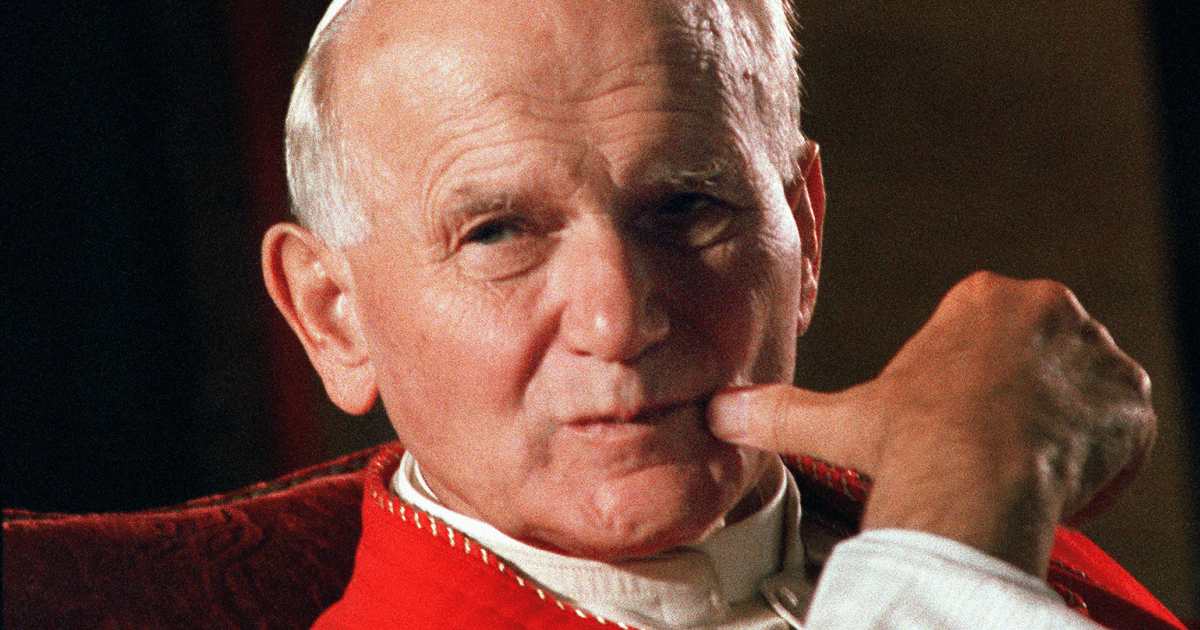
Three men drove the debate: Marcel Lefebvre, the future founder of the SSPX, who was against religious liberty; John Courtney Murray, the American Jesuit and editor-in-chief of America magazine; and the future Pope St John Paul II, Karol Wojtyla.

John Courtney Murray insisted that the Church ought to enshrine in her doctrine the liberal American concept of religious liberty – that false religions have an equal right to recognition by the state as Catholicism. When he returned to America after the Council, he claimed that this was exactly what the document said.

Not surprisingly, John Courtney Murray and Marcel Lefebvre found themselves at an impasse on this question. Despite voting in favour of the final document, Marcel Lefebvre was upset by its reception and was familiar with the consequences of liberalism’s religious liberty in France. He and many of his followers agreed with Murray that the document upheld American religious liberty, but instead saw it as a bad thing.

Karol Wojtyla took a different tack from the other two men. He believed the document enshrined not the American conception of religious liberty, but a more Catholic understanding of religious liberty.

Given that one of these men became pope, you may be able to predict who ultimately won this debate. Wojtyla’s understanding of religious liberty, coming from a background of not only Nazi but also communist occupation of his home country, rejected Lefebvre’s and Murray’s shared understanding of religious liberty.

He understood religious liberty as the liberty of the true religion – Catholicism – to exercise itself in the public square. In documents such as Veritatis Splendor, Pope St John Paul II insisted that freedom as a Christian value is not absolute freedom of conscience, wherein one is free to do as one chooses without coercion. Freedom is not freedom from something, but freedom for something.

True freedom means that man is free to choose the good, and societies ought to protect that freedom to choose the good. Religious liberty is a recognition of God’s gift of free will to mankind: that we are free to choose virtue, and a recognition that this freedom also means that we are free to choose vice.

Still, many theologians and critics of Dignitatis Humanae insist with Lefebvre that this promotion of religious liberty is a departure from tradition, particularly from Boniface VIII’s Unam Sanctam, Pius IX’s Quanta Cura and Leo XIII. However, this criticism is a misreading of both Vatican II and the previous popes.

Pope Leo XIII recognised the value of the American conception of religious liberty as a remedial good. He recognised that the United States and its pluralism had allowed the Catholic Church the space she needed to thrive, something she had not done in other nations that were not explicitly Catholic. America was a historical anomaly in that it was a non-Catholic nation in which Catholics thrived without persecution.

Typically, Catholicism thrives because of explicit support from the state, or in non-Catholic nations amid strong persecution. In Longinqua Oceani, Leo XIII recognised that America’s conception of religious liberty was a remedial good that could be allowed, although it was not ideal.

Other theologians – strong supporters of the Council – agree with Murray that the American conception of religious liberty has been enshrined in Church teaching and that the state cannot make any positive claims about religion. But that’s not what the Church teaches either.

In an interesting section of the Catechism that discusses the Sabbath day, the Church explicitly invokes religious liberty as a reason why the state should recognise Christian holidays and Sunday. The state is allowed to make positive law in favour of Catholicism and, in fact, the Church insists that it does.

“In respecting religious liberty and the common good of all, Christians should seek recognition of Sundays and the Church’s holy days as legal holidays.” (CCC 2188)

The danger here is twofold. If we take the opinion of John Courtney Murray, we risk missing the wealth of the tradition of the past. We risk a rupture with the tradition and the loss of the wisdom of Leo XIII, Boniface VIII and Pius IX merely because their words don’t strike our American ears as appropriate.

It’s baffling to think of the United States observing the Solemnity of the Sacred Heart, for example. But if we pretend that the American conception of religious liberty is enshrined in Church doctrine, we run the risk of missing the greater possibility of a more Catholic United States.

If we take the approach of Marcel Lefebvre, what we risk doing is becoming what Fr Antonin-Dalmace Sertillanges called “pallbearers of the past”. We risk missing the wisdom of the recent councils, remaining angry that things aren’t as they used to be. If we try to apply the practical recommendations of Pope Boniface VIII to the United States of America in 2026, we are going to be disappointed. We run the risk of remaining in place and not being effective.

We cannot overlook the tactical and evangelical proposal that Dignitatis Humanae presents: how does the Church evangelise and relate to the state in a post-Christian world? This is not something that the Church has dealt with before, but it is something Pope St John Paul II handled well.

If we take the approach of Pope St John Paul II and accept that the Church cannot contradict herself, we harmonise Vatican II and the previous tradition like a pair of 3D glasses. We end up seeing not just red or blue, but a fuller picture of what it means to have religious freedom.

The kind of religious freedom towards which we ought to be working recognises that many things impede religious freedom in our country, even though there is no explicit persecution. The prevalence of things such as pornography and the pervasiveness of access to mortal sin impede our ability to choose the good.

Vatican II was not a surrender to Americanism or a destruction of tradition, but the beginning of a new framework for how the Church would preach in the modern world. It began what Pope St John Paul II called a “re-evangelisation”.

If we refuse to follow his example – whether by accepting the false doctrines of the modern world or insisting that we evangelise in the old way – we will not be able to address the modern world, much less save it.

Continue reading with a free account

Create a free account to read up to five articles each month
Create free account

You have # free articles remaining this month.

Subscribe to get unlimited access.
Sign up

subscribe to the catholic herald today

Our best content is exclusively available to our subscribers. Subscribe today and gain instant access to expert analysis, in-depth articles, and thought-provoking insights—anytime, anywhere. Don’t miss out on the conversations that matter most.
Subscribe