

May 5, 2026

Pope calls bishops’ conference presidents to Rome for marriage summit

The Catholic Herald
More
Related
Min read
share

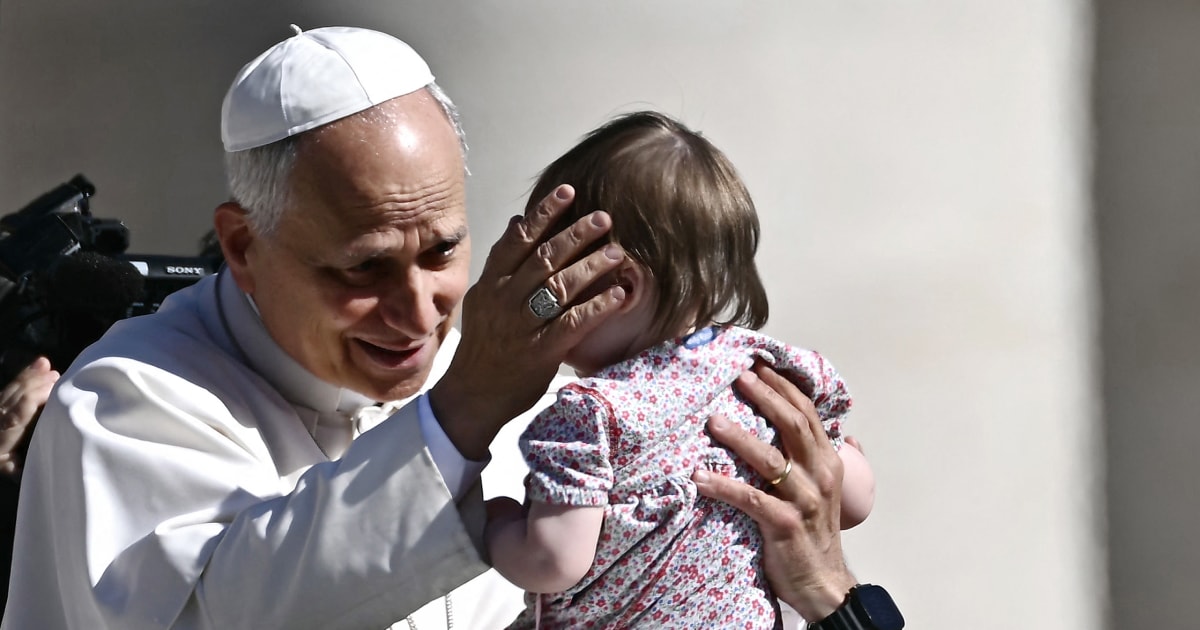
Pope Leo XIV has convened presidents of bishops’ conferences from around the world on April 30 for an October summit in Rome to address the global crisis in marriage, the Holy See confirmed, following preparatory discussions this week among senior theologians and Church officials.

The high-level meeting, to be held at the Vatican, will bring together episcopal leaders to examine declining marriage rates, rising cohabitation and growing reluctance among young people to form families – developments the Pope has identified as a matter of urgent concern for both Church and society. The initiative follows a study day held on April 29 at the Casina Pio IV, organised by the Dicastery for the Laity, the Family and Life, with around 75 invited participants including curial officials, seminary formators and academic specialists.
The gathering focused on the theological and pastoral formation of clergy in relation to marriage, with particular emphasis on equipping priests to guide young people, engaged couples and families in a secularised cultural context. The theme reflects a longstanding concern within the Church regarding the weakening of sacramental understanding of marriage, especially in Western Europe, where civil marriage rates have declined significantly over recent decades and religious marriage has become a minority practice in several countries.

Among the principal contributors was Fr Andrea Bozzolo, rector of the Pontifical Salesian University and a former professor at the Pontifical John Paul II Institute for Studies on Marriage and Family. He warned that in many societies marriage is no longer perceived as a decisive or foundational act, noting that cohabitation has become widely accepted as a preliminary stage. Such arrangements, he said, are often viewed as a means of “verifying” a relationship before any formal commitment, reflecting what he described as a broader “liquid” social environment.

While acknowledging that many couples who cohabit still intend to marry, Bozzolo cautioned against reducing marriage to a “mere social procedure” or formalisation of an existing arrangement. He stressed the importance of presenting marriage as a public and sacramental covenant, rooted in Christian anthropology and the theological understanding of love as more than a transient emotional state. The shift in attitudes, he indicated, has contributed to rising instability in relationships and increased separation rates, a trend reflected in civil data across Europe and North America.

The Vatican’s initiative builds on earlier magisterial teaching, notably Amoris Laetitia of Pope Francis, which called for renewed pastoral accompaniment of families while reaffirming the indissolubility of marriage. It also reflects concerns expressed by Pope John Paul II in his extensive catecheses on the theology of the body, which emphasised the sacramental and anthropological foundations of Christian marriage in response to cultural shifts in the late 20th century.

Pope Leo XIV has previously highlighted the dignity of marriage as a vocation, describing it as among the “noblest and highest” callings, notably during commemorations of Louis Martin and Zélie Martin, canonised in 2015 as the first married couple jointly raised to the altars in modern times. Their canonisation was widely interpreted as a reaffirmation of the sanctity of family life within the Church’s teaching.

The October summit will mark the first time since the 2019 Vatican meeting on clerical abuse that all presidents of bishops’ conferences have been called together by the Pope for a single issue. That earlier gathering, also held in Rome, led to the establishment of new global safeguarding norms and structures. Vatican officials have indicated that a similarly coordinated approach may be envisaged in response to the challenges facing marriage and family life.

Further documentation is expected from the Holy See in advance of the October meeting, outlining key themes for discussion and potential pastoral responses.

Continue reading with a free account

Create a free account to read up to five articles each month
Create free account

You have # free articles remaining this month.

Subscribe to get unlimited access.
Sign up

subscribe to the catholic herald today

Our best content is exclusively available to our subscribers. Subscribe today and gain instant access to expert analysis, in-depth articles, and thought-provoking insights—anytime, anywhere. Don’t miss out on the conversations that matter most.
Subscribe