

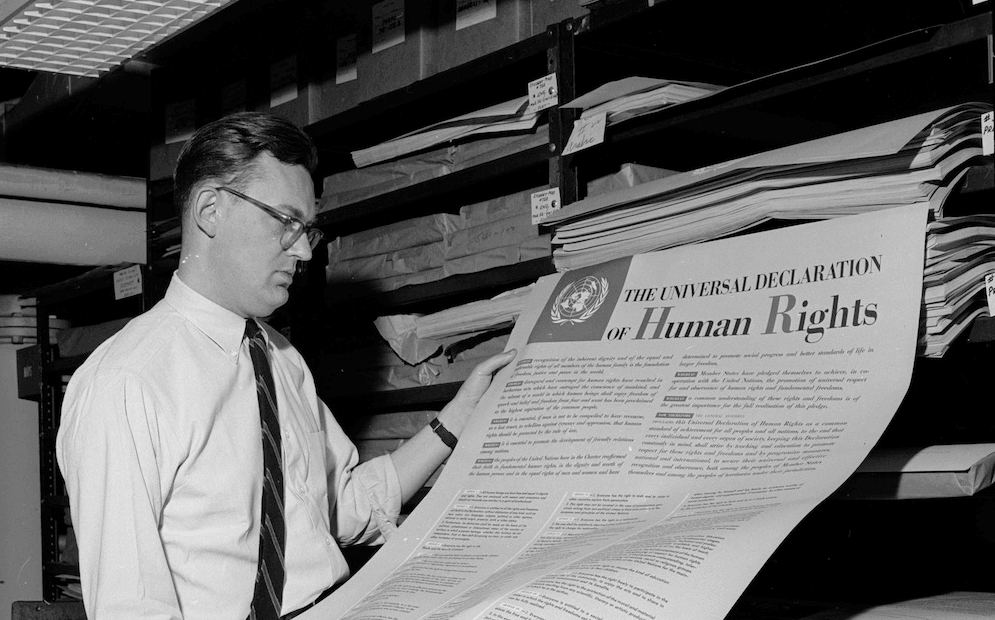
Seventy years ago this week, the UN’s Universal Declaration of Human Rights was published, and its clarion call of basic human rights for all – starting with the right to life and liberty – has become the basis of much international law and practice. The declaration’s 30 articles were decent, moral and humane: that rights are held regardless of colour, creed or ethnicity; that we have a right to freedom from torture, to education, to the presumption of innocence, to freedom of expression, to peaceful organisation, to food, shelter and housing for ourselves and our families. Yet Catholic thinkers were not altogether approving of this 1948 conception of rights, an idea founded in the atheistic French Revolution. It was really Pope John Paul II who advocated rights to uphold ideas about human dignity, and rights against totalitarian states such as the former USSR. Today, there are many suggestions about amending or adding to the UN list of rights – including the “right to reproduce”. But how can something which may depend on the diktats of nature be claimed as a “right”? And isn’t it rather cruel to tell a woman – or a man – who is infertile that they have a “right” to reproduce? The “right” to die is another anomaly, although now much demanded. We are compelled to die: rights don’t come into it. The UN declaration was worthy in aspiration, but it’s clear that some of the rights have not been delivered – and perhaps never will be. No state can guarantee a right for every person to choose their work, or even the right to own property. And how about balancing rights with duties? Only in the penultimate Article 29 does the UN mention that we also have “duties to the community”. Rights are often taken for granted: but for every right there is surely a corresponding responsibility.
2:30 PM
Rights need more than declarations
seventy years ago this week, the un’s universal declaration of human rights was published, and its clarion call of basic human rights for al...
Mary Kenny

4 min read



Already a subscriber? Sign in
5freearticles every month
Continue reading with a free account. No card needed.
- Five free articles every thirty days, on any device you sign in on
- The Catholic Herald newsletter, every morning
- Subscribe whenever you like for everything: every article and the magazine

subscribe to the catholic herald today
Our best content is exclusively available to our subscribers. Subscribe today and gain instant access to expert analysis, in-depth articles, and thought-provoking insights—anytime, anywhere. Don’t miss out on the conversations that matter most.
Subscribe



