
May 12, 2026

Rubio says Catholic faith is central to American identity

Thomas Colsy
More
Related
Min read
share

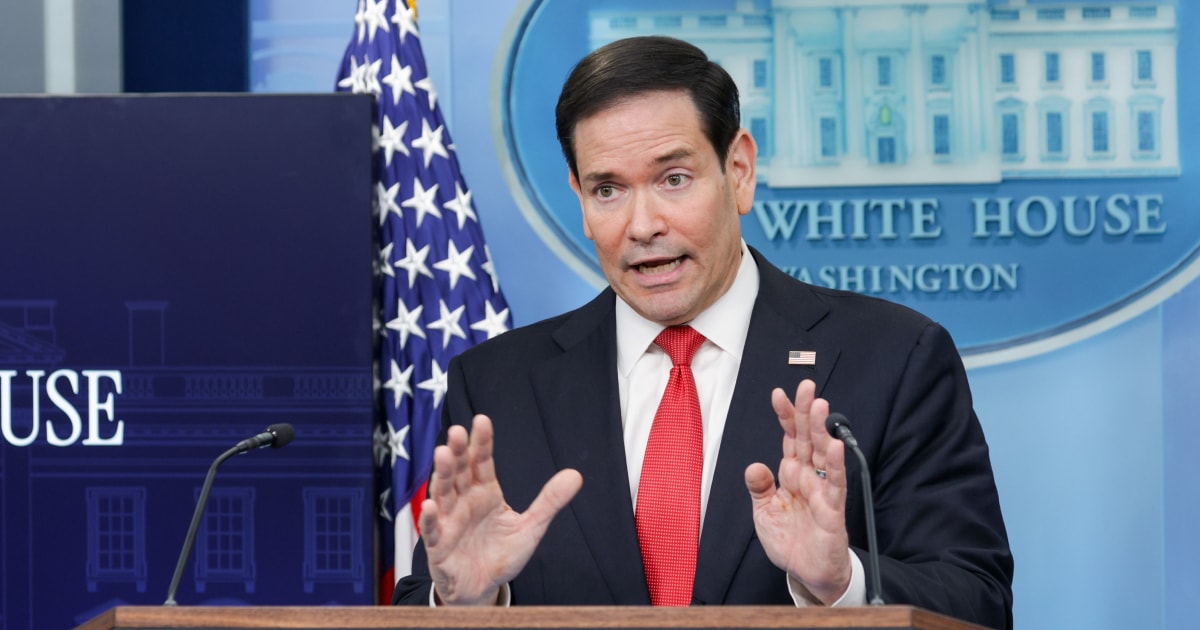
US Secretary of State Marco Rubio delivered a substantial address on the central place of the Catholic faith in the history and identity of the United States, portraying the nation as a place where the Church and the Christian civilisation it shaped experienced a profound rebirth. His speech was delivered in the wake of his meeting with Pope Leo XIV, and amid lingering concerns about anti-Catholic prejudice in American institutions such as the Federal Bureau of Investigation.

Speaking virtually at the symposium “Endowed by Their Creator: Catholicism, the Declaration of Independence, and the American Experiment at 250”, organised ahead of the United States’ semiquincentennial, Secretary Rubio opened by quoting Pope Leo XIII’s 1895 encyclical on the United States, Longinqua Oceani. He cited the pontiff’s words: “All intelligent men are agreed that America seems destined for greater things. Now it is our wish that the Catholic Church should not only share in but help bring about this prospect of greatness.”

Rubio emphasised that the Catholic presence predates the American founding by centuries. “The first Christian service on our soil was a Catholic Mass,” he stated. He pointed to St Augustine in Florida, founded by Spanish Catholics in 1565, as “the oldest permanent settlement in the United States”, and recalled that “Catholic saints were martyred on American soil well over a century before the Revolution began”.

The Secretary of State traced the extensive Catholic exploration of the continent: “In missions and settlements, wilderness forts and trading posts stretching from the first colonies to the distant frontier, Catholic explorers, soldiers, priests and pioneers consecrated this new world for their ancient faith and Christianised its land with Catholic names: Maryland, Saint Louis, San Francisco, Santa Fe. Almost every region of what is now the United States was first explored and mapped by Catholics.”

Addressing misconceptions about the faith’s place in American life, Rubio declared: “Some have claimed that the Catholic faith is a foreign import to our country. Only one of the 56 men who signed the Declaration of Independence was Catholic – Charles Carroll of Maryland... But the Catholic faith has always been part of the American story. The first Christian service on our soil was a Catholic Mass. The oldest permanent settlement in the United States is the town of St Augustine, planted by Spanish Catholics on the coastal sands of my home state of Florida. Catholic saints were martyred on American soil well over a century before the Revolution began.”

He noted the contribution of Charles Carroll of Carrollton, the only Catholic signer of the Declaration of Independence, and highlighted the disproportionate service of Catholics during the Revolutionary War. He quoted George Washington’s 1790 letter to American Catholics, thanking them personally for the “patriotic part” they played in securing independence.

Rubio rejected portrayals of the American founding as a radical Enlightenment rupture with the Christian past. “The Revolution was not a radical rupture with the past,” he said. “It was a renewal of an older inheritance, fitted to the unique experience of a free Christian people in a new world… rooted upon a fixed and unchanging moral order governed by the laws of nature and nature’s God.”

He continued: “This fundamental truth endows man with not just rights but with duties. It conceives freedom and virtue as inseparably linked… built not to sanction licence, but to restrain passion, check ambition with ambition, and secure the common good.” Rubio described America as “a gift – where the Church and the civilisation it made was reborn, discovering itself anew in the wilderness”. He situated the republic within the same civilisational tradition that produced “the towering cathedrals of Rome and the philosophy of Augustine and Aquinas”.

In closing, the Secretary offered a theological reflection on the nation’s history: “To look upon the history of this golden land is to see the face of God.”

The address has resonated strongly among Catholics for its confident and historically grounded affirmation of the Church’s indispensable role in the moral and cultural formation of the United States. The speech marks one of the most notable public witnesses by a senior Catholic member of the American government in recent history, at a time when the Church’s voice in public life has been contested.

This speech followed Secretary Rubio’s private audience with the first American-born pontiff, Pope Leo XIV, at the Apostolic Palace on May 7. During their 45-minute meeting, the two discussed peace in the Middle East, humanitarian concerns and bilateral relations between the Holy See and the United States.

Continue reading with a free account

Create a free account to read up to five articles each month
Create free account

You have # free articles remaining this month.

Subscribe to get unlimited access.
Sign up

subscribe to the catholic herald today

Our best content is exclusively available to our subscribers. Subscribe today and gain instant access to expert analysis, in-depth articles, and thought-provoking insights—anytime, anywhere. Don’t miss out on the conversations that matter most.
Subscribe