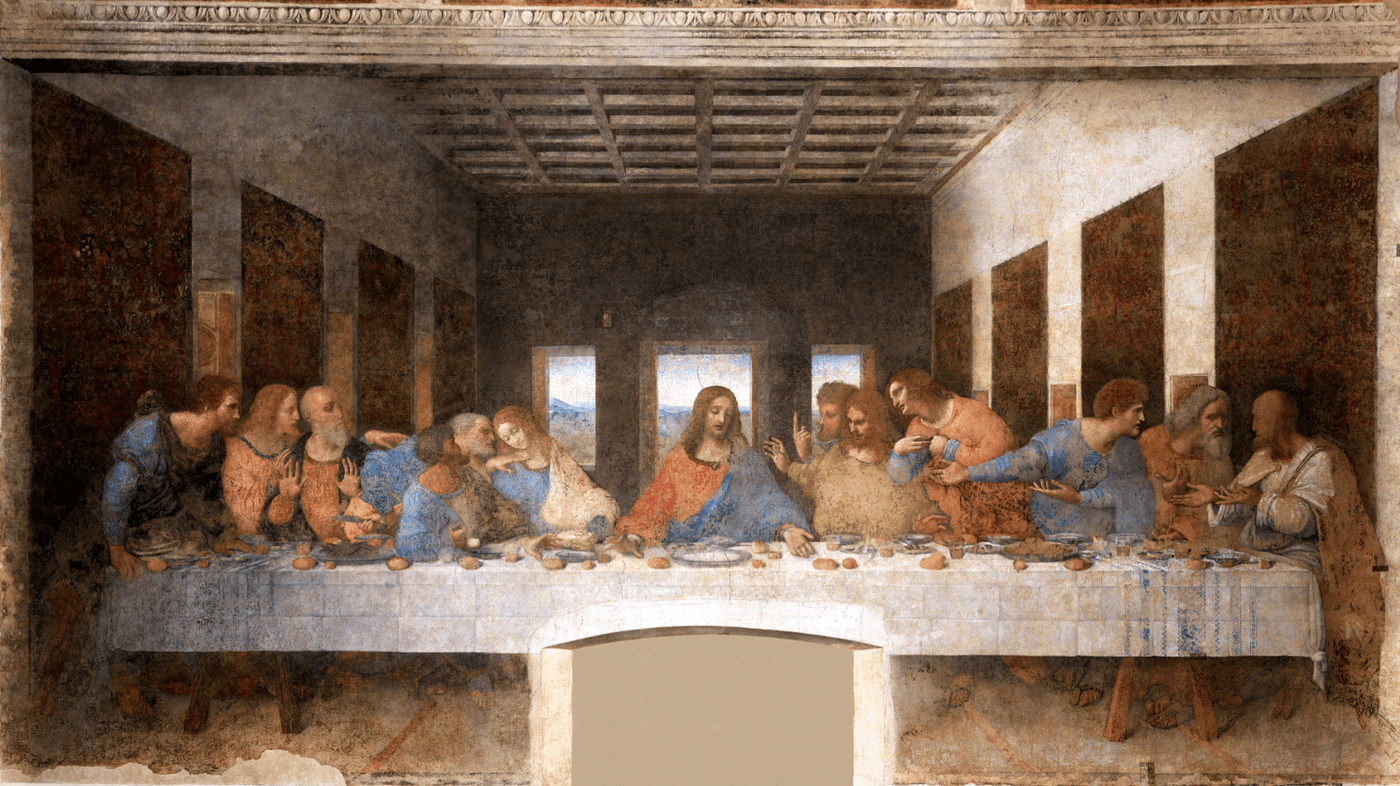
The single currency devised by the European Union, the euro, is 20 years old this month. My personal disappointment with this financial innovation is that the European Central Bank decided against featuring a human face on the notes. If the bank had chosen a human face, surely the outstanding candidate would have been a personage who had already featured on Italian banknotes: Leonardo da Vinci. As it happens, we mark the 500th anniversary of Leonardo’s death this year. He died on May 2, 1519, at the Château d’Amboise in the Loire valley, aged 67, probably of a stroke. He was working under the patronage of King Francis I of France, who said of him: “There has never been another man born into the world who knew so much as Leonardo: not so much about painting, sculpture, architecture – and a very great philosopher.” The centuries have endorsed and added to that view. Leonardo da Vinci was not only a painter of great genius – his Mona Lisa is the world’s most famous picture – but he was also the epitome of the Renaissance man. He was a master of painting, architecture, engineering, science, anatomy, geology, botany and astronomy. He foresaw the invention of the helicopter, the parachute and the tank in his drawings and etchings. He produced the blueprint for many future inventions, from an adding machine to a bobbin for a sewing machine. He foresaw the ultrasound scan: his drawings of the development of the unborn child in the womb are astonishingly biologically accurate. Leonardo was born out of wedlock in the Republic of Florence to an older legal notary (who was previously childless) and a young peasant mother, Caterina. His paintings of women and motherhood were particularly tender. Freud thought that his depiction of the Virgin, the Infant Jesus and St Anne was an extraordinary evocation of motherhood: behind a mother is another mother. Leonardo was in the employ of two popes, Alexander VI (the notorious Rodrigo Borgia: unedifying in morals, but elevating in art) and Pope Leo X. Italy is justly proud of this most phenomenal Italian, yet Leonardo belongs to all Europe, and to all humanity. The Last Supper is the most widely reproduced religious painting of all time, and has presented the world with a Gospel narrative that is visually unrivalled. This is the year of Leonardo da Vinci.
2:30 PM
2019 is the year of Leonardo da Vinci
the single currency devised by the european union, the euro, is 20 years old this month. my personal disappointment with this financial inno...
Mary Kenny

4 min read



Already a subscriber? Sign in
5freearticles every month
Continue reading with a free account. No card needed.
- Five free articles every thirty days, on any device you sign in on
- The Catholic Herald newsletter, every morning
- Subscribe whenever you like for everything: every article and the magazine

subscribe to the catholic herald today
Our best content is exclusively available to our subscribers. Subscribe today and gain instant access to expert analysis, in-depth articles, and thought-provoking insights—anytime, anywhere. Don’t miss out on the conversations that matter most.
Subscribe