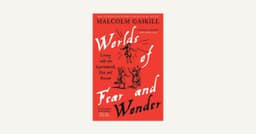


Julian Barnes has always looked more like a French philosopher than an English novelist. With his latest novel, Elizabeth Finch, about an exceptional teacher (or is it?), he lives up to his looks. More than (or perhaps less than – certainly different from) a novel, this is a philosophical treatise on almost everything: monotheism v paganism, life after death, censorship, monogamy, romanticism, stoicism. We touch upon Montaigne, Milton and – above all – Julian the Apostate.
The book is divided into three parts. In the first we are introduced to the eponymous heroine, Elizabeth Finch. There are many great evocations of teachers in literature. From Mr M’Choakumchild in Hard Times through Jean Brodie to Roald Dahl’s Miss Honey (good) and Miss Trunchbull (bad), and Zoe Heller’s (Notes on a Scandal) impossible pair of women, teachers provide a rich fictional seam. Elizabeth Finch is straight from that mine. A mature student (EF, as he calls her, is a university rather than schoolteacher) narrates the novel. The opening sentence gives us an immediate sense of the kind of teacher she will be: “She stood before us, without notes, books or nerves. The lectern was occupied by her handbag. She looked around, smiled, was still, and began.” EF is a source of mystery to her students. They try to imagine her home life, but even after Neil (the narrator) starts having regular lunches with her, he discovers no more about her than he knew that first day. Because her life is not the point of her, and certainly not the point of this novel. She is there to encourage wide, deep, philosophical thinking. Her course is called Culture and Civilisation, but the reading list is “entirely optional”. No Gradgrind she: “I shall not attempt to stuff you with facts as a goose is stuffed with corn; this would only lead to an engorged liver, which would be unhealthy.” In all of this, in her stillness, in the way she listens and corrects without snubbing, in the way she clearly guides her students to be what modern educators like to call “their best selves”, she follows in the steps of the great Jean Brodie. She is all about ideas, not about curriculum.