
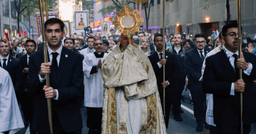
Six Catholics were taken into police custody on Saturday June 6 after attempting to pray silently in front of the historic Church of St Laurent in Paris.
They were protesting against the transformation of the consecrated building into a venue for a secular sound installation directed as part of the city’s Nuit Blanche festival, whose 2026 artistic director was the LGBT activist and DJ Barbara Butch.
The detentions have provoked anger among French Catholics, who see the episode as emblematic of a growing intolerance: peaceful prayer suppressed by police while a consecrated church is used for an ideologically charged cultural event.
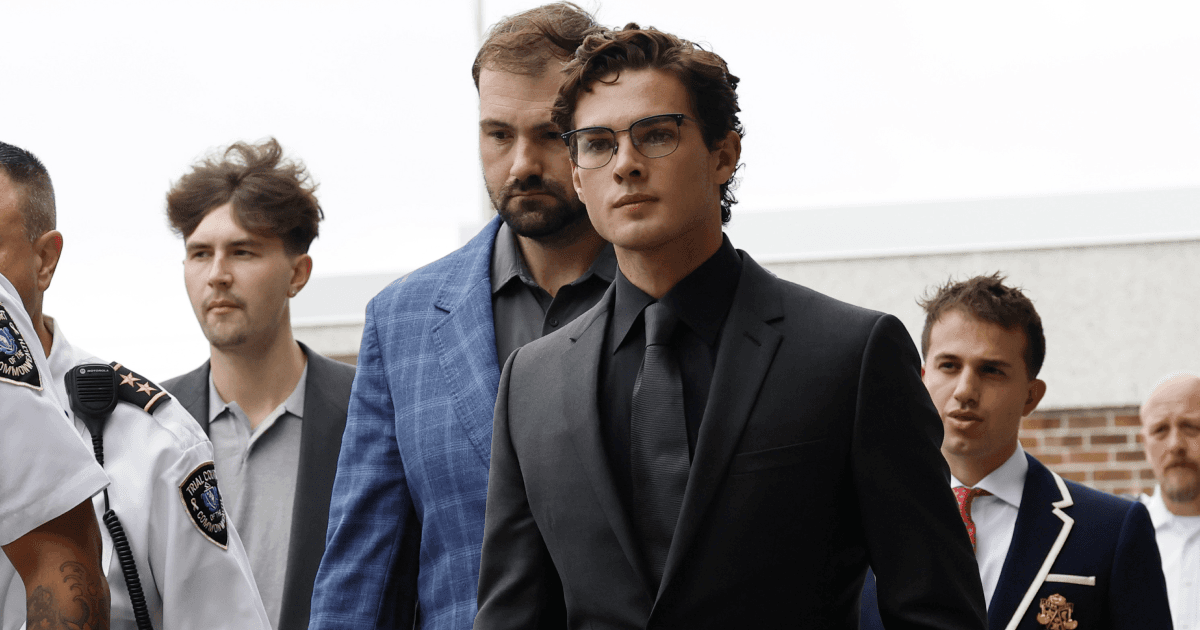
Videos circulating on social media show officers intervening swiftly to disperse the group, with several individuals led away in handcuffs.
Many faithful have asked why prayer outside a church is being treated as a public order threat while what they regard as the desacralisation of the building itself proceeds under official protection.
The installation, Sous la peau du ciel (“Beneath the Skin of the Sky”) by the artist Marie-Luce Nadal, formed part of Nuit Blanche 2026, for which Butch served as overall artistic director.
Visitors inside the church were invited to record personal “wishes” and declarations of love that were mixed into an ambient soundtrack.
Butch rose to international prominence, and drew fierce Catholic condemnation, for her central role in the 2024 Paris Olympics opening ceremony, which many bishops and faithful described as a mocking parody of the Last Supper.
One participant in the prayer vigil told reporters that the group had come “simply to pray the Rosary in reparation for the offence being offered to Our Lord in his own house”.
Catholic outlets, including Frontières Media and L’Écho Chrétien, reported that the six – five men and one woman – were placed in garde à vue, or police custody, despite the largely peaceful nature of their witness.
It has been alleged that some members of the group attempted to block entry to several participants.
French media have linked the six individuals, predominantly young men, to networks associated with the traditionalist Catholic movement Civitas, which was officially dissolved by the French government in 2023 but whose sympathisers continue to mobilise on moral and religious issues.
Le Parisien reported that the City of Paris filed a complaint, with the mayor of the 10th arrondissement, Alexandra Cordebard, claiming she had been pushed or shoved during the incident.
Two of those detained face additional investigation for alleged violence against an elected official.
The choice of several historic Parisian churches for Nuit Blanche installations has intensified the row.
Protesting Catholics argue that turning sacred buildings into stages for contemporary art, especially under the direction of a figure as polarising as Butch, shows a profound lack of respect for the faith of millions.
St Laurent Church, one of the oldest churches in its arrondissement, was placed under heavy police protection for the duration of the event, while those praying outside were rapidly removed.
The incident has provoked strong reactions across French Catholic social media, with many drawing parallels to earlier restrictions on public prayer near abortion clinics.
One widely shared comment asked: “Prayer is forbidden, but turning the house of God into a soundstage for ‘love activism’ is protected by the state?”
Butch has described herself as a “love activist” and body-positive feminist.
Her appointment as artistic director of Nuit Blanche 2026, which had a reported budget of about €1.3 million, has been seen by traditional Catholics as a deliberate provocation following the Olympics controversy.
French bishops at the time condemned elements of the opening ceremony for involving “mockery and derision of Christianity”.
As of June 8, the Archdiocese of Paris had not issued a public statement on the use of St Laurent or the arrests outside its doors.
The six detained Catholics remained in custody while investigations continued.
The episode has become a flashpoint in the ongoing debate over the place of Christianity in secular France, the limits of artistic freedom when it involves consecrated spaces and what critics describe as “two-tier policing”: robust protection for some secular, non-Christian or anti-Christian events, paired with swift action against Christian believers offering peaceful reparation.


.png)
.jpg)
.png)
.png)