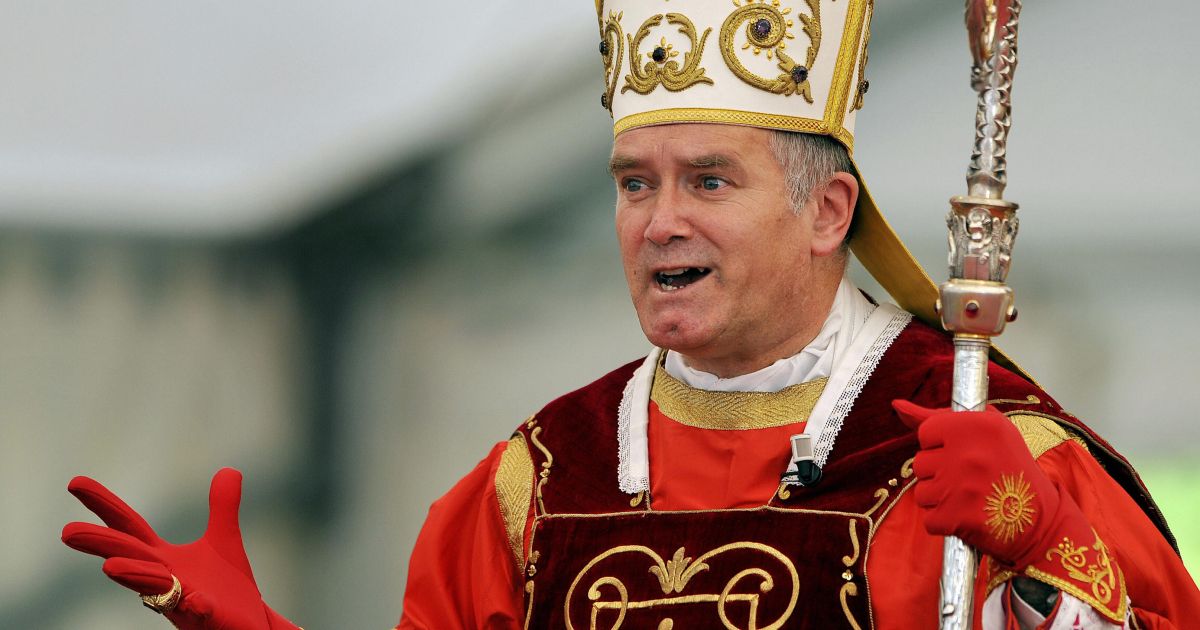


Bishop Bernard Fellay has warned members of the Society of St Pius X that they could face excommunication if the Society proceeds with episcopal consecrations without papal mandate, as fresh reports suggest Rome is preparing a formal response to any such move.
The SSPX announced in February that it intended to consecrate new bishops on July 1 without authorisation from the Holy See, reviving a crisis that many Catholics had assumed belonged to the era of Archbishop Marcel Lefebvre. The Society’s own announcement says that Fr Davide Pagliarani, its superior general, made the decision public on February 2.
According to Advaticanum, Bishop Fellay made the warning during confirmations on Good Shepherd Sunday at the Immaculata in St Marys, Kansas, saying there was “a very high probability” that “all of you, we included, may be excommunicated, declared schismatic”.
EWTN reported in February that bishops consecrated without papal approval would be likely to incur automatic excommunication, echoing the logic applied after Archbishop Lefebvre’s illicit consecrations in 1988. It has been suggested that Vatican officials are again preparing to respond along those same lines if the July consecrations go ahead.
That is the backdrop against which Bishop Fellay’s intervention is likely to be read. His reported remarks did not dwell only on possible penalties, but placed the issue within a wider ecclesiological meditation on the Church, the liturgy and the need to endure contradiction. Even so, the practical meaning was plain enough: the Society’s leadership appears to believe that a decisive break with Rome is now a serious possibility rather than a remote threat.
Under canon law, episcopal consecration without pontifical mandate is treated as a grave offence against ecclesial communion, precisely because it touches the Church’s apostolic and hierarchical constitution. The current Code of Canon Law states that both the bishop who consecrates another bishop without pontifical mandate, and the person who receives the consecration, incur a latae sententiae excommunication reserved to the Apostolic See.
That is why the 1988 consecrations proved so consequential, and why any repetition would almost certainly provoke a formal Roman response. In Ecclesia Dei, Pope St John Paul II said that Archbishop Lefebvre and the four priests consecrated as bishops, including Bishop Fellay, had incurred excommunication, describing the consecrations as a schismatic act. Pope Emeritus Benedict XVI later remitted the excommunications of the four surviving SSPX bishops in 2009.
Recent reports have gone further still. Rorate Caeli, relying on anonymous Roman sources, claimed on April 25 that Pope Leo XIV had chosen to follow the “1988 jurisprudence” and that a decree had already been drafted. Those claims remain unconfirmed by an official Vatican statement and should therefore be treated with caution.
If Rome does act, the consequences would be grave not only juridically but symbolically. For years, relations between the Holy See and the SSPX have been marked by a strange mixture of tension and partial accommodation: doctrinal disagreement, canonical irregularity and, at the same time, various practical gestures intended to avoid a definitive rupture. New episcopal consecrations without papal approval would test the limits of that uneasy arrangement.
For now, the most that can be said with confidence is that both sides are speaking in unusually stark terms. The Society has signalled its intention to proceed. Rome has already made clear, through public reporting and earlier precedent, that consecrations without mandate would be treated as a schismatic act with severe consequences. Bishop Fellay’s warning suggests that those within the SSPX understand exactly how high the stakes have become.