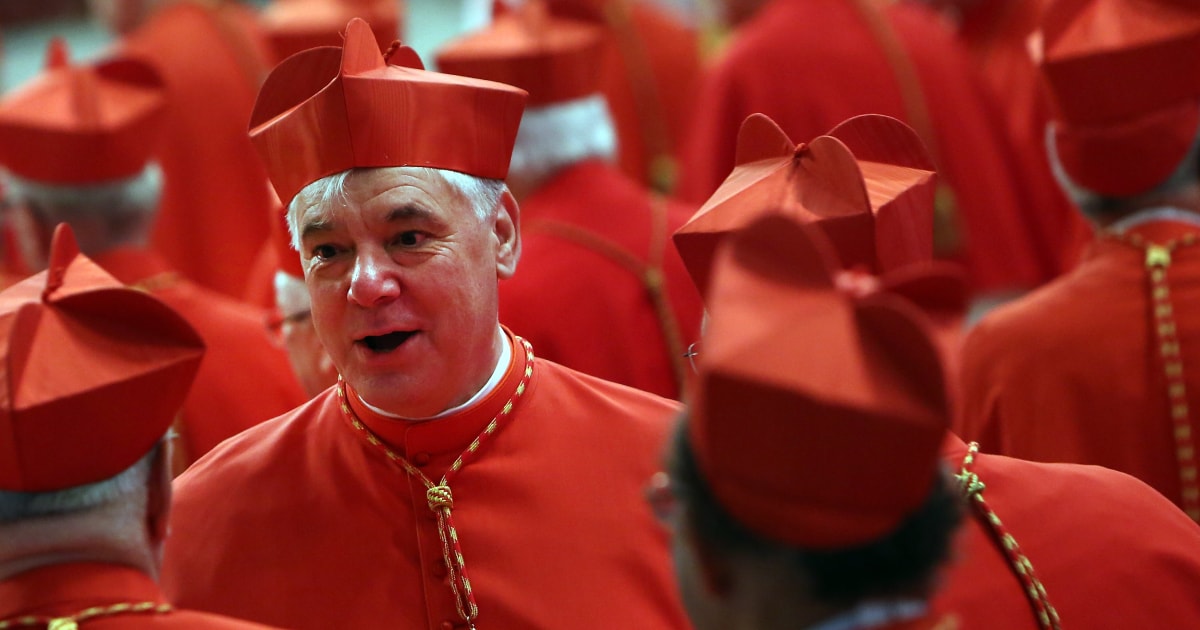


Cardinal Gerhard Ludwig Müller, prefect emeritus of the Congregation for the Doctrine of the Faith, published a strong criticism on 8 May of the final report of Study Group 9 of the Synod on Synodality. He described proposed blessings for same-sex couples as “fraudulent and blasphemous” and accused the document of promoting a “heretical relativisation” of natural and sacramental marriage.
In a detailed commentary published last week, the German cardinal, who led the Vatican’s doctrinal office from 2012 to 2017, warned that the study group’s conclusions reflected a broader attempt to align Church pastoral practice with contemporary ideologies at the expense of revealed truth. He stated that such blessings rested upon “the heretical denial of the revealed truth that God created humankind as male and female”.
Cardinal Müller wrote: “The private or even paraliturgical blessing of same-sex couples or of different-sex couples in irregular situations is based on the heretical denial of the revealed truth that God created human beings as male and female.” He added that “there is no mention in Sacred Scripture or in the entire tradition of the Church of a blessing for persons in adulterous relationships, nor any indication that bishops are authorised to ordain or permit fraudulent and blasphemous blessings”.
The cardinal argued that the report and similar initiatives ignored core doctrinal principles while constructing “a comfortable and worldly conformist Christianity” that sought approval from prevailing cultural trends. He criticised what he termed a “supposed ‘paradigm shift, from rigid dogmatism to a pastoral approach close to the people’” pursued by certain synodal working groups.
Cardinal Müller warned that “woke ideology” had entered the Church as “a destructive heresy and a divisive schismatic force” comparable to historical errors such as Manichaeism or Pelagianism. “Gender ideology directly contradicts Christian anthropology,” he wrote. “And with its 60-80 arbitrarily invented genders, it also directly contradicts biological science.”
He noted the enthusiastic reaction from pro-LGBT quarters within the Church as evidence of “the open acceptance of the heretical relativisation of natural and sacramental marriage”. The cardinal stressed that a genuine blessing “is a prayer of the Church trusting in God’s help and assistance for individuals, so that they may progress in all that is good, and in no way a confirmation of a life contrary to God in sin”.
Drawing on Scripture, Cardinal Müller recalled St Paul’s exhortation in Ephesians: “Put off your old self, which is being corrupted by its deceitful desires; be renewed in the spirit of your minds; and put on the new self, created to be like God in true righteousness and holiness.” He insisted that pastors must lead souls to Christ rather than treat them as “pawns of an atheistic ideology”.
The former doctrinal prefect invoked the Second Vatican Council’s Lumen Gentium, recalling that the Church “desires to enlighten all men with the light of Christ, proclaiming the Gospel to every creature”. He expressed confidence that, as in past crises, the Magisterium and the Doctors of the Church – from St Augustine and St Thomas Aquinas to St John Henry Newman – would uphold the deposit of faith.
Cardinal Müller’s intervention comes amid the ongoing implementation phase of the Synod on Synodality, with Study Group 9 examining pastoral questions related to homosexuality and the inclusion of personal testimonies in its recent report. The cardinal, created by Pope Francis in 2014 and long regarded as a leading voice in defence of classical Catholic doctrine, has consistently called for fidelity to the Church’s perennial teaching on marriage as the exclusive union of one man and one woman, open to life, as affirmed by Christ in the Gospels.
His latest contribution highlights continuing theological tensions over the proper exercise of pastoral charity in full conformity with divine revelation and the unchanging anthropology of the Catholic faith. Cardinal Müller, one of the most senior clerics in the Catholic Church, has in recent months increasingly entered ecclesial and political debates by denouncing mass migration, particularly of Islamic origin, into Europe and criticising ultramontanism.


.jpg)
.jpg)
.jpg)
.jpg)