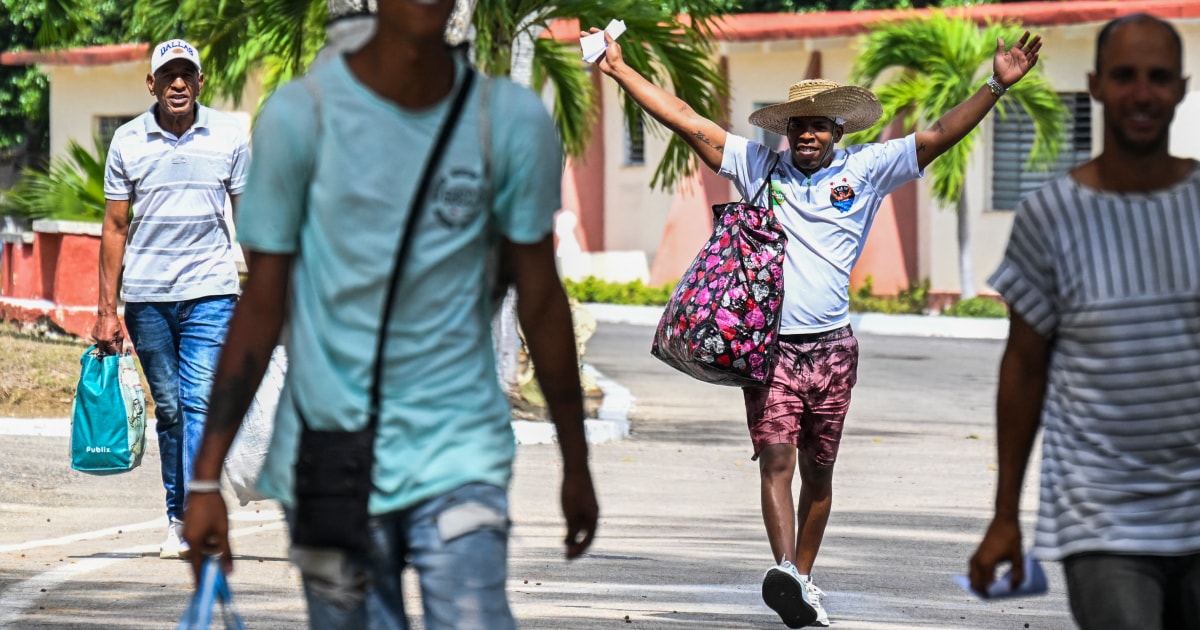
The Cuban government has announced that 2,010 prisoners are to be released during Holy Week, describing the measure as part of the religious observances of Easter. The decision, made public on April 2, is the largest such release in recent years and comes at a time of mounting pressure on the island from the administration of President Donald Trump.
According to the Cuban Ministry of Foreign Affairs, the release follows a government-approved pardon and came after officials considered a range of factors, including prisoners’ conduct while in custody, whether they had served a substantial portion of their sentence and their state of health. The authorities said the measure formed part of the “religious celebrations of Holy Week”.
The government said those due to benefit include young people, women and prisoners aged over 60. It also specified that certain categories had been excluded. Among those not covered are people convicted of sexual assault, pedophilia with violence, murder, robbery involving violence or weapons, and offences described by the authorities as crimes against authority.
Havana has presented the move as this year’s second prisoner release. In the same statement, officials said it was the fifth pardon carried out by the Cuban government since 2011 and that, across those measures, more than 11,000 people have been freed.
The latest announcement follows an earlier decision in March, when the Cuban government said 51 prisoners would be released in what it called a spirit of goodwill and because of its close and fluid relations with the Vatican. That earlier move also coincided with the approach of Holy Week and was publicly linked to contacts between Cuban officials and the Holy See.
The broader background is a worsening crisis on the island. EWTN reported that the United States has been cutting off Cuba’s oil supply in an effort to force political and economic reforms, while AP described the pressure as an oil blockade that has contributed to blackouts and wider civilian suffering. In practical terms, ordinary Cubans have been living through acute shortages affecting daily life.
The strain has also been described in explicitly humanitarian terms by Church figures. Bishop Manuel de Jesús Rodríguez of Palm Beach wrote in a March 27 column of a “deep and increasing humanitarian crisis” in Cuba. The bishop, who is originally from the Dominican Republic, said the situation on the island was stark and demanded more than expressions of concern.
He said prayer had to be matched by action. For that reason, the Diocese of Palm Beach is working with the Cuban bishops to identify practical ways of helping, especially in the urgent fields of food and medical care. “This job is not optional,” he wrote. “It is a moral imperative.”
The new release therefore lands at the intersection of religion, diplomacy and a deepening social emergency. Cuban officials have framed it as an Easter and Holy Week gesture. Others will see it in the light of intensifying international pressure, recent Vatican contacts and the increasingly severe conditions faced by many on the island.


.jpg)