

May 20, 2026

Vance says Pope Leo’s AI encyclical will be ‘very important’

Thomas Colsy
More
Related
Min read
share

US Vice President JD Vance has said he is “looking forward to reading” Pope Leo XIV’s first encyclical, Magnifica humanitas, which addresses the preservation of the human person in the age of artificial intelligence and is scheduled for publication on May 25, 2026.

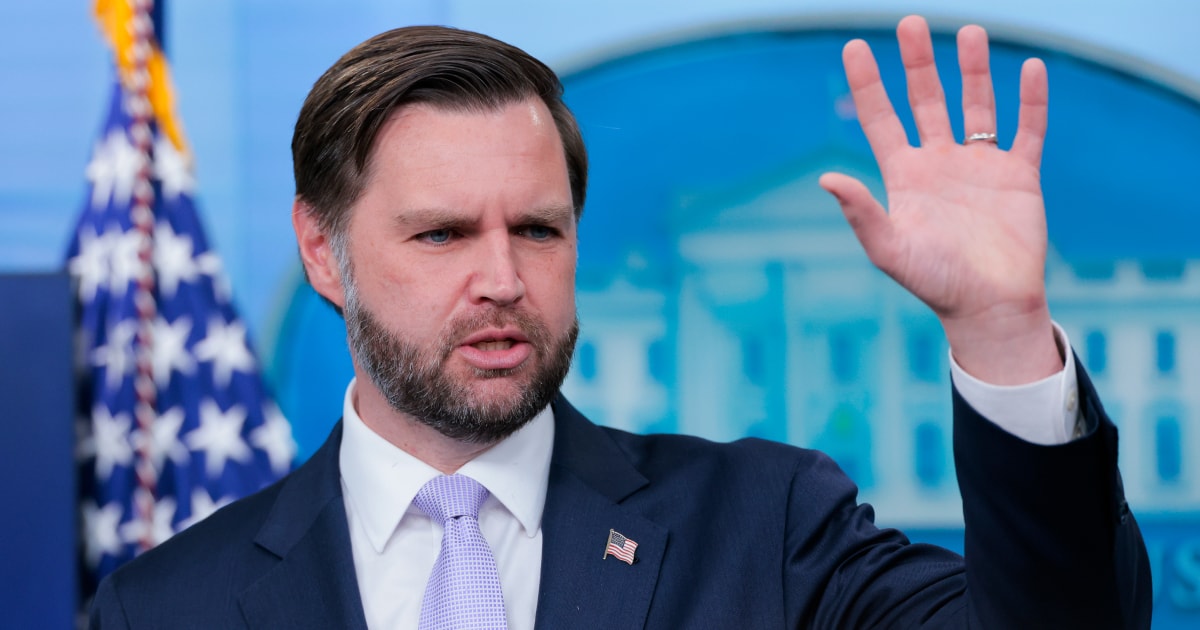
The Vice President made the comments during a White House press briefing on May 19, describing the forthcoming document as one that “is going to be a very, very important document” from the leader of the world’s largest Christian denomination.

Mr Vance, a Catholic convert, stated: “I think when the Pope issues an encyclical on artificial intelligence, it’s going to have some influence. I, of course, don’t know how much influence. I don’t know exactly what it’s going to say, but I think when the leader of the world’s largest Christian denomination speaks on an issue like that, it’s certainly going to have some influence.”

He added: “I’m sure it will contain a lot of insights, some of which I’ll probably agree with, some of which I may not, but I think that it’s going to be a very, very important document.”

The encyclical, signed by the Pope on May 15 – the 135th anniversary of Pope Leo XIII’s landmark Rerum Novarum – will be formally presented by Pope Leo XIV himself in the Vatican’s Synod Hall on May 25. The American-born Pontiff has indicated he will deliver remarks and a final blessing at the event.

Magnifica humanitas is expected to situate rapid technological development, particularly artificial intelligence, within the Church’s consistent teaching on the dignity of the human person created in the image and likeness of God. Pope Leo XIV has shown sustained interest in questions of artificial intelligence and the dignity of work since the beginning of his pontificate.

Shortly after his election in May 2025, he told the College of Cardinals that he chose his papal name in honour of Leo XIII, whose 1891 encyclical addressed the social disruptions of the Industrial Revolution and established foundational principles of Catholic social teaching.

Mr Vance’s remarks come as attention focuses on his close and long-standing association with the politically active technology investor Peter Thiel. The pair first connected after a 2011 talk by Mr Thiel at Yale Law School, an event Mr Vance has described as one of the most significant of his time there. Mr Thiel subsequently hired him as a partner at his venture capital firm Mithril Capital. Mr Thiel provided approximately $15 million to support Mr Vance’s successful 2022 Senate campaign in Ohio through the Protect Ohio Values super PAC, one of the largest single-candidate donations in US Senate history.

Mr Thiel, co-founder of PayPal and Palantir Technologies, has openly engaged with transhumanist ideas. In a June 2025 interview with the New York Times columnist Ross Douthat, he discussed the transhumanist vision of “this radical transformation where your human, natural body gets transformed into an immortal body”. He acknowledged orthodox Christian critiques that such projects address the body but fall short in the necessary transformation of the soul. Mr Thiel has also reflected on broader theological implications of technological acceleration, including references to the figure of the Antichrist in relation to unchecked progress.

In the same White House briefing, Mr Vance outlined the Trump administration’s approach to artificial intelligence. He said President Donald Trump “wants us to be pro-innovation” on AI and “wants us to win the AI race against all other countries in the world”.

Mr Vance continued: “He recognises that AI is going to be an important tool, not just for our economy, but for our military, and so he wants to ensure that we are winning that particular race. We also want to make sure that we’re protecting people, we’re protecting people’s data, we’re protecting people’s privacy.”

Acknowledging challenges, he added: “We’re trying to balance that safety against innovation, and we think that we’ve got the right balance here in the Trump administration, but something we’re going to have to keep on working on, because that’s just the nature of these technologies: they certainly change.”

The release of Magnifica humanitas on May 25 is expected to draw significant attention from those concerned with upholding the Church’s anthropological vision against visions of human nature that prioritise the technological overcoming of natural limits. The presentation will include participation from figures in the AI sector, including Christopher Olah, co-founder of Anthropic.

Catholic tradition has long insisted that technological progress must serve the authentic good of the human person and remain ordered to his eternal destiny rather than redefine it. Mr Vance’s expressed interest in the encyclical highlights an intersection between emerging policy priorities in Washington and the Church’s unchanging defence of human dignity.

Continue reading with a free account

Create a free account to read up to five articles each month
Create free account

You have # free articles remaining this month.

Subscribe to get unlimited access.
Sign up

subscribe to the catholic herald today

Our best content is exclusively available to our subscribers. Subscribe today and gain instant access to expert analysis, in-depth articles, and thought-provoking insights—anytime, anywhere. Don’t miss out on the conversations that matter most.
Subscribe