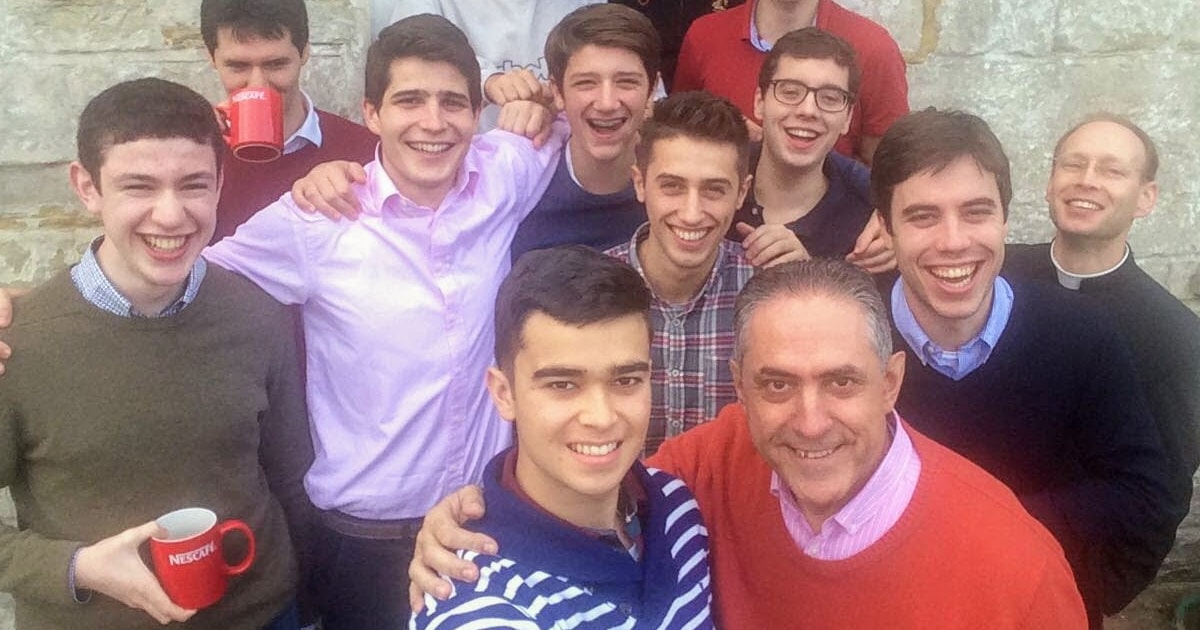


The Diocese of Salford has formally opened the cause for the beatification and canonisation of Pedro Ballester Arenas, a 21-year-old member of Opus Dei from Manchester who died of advanced pelvic cancer in 2018.
The diocese announced on May 13 that the cause had been opened after the postulator, Fr Paul Hayward, formally requested the beginning of the process. Bishop John Arnold is now inviting members of the faithful to submit testimonies, memories and any writings attributed to Pedro, including letters and diaries, to help the diocesan tribunal build a fuller picture of his life, virtues and reputation for holiness.
Pedro died on January 13, 2018, at the age of 21. Born in Manchester in 1996 to Spanish parents, he grew up in a Catholic family and began attending classes of Christian formation at Greygarth Hall, an Opus Dei centre in Manchester. On May 1, 2013, he joined Opus Dei as a numerary, committing himself to celibacy and to seeking sanctity in ordinary life in the spirit of St Josemaría Escrivá.
A gifted student, Pedro won a place to study chemical engineering at Imperial College London in 2014. That same year, after experiencing back pain, he was diagnosed with advanced cancer of the pelvis. He returned to Manchester for treatment and later transferred his studies to the University of Manchester.
From 2015 until his death, Pedro received treatment mainly at The Christie Hospital in Manchester, with a period of specialist care in Heidelberg, Germany. According to the website established by friends to share his story, he was able to meet Pope Francis in Rome in November 2015, but the cancer later returned.
The Diocese of Salford said Pedro accepted his illness “with remarkable faith”, offering his suffering for the Pope, the Church and souls, and bearing his condition with “deep serenity and trust in God”. It said his reputation for holiness had “grown significantly” in the years since his death.
Fr Joseph Evans, chaplain of Greygarth Hall, who accompanied Pedro during his illness, has described him as “very much an ordinary person with defects and struggles”. He added: “Sometimes the suffering got him down, particularly that it went on for so long. At times he would cry. He could be occasionally irritated or react against what he considered excessive sentimentality. But his struggle was very real and exceptionally brave.”
Pedro spent periods during his final year at Greygarth Hall, supported by family, friends, fellow members of Opus Dei, hospital staff and the women who ran the residence’s domestic administration. Those close to him recalled a steady stream of visitors to his room, and said he remained interested in others and sought to bring them closer to God.
Shortly before his death, after three years of illness, Pedro was asked by a friend whether he was happy. He replied: “I have never been happier.”
More than 500 people attended his funeral at the Church of the Holy Name in Manchester. Cardinal Arthur Roche, then a bishop, travelled from Rome to celebrate the ceremony, according to Opus Dei. Pedro’s grave in Southern Cemetery, Manchester, has since drawn visitors from around the world.
In a homily after Pedro’s death, Fr Evans said: “Suffering was the curriculum, the syllabus, which Pedro was given to study, not in some abstract, intellectual manner, but in the most personal, flesh and blood manner you can imagine. And he passed with distinction.”
The opening of the cause is the first formal step in a long process. The diocesan phase will examine Pedro’s life, writings and the testimony of those who knew him before any dossier is sent to the Dicastery for the Causes of Saints in Rome. Opus Dei said the process will seek to establish whether Pedro lived the Christian virtues in a heroic manner, not as an occasional exception but as the consistent pattern of his life.
Friends of Pedro have gathered accounts of favours attributed to his intercession, and the Diocese of Salford has asked anyone with information, whether positive or otherwise, to contact the diocesan tribunal.
If the cause advances, Pedro would join a growing number of modern young Catholic figures, including Blessed Carlo Acutis, Blessed Pier Giorgio Frassati and the Servant of God Sister Clare Crockett, whose lives have been presented as witnesses to holiness amid the ordinary circumstances and struggles of youth.

.jpg)

.jpg)


.jpg)