



May 15, 2026

Peers to introduce bills on abortion complications and babies born alive

The Catholic Herald
More
Related
Min read
share

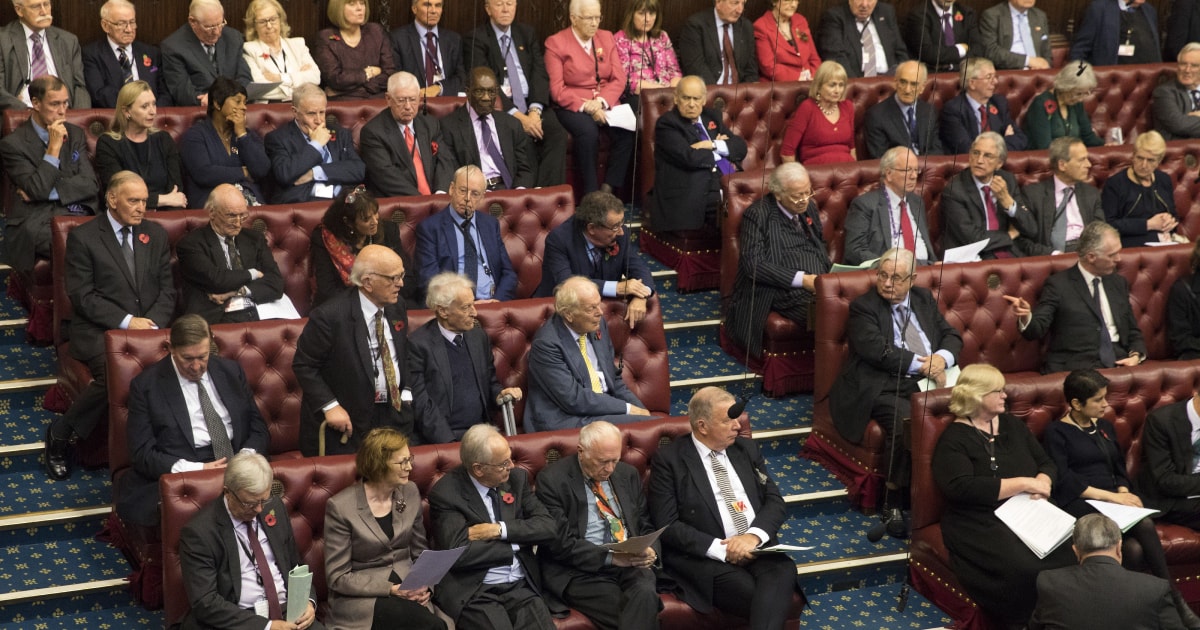
Two Private Members’ Bills addressing abortion complication reporting and babies born alive after an abortion are to be introduced in the House of Lords after being drawn in a ballot.

Lord Moylan’s Complications from Abortions (Annual Report) Bill was drawn in 14th place in the House of Lords Private Members’ Bill ballot and is due to receive its First Reading on June 9.

Baroness O’Loan’s Infant (Born Alive) Protection Bill was drawn at number 17 and is expected to receive its First Reading on June 11.


No bill to introduce assisted suicide was drawn in the ballot, and no pro-abortion bills were drawn.

At the beginning of each parliamentary session, two days after the State Opening of Parliament, a ballot is held to allocate the order in which the first 25 Private Members’ Bills are introduced in the House of Lords. Peers usually enter the ballot by submitting the short and long title of their bill to the Legislation Office.

Private Members’ Bills in the Lords rarely have enough time to pass through all their stages. If they do, they may then be supported by an MP and continue in the House of Commons. In the Commons, Lords Private Members’ Bills do not have priority over bills introduced there, and rarely become law unless the Government provides parliamentary time.

Such bills are often used by peers to raise the profile of an issue through parliamentary debate, campaigning and media attention. A later change in the law may then be pursued through another mechanism, such as a Commons Private Member’s Bill or an amendment to a Government Bill.

The contents of Lord Moylan’s and Baroness O’Loan’s bills are still being finalised with the Public Bill Office, so only their titles are currently available.

Lord Moylan’s bill follows a Government review published in November 2023 which suggested that abortion complication rates are likely to be higher than those previously reported in annual abortion statistics, which are based on data from abortion providers.

The review, undertaken by the Office for Health Improvement and Disparities, analysed Hospital Episode Statistics for England from 2017 to 2021 and compared them with data from the Abortion Notification System, which is based on reports from abortion providers.

According to the review, Abortion Notification System data showed an average complication rate over the five years from 2017 to 2021 of 1.52 per 1,000 abortions. The analysis of Hospital Episode Statistics over the same period showed a complication rate of 4.06 per 1,000 abortions, more than 2.6 times higher.

When incomplete abortions were included in the Hospital Episode Statistics analysis, the complication rate over the same period was 18.16 per 1,000 abortions, more than 11.9 times higher than the rate derived from the Abortion Notification System.

The review also found a larger disparity among women under 20. For that age group, the Hospital Episode Statistics-derived complication rate was 4.43 times higher than the rate derived from the Abortion Notification System. When incomplete abortions were included, the Hospital Episode Statistics-derived complication rate for under-20s was 17.43 times higher.

The review also noted that abortion providers were not recording complications that occurred after discharge or after the form recording the abortion had been sent to the Department of Health and Social Care. The Office for Health Improvement and Disparities said there was “no evidence” at the time of the review that providers were informing the Department so that data could be updated when a woman reported a complication after the form had been submitted.

The review further noted that complications may be less likely to be recorded for terminations where one or both abortion medications are administered at home, since the person completing the HSA4 form may not know whether the woman experienced a complication after the abortion.

Baroness O’Loan’s Infant (Born Alive) Protection Bill is intended to clarify legal protections for babies born alive following an abortion.

Right To Life UK said the measure follows a change in the law during the last parliament which, it says, means that it is no longer illegal for women to perform their own abortions for any reason, including sex-selective purposes, and at any point up to and during birth.

The group said the change, introduced through the Crime and Policing Act 2026, could lead to an increase in dangerous late-term abortions at home and to more viable babies’ lives being ended beyond the 24-week abortion time limit.

Right To Life UK also cited overseas evidence, including Australian state data following the decriminalisation of abortion, and a 2008 UK report which found that 66 infants were born alive after NHS terminations in one year.

In the state of Victoria, Australia, Right To Life UK said that 33 babies were born alive and subsequently died out of 310 late-term abortions after 20 weeks. It also cited an official review reporting that, in 2011, there were 40 terminations of pregnancy after 20 weeks “resulting in live birth”.

The group also said that between 2005 and 2015, 204 babies were born alive as a result of abortions in Queensland.

Responding to the absence of any bill to introduce assisted suicide or expand abortion laws in the Lords ballot, Catherine Robinson, spokesperson for Right To Life UK, said: “It’s great to see that no pro-abortion bills were drawn in the ballot for this session. While this is a positive development, there is still the serious risk that pro-abortion MPs, backed by the abortion lobby, will try to hijack a Government Bill during this parliamentary session to introduce further extreme changes to our abortion laws.

“Likewise, it’s great to see no bill to introduce assisted suicide has been drawn in the ballot. While this is great news, the House of Commons ballot is this Thursday, and the assisted-suicide lobby, led by Dignity in Dying, a multi-million-pound pressure group, has made it clear that it is going to attempt to bring back the Leadbeater assisted-suicide Bill in the next parliamentary session. It then plans to use the Parliament Acts to bypass the House of Lords and force the Bill into law.

“It’s vital that pro-lifers around the country are ready to respond to this major threat should they be successful at persuading an MP to take forward the Leadbeater assisted-suicide Bill.”

Responding to Lord Moylan’s bill being drawn in the ballot, Robinson said: “A Government review in 2023 revealed that abortion complication rates are likely much higher than has been previously reported in the annual abortion statistics, which are based on reporting from abortion providers.

“In this new parliamentary session, the Government needs to urgently introduce measures to ensure that abortion complications data is accurately collected and reliably reported moving forward.

“While it is rare for Lords Private Members’ Bills to become law, this bill will ensure that the issue of complication-rate underreporting is put on the radar and debated extensively in Parliament, the media and wider society. This will help raise the profile of this major issue and put pressure on the Government to ensure that abortion complications data is accurately collected and reliably reported for years to come.”

Responding to Baroness O’Loan’s bill being drawn in the ballot, Robinson said: “Babies born alive following an abortion should receive the same standard of care as any other baby born at the same gestation. Sadly, the fact that it is no longer illegal for women to perform their own abortions for any reason, including sex-selective purposes, and at any point up to and during birth, means that late-term abortions outside a clinical setting are far more likely. Such babies need the full protection of the law.”

Continue reading with a free account

Create a free account to read up to five articles each month
Create free account

You have # free articles remaining this month.

Subscribe to get unlimited access.
Sign up

subscribe to the catholic herald today

Our best content is exclusively available to our subscribers. Subscribe today and gain instant access to expert analysis, in-depth articles, and thought-provoking insights—anytime, anywhere. Don’t miss out on the conversations that matter most.
Subscribe