

Dublin City Council has again opted to celebrate a pagan goddess on the feast of St Brigid. The celebration, taking place between 30 January and 2 February, is part of a national holiday introduced in 2023 to commemorate St Brigid, the Patroness of Ireland, and also to coincide with the ancient Gaelic festival of Imbolc, a seasonal marker of spring’s beginning.
However, over the past four years, the council has chosen to give little emphasis to the saint’s life, and instead to highlight a Celtic goddess, also called Brigid, about whom little is known and who is first mentioned in the 10th century, some 500 years after the Christian saint. The council explains that the festival, called Brigit: Dublin Celebrating Women, “honours the Celtic goddess Brigit, who embodies inspiration, healing, magic, smithcraft, wisdom, poetry, protection, fire and earth.”
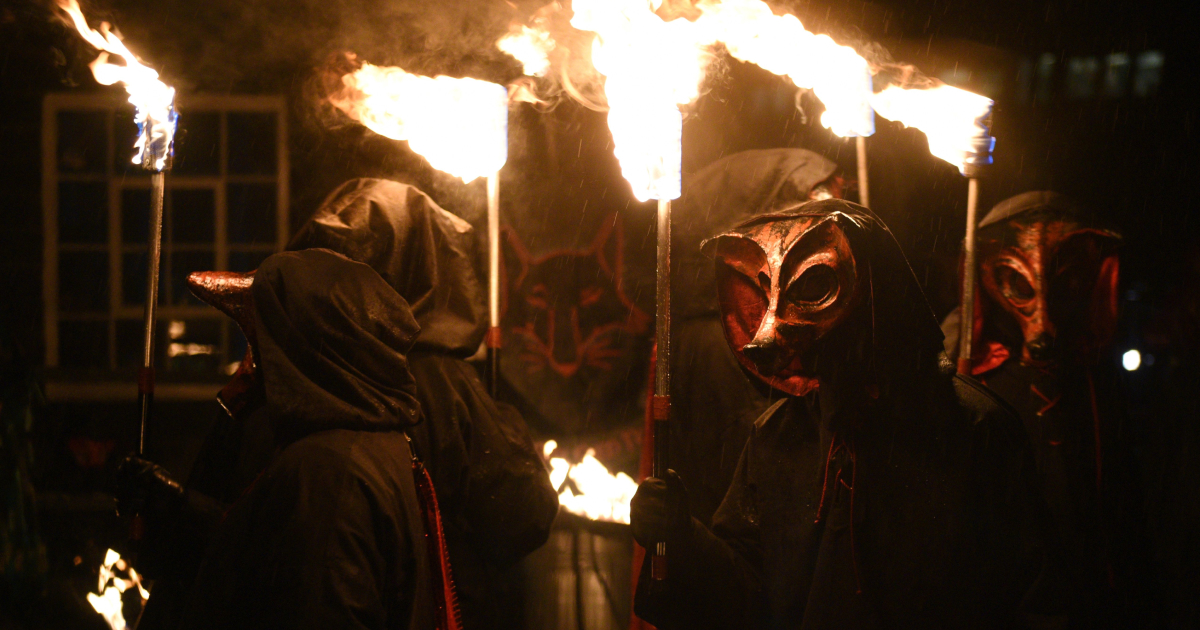
The celebration includes a series of events sponsored by the council which are overtly pagan and anti-Christian in nature. Over the course of the weekend, residents are encouraged to attend a “sauna blessing to honour Brigid”, a walking tour to learn “how politics, religion, and legislation shaped an unjust world”, and Flame and Flow, where participants join the yoga teacher Justine Carbery in “a ritual space to open your heart and body”. Other sessions include “F*ck Your Womb: A Textile Art Session” and “Vulva Stories”.
The council’s co-opting of the saint’s festival is part of a nationwide attempt to wash out the Christian association with the new bank holiday. For example, Herstory, an Irish multi-disciplinary storytelling platform, explains that in its bid to celebrate the saint’s day it is celebrating “the modern women who embody her qualities and share her passions as an environmentalist, feminist, Pride icon, healer, pioneer, human rights activist, goddess of the arts, alchemist and wisdom weaver”. Other attempts to re-write her life in support of a variety of secular causes include, perhaps most bizarrely, the suggestion that she was in a homosexual relationship with her companion and fellow nun Darlugdach, despite both being consecrated virgins.
Ireland has been in the grip of some of the fastest secularisation of any country in the world over the past decades. While the vast majority of the country still identifies as Catholic, roughly 70 per cent, Mass attendance has fallen from around 90 per cent in the 1970s to just 30 per cent today. However, much like other parts of the secularised Anglosphere, there are signs of hope. Dublin marked the highest number of adult baptisms in recent memory in 2025, and a small but steady growth in the number of men entering seminary has been noted in recent years.