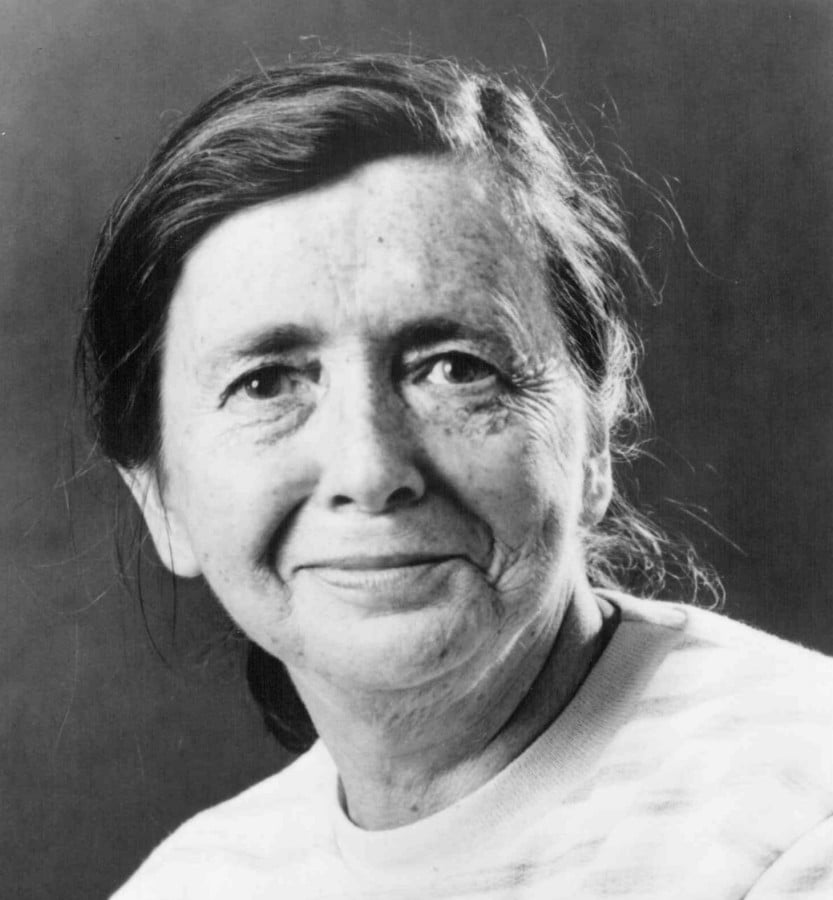
The poet Elizabeth Jennings was born on this day in 1926. A devout Catholic, she attended St Anne's College, Oxford, where she lived all her life, before working as a librarian then in publishing before writing full-time. Her "sincere and scrupulous work" has been praised for its "unassuming technical craft", "emotional restraint," and "sensitivity towards others, evident in the pained tenderness of some of her poems." She was often so poor she was called "the bag-lady of poetry."Her books of poetry won several prizes, beginning with the Somerset Maugham Prize in 1955 for her second book of poems. She was named a Commander of the Order of the British Empire (CBE) in 1992. Jennings died in October 2001. She can be heard reading two of her poems here and others can be read here. Her Collected Poems was published in 2012.She was interviewed by Genevieve Fox in 1993. The interview, titled "From W.H. Auden to Al Pacino", appeared in the 11 June 1993 issue. The Catholic Herald published an appreciation of her work last year, Fr Ryan Service's "The poetry of Elizabeth Jennings helped shape me as a Christian." Elizabeth Jennings's reflective poetry and the periods of doubt and depression in her personal life do not prepare you for such a sparky character. Identifiable at a distance by the entourage of plastic bags at her feet and the maroon beret and duffle coat, worn in spite of the sunny day, the 66-year-old poet is installed at a table in her favourite Oxford cafe. Jennings has been coming here for three years, to chat to other regulars, to conduct interviews, occasionally to write a poem. Spared the clearing away of crockery meted out to other customers, she is left in respectful peace. Her handbag, worn across her chest and stuffed full of papers, provides a convenient metaphor for her eclectic mind. She offers an opinion on everything from the ordination of women ("fundamentally unsuitable. I don't think I trust them"), to Freud ("done as much damage as Marx"), and Madonna's latest movie Body of Evidence ("pornographic"). For more than 40 years Jennings has been one of Britain's major poets, coming to prominence in 1955 when she won the Somerset Maugham Award. Numerous accolades have followed in the years since, including the W H Smith Literary Award and, last year, a CBE. But she has never achieved a high public profile, a neglect she harbours no bitterness about. "No, I don't feel discriminated against. I've been lucky. But poetry is a difficult job. I don't really like it and I don't like unkind reviews. And there have been periods of such ghastly penury that I've often had to sell books, even my own work. My father was very generous and I've collected books since I was 15." Born in Bolton, Lincolnshire, in 1926, her father was a doctor and a Catholic convert. Her family moved to Oxford when Jennings was six. The poet and the person are linked particularly closely in Jennings and the poems concern nature, art, and her much loved Rome, society's foibles, love divine and secular friendship and childhood. Tributes include special homages to her mother, "the sweetest most gentle woman," whose death two years ago has intensified Jennings's own vulnerability, and is best captured in "V Sudden Remembrance," the fifth of ten poems in a series entitled "For My Mother".
12:30 AM
Elizabeth Jennings: The Catholic bag-lady of poetry
the poet elizabeth jennings was born on this day in 1926. a devout catholic, she attended st anne's college, oxford, where she lived all her...
FromtheArchives
7 min read



Already a subscriber? Sign in
5freearticles every month
Continue reading with a free account. No card needed.
- Five free articles every thirty days, on any device you sign in on
- The Catholic Herald newsletter, every morning
- Subscribe whenever you like for everything: every article and the magazine
subscribe to the catholic herald today
Our best content is exclusively available to our subscribers. Subscribe today and gain instant access to expert analysis, in-depth articles, and thought-provoking insights—anytime, anywhere. Don’t miss out on the conversations that matter most.
Subscribe