


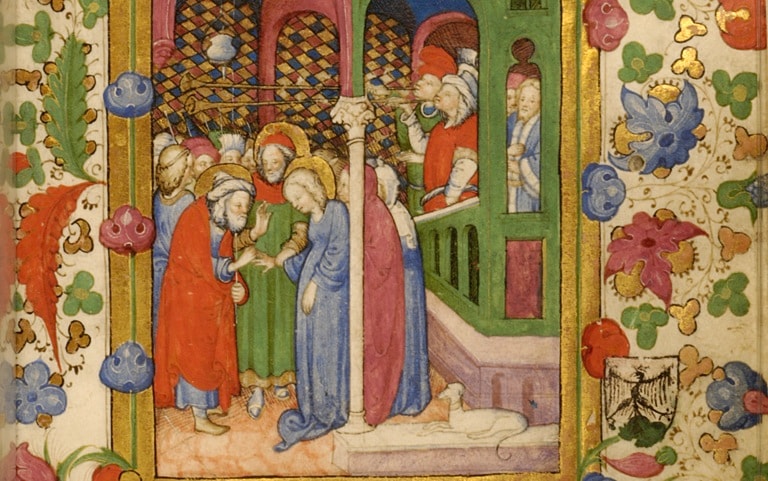
"Good day, Sir Christmas, our king!” proclaims an English carol of the 15th century, welcoming the beginning of the Christmas season, and telling Christmas that everyone, “both old and young, is glad and blithe at your coming”. Another carol says about Christmas that “in mirth and games he has no peer”, and it’s certainly true that medieval Christmas was a very joyous season. From carols, manuscript illustrations, literary descriptions and account books, we can get a vivid picture of the enthusiasm with which medieval people celebrated Christmas. The best thing about a medieval Christmas is how long it lasts. The main festivities began on the Feast of the Nativity and lasted all the way through the Twelve Days of Christmas, ending on Twelfth Night (the eve of the Epiphany). Though many people then had to go back to work, the season of Christmastide did not actually end until Candlemas on February 2, the Feast of the Purification, 40 days after Christmas Day. Unlike the modern commercial Christmas, which now starts some time around the end of November and stops abruptly on December 26, the medieval season was closely attuned to the rhythm of the liturgical year: fasting and preparation in Advent were followed by an extended period of celebration of Christ’s birth, brightening the darkest and coldest days of the year.
2:30 PM
How to feast like a medieval Catholic
"good day, sir christmas, our king!” proclaims an english carol of the 15th century, welcoming the beginning of the christmas season, and te...
Eleanor Parker

4 min read



Already a subscriber? Sign in
5freearticles every month
Continue reading with a free account. No card needed.
- Five free articles every thirty days, on any device you sign in on
- The Catholic Herald newsletter, every morning
- Subscribe whenever you like for everything: every article and the magazine

subscribe to the catholic herald today
Our best content is exclusively available to our subscribers. Subscribe today and gain instant access to expert analysis, in-depth articles, and thought-provoking insights—anytime, anywhere. Don’t miss out on the conversations that matter most.
Subscribe