



A former Swiss auxiliary bishop has warned that Islam is “incompatible with the Western idea of freedom” and described post-Second Vatican Council liturgical reform as a “rather violent … reconstruction” in a wide-ranging interview published by AdVaticanum. Marian Eleganti, speaking on the Church’s future, abuse scandals and the traditional liturgy, also cited “a factual correlation” between clergy abuse cases and homosexuality, and said the Eucharist is now widely treated as “a mere symbol”.
The interview brings together several of the most direct public statements by the former auxiliary bishop of the Roman Catholic Diocese of Chur since his early retirement in 2021. Reflecting on the legacy of the Second Vatican Council, he described the post-conciliar reform of the Mass as “a rather violent, provisional reconstruction … associated with great losses that need to be addressed”, pointing in particular to changes in orientation, prayers and ritual form.
On the state of the Church in Europe, he said the period since the Council had produced “an indescribable decline in the practice and knowledge of the faith”, alongside “liturgical formlessness and arbitrariness”, contrasting with expectations at the time of a “springtime”. He added that “the worst of all evils is the practical irrelevance of God in our society”, which he said had been replaced by “ideologies or other forces” with “extremely destructive” effects on what was once considered sacred in the Christian West.
Addressing clerical abuse, Eleganti referred to his earlier intervention on what he termed an “elephant in the room”, stating that “all Church studies on abuse show a disproportionately high number of male victims”. He said this constituted “a factual correlation”, adding that “it does little good to turn a blind eye to this”, while specifying that such data does not imply that individuals with a homosexual orientation are predestined to commit abuse.
The bishop also commented extensively on Islam and migration in Europe, stating: “Islam, not just so-called Islamism, is, by its very nature, an anti-Christian religion, in theory and in practice.” He added that “Christianity has never fared well under Islamic rule” and that “wherever Islam holds sway, Christianity is being decimated to the point of near extinction.” He further argued that Islam is “incompatible with the Judeo-Christian tradition of the West” and with the principle of separation between religion and state, warning that “only the numerical balance will decide” the future coexistence of Christianity and Islam in Europe.
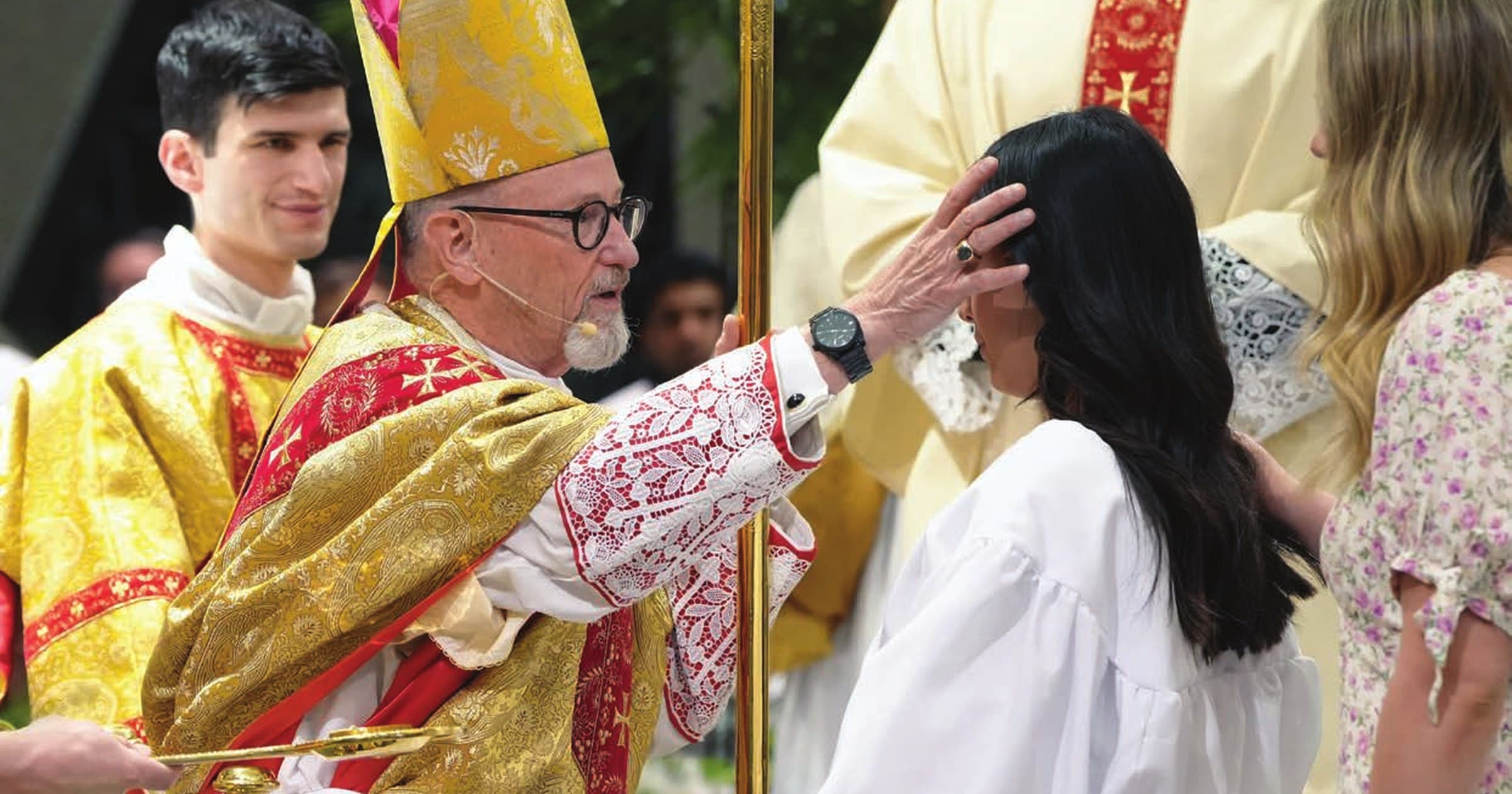
On liturgical questions, Eleganti said the appeal of the Traditional Latin Mass among younger Catholics lies in its “focus … on God or Christ, rather than on the community”, as well as its “reverence”, “stillness”, and use of Gregorian chant. He called for greater freedom in the use of different rites, stating: “Why don’t we simply give hearts the freedom to pray as they wish … without disqualifying any person or rite?”
At the same time, he warned that divisions over liturgical forms risk becoming “a question of ‘to be or not to be’”, insisting that personal devotion is not determined by external forms alone.
Eleganti also addressed tensions surrounding the Society of St Pius X, stating that planned episcopal consecrations without papal mandate would constitute “a schismatic act”, while adding that many faithful are drawn to traditional liturgy without fully identifying with the group’s position.
The interview concluded with comments on a recent incident in Switzerland in which the Eucharist was reportedly shared with animals. Eleganti said: “It is simply terrible that the sacraments … are no longer understood,” adding that the Eucharist “is the Body of Christ … the living, mysteriously present Person of the Lord”, and that reports of such actions “cause great pain”.
The remarks come amid wider debates within the Catholic Church over liturgy, doctrine and secularisation in Europe, particularly in countries such as Switzerland, where Church affiliation remains historically widespread but regular practice has declined sharply in recent decades.