
There are two doors in the same hospital corridor. Behind one, my son Theo fights for breath. Behind the other, life is deliberately ended.
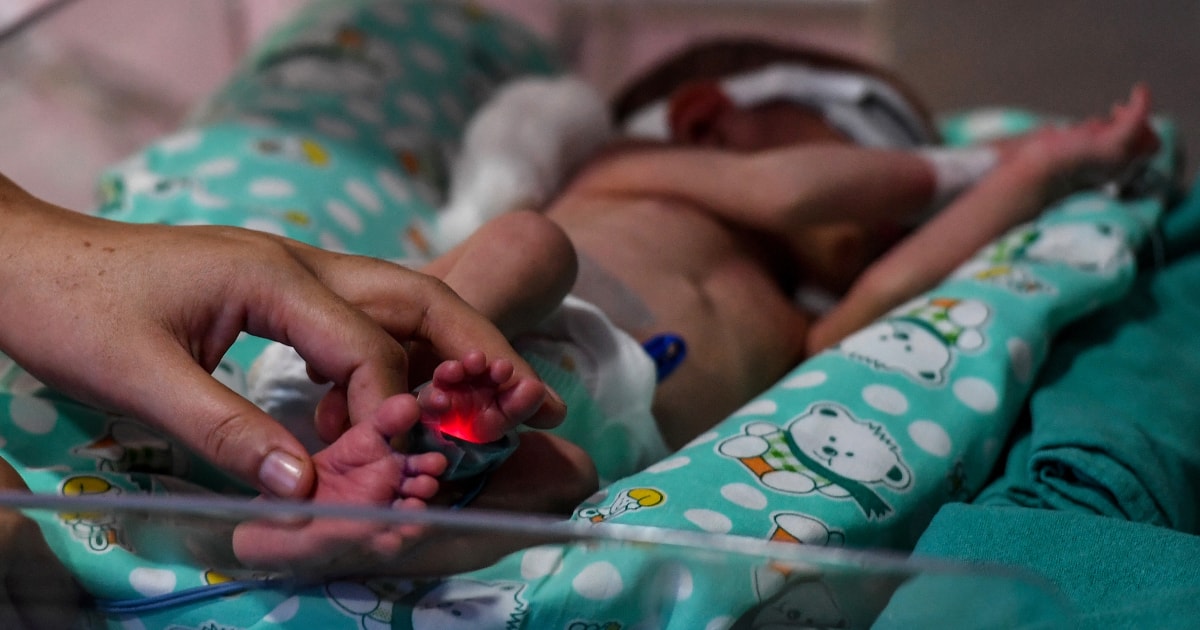
Last month I spent two weeks walking that corridor, back and forth, day and night, living in the tension between those two realities. Theo was born needing help. Machines, wires, oxygen, numbers constantly flickering. Every feed monitored. Every breath watched. Conversations in quiet tones with doctors and nurses who carry both skill and compassion in equal measure.
You quickly learn a new language in NICU – the neonatal intensive care unit. Sats. Flow rates. Percentages. You begin to measure progress in the smallest increments: a stable reading, a slight reduction in oxygen, a calmer feed. And you realise something profound: how fragile life is, and how fiercely it is protected.
No one in that unit asks whether Theo’s life is valuable. No one debates whether he is worth the effort, the time, the resources. They simply act on a shared assumption: He matters. I watched nurses move with extraordinary care, adjusting tubes, checking monitors, speaking gently to babies who cannot understand their words but somehow respond to their presence.
There is a quiet determination in that place. A clarity of purpose. Everything is ordered towards one end: to sustain these small, vulnerable lives. It is humbling. It is beautiful. It is exhausting. And it is utterly clear: these children are not abstractions. They are patients. They are sons and daughters. They are loved.
And yet, just down the hall, a different reality exists. Behind another door, life at a similar stage of development can be ended. One life is fought for. Another is stopped.
The same hospital. The same professionals. The same humanity. Two completely different responses.
For me, this was not an abstract debate. It was lived.
Sitting beside my son, watching numbers rise and fall, hoping, praying for stability, something becomes clear in a way that is difficult to articulate but impossible to ignore: life is not valuable because it is easy, or independent, or convenient. It is valuable because it is life. Because it is him.
Theo is not a concept to me. He is a person I know, a face I recognise, a cry I can distinguish from others. And yet, biologically and developmentally, he is not fundamentally different from those whose lives are ended just a short walk away.
I have spent much of my professional life working in public affairs and ethical questions around the beginning of life. But there are moments when lived experience cuts through even the arguments you think you already understand. This was one of those moments.
A question pressed itself forward: how can we hold these two realities together? How can we pour such extraordinary effort into saving one life, while accepting the ending of another, so close by, under the same roof? There are painful circumstances behind decisions made in those rooms. But there is also something we risk losing: a shared understanding of what a human life is.
This time in NICU has changed me. Not because it introduced a new idea, but because it made an old truth impossible to ignore. Every life in that corridor matters. Not because it is strong, or independent, or even wanted. But because it is human. Because it bears a dignity that does not come and go depending on circumstance.
For those of us who see the world through the light of the Gospel, this truth runs even deeper: each life is known, willed and loved by God. And once you have seen a life fought for like that, truly fought for, it becomes very difficult to accept that, just a few steps away, another life of the same kind is treated as if it does not.
Michael J Robinson is Executive Director of the Society for the Protection of Unborn Children (SPUC).