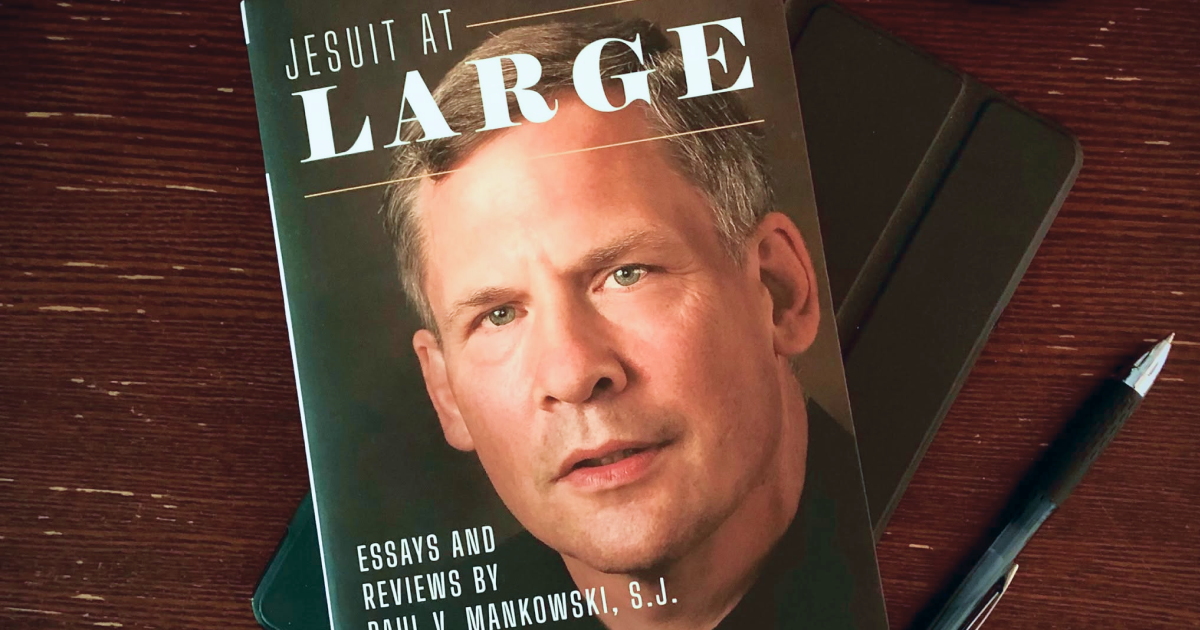



As we have just had the feast of St Ignatius of Loyola, it seems fitting to pay tribute to one of his most loyal sons. In the public imagination, the Society of Jesus has become associated less with missionary zeal than with political progressivism, doctrinal subtlety and ecclesiastical scandal. Yet amidst this turmoil was a Jesuit at once honest and faithful, a man whom many Catholics have never heard of, precisely because he spent much of his priesthood being marginalised by his own order. Fr Paul Mankowski SJ (1953–2020) embodied the qualities St Ignatius prized above almost everything else: intellectual excellence, fearless devotion to truth, indifference to reputation and a willingness to suffer quietly for the good of the Church.
Paul Mankowski entered the Society of Jesus in 1976 at the age of 22. By 1988 he had earned an MA in classics from Oxford and a Master of Divinity and Licentiate in Sacred Theology from Weston Jesuit School of Theology, and had been ordained to the priesthood. He was widely regarded as one of the brightest young Jesuits of his generation and seemed destined for a distinguished academic career. He would go on to receive a PhD in comparative Semitic philology from Harvard University in 1997. Had he entered the Society in another era, he might simply have become one of its leading scholars. Instead, he entered one of the most turbulent periods in Jesuit history.
The decades following the Second Vatican Council witnessed extraordinary upheaval throughout the Church. Amid genuine desires for renewal came what many described as the “spirit of Vatican II” – a mentality that often went well beyond the Council’s actual texts. Vocations declined sharply, religious life underwent dramatic experimentation and long-settled theological questions were reopened. Across Europe and North America, prominent Catholic theologians questioned or openly dissented from Church teaching on contraception, priesthood, sexual ethics, Christology and the authority of the Magisterium. The Society of Jesus, long regarded as the Church’s intellectual spearhead, found itself at the centre of many of these debates.
Mankowski saw through the airs of intellectual sophistication to what he believed was, at heart, a crisis of faith. Alongside his formidable scholarship, he proved to be one of the finest Catholic essayists of his generation. His prose combined rigorous argument with devastating wit, exposing theological confusion without ever sacrificing precision. He argued that Catholic doctrine was something received rather than reinvented and criticised theologians who treated settled teaching as endlessly negotiable. His essays – many of which have since been collected in Jesuit at Large: Essays and Reviews by Father Paul V. Mankowski, S.J. and Diogenes Unveiled – display a rare combination of erudition, clarity and humour.
That humour was one of his defining characteristics. Friends recalled that his private correspondence was even funnier than his published work. Even in small observations he could reveal something profound. Reflecting on his preference for wearing clerical dress, he once quipped: “Personally I’ve never trusted a priest who wasn’t at least a little bit seedy.” This is characteristic of Mankowski: self-deprecating, dry and entirely free of pretension.
As his reputation grew, so too did the discomfort he caused. His essays were precise, fearless and increasingly difficult for some within the Society to ignore. The turning point came when, through painstaking archival research, Mankowski uncovered evidence that senior Jesuit officials had frustrated efforts by Fr Pedro Arrupe, the superior general of the Society of Jesus, to remove Fr Robert Drinan SJ from Congress after his persistent support for legal abortion. For Mankowski, the issue was not simply political. It concerned obedience – the very virtue at the heart of Ignatian spirituality. A Jesuit priest had remained one of America’s most prominent pro-abortion legislators while ecclesiastical authority appeared to have been circumvented rather than obeyed.
The consequences for Mankowski were severe. He was forbidden from publishing under his own name without prior approval from his superiors, forcing him to write anonymously or under the pseudonym “Diogenes”. Much of his public ministry became constrained. He did not profess final vows until 2012, 36 years after entering the Society, an unusually long delay that friends and colleagues have read as a mark of the friction with his superiors. He died eight years later. There is an irony almost too striking to invent: the man who had devoted himself to exposing failures of obedience found himself accused of disobedience by the very order whose founder had made obedience one of its defining charisms.
Yet Mankowski never left the Society. He never renounced his vocation, never abandoned his vows and never ceased identifying himself as a son of St Ignatius. He accepted restrictions that many would have regarded as deeply unjust, continuing to serve the Church quietly through scholarship, pastoral ministry and friendship. As George Weigel described him, he was “one of the finest Jesuits of his generation”. The judgement seems only to have grown stronger with time.
That paradox is what makes Fr Paul Mankowski such an important figure. He was not merely a critic of the post-conciliar Church; he was a Jesuit who believed authentic reform could never come at the expense of truth. He fought vigorously for doctrinal clarity, intellectual honesty and fidelity to the Church, accepting the personal cost that such convictions demanded.
Fr Paul Mankowski never became a bishop, a provincial, a university president or a Vatican official. His legacy is found instead in the countless Catholics who discovered, through his essays and his example, that fidelity and intellectual seriousness belong together. He demonstrated the very qualities St Ignatius hoped to instil in every Jesuit: disciplined character, rigorous scholarship, courageous charity and complete devotion to Christ.
He could certainly write sharply, and some considered him unnecessarily provocative. But even his critics rarely questioned either his learning or his sincerity. The affection so many people continue to feel for Fr Mankowski arises not simply from his intellect but from the courage his integrity required. In the wake of the feast of St Ignatius, it is worth remembering that one of the Society’s most faithful sons was also one of its most overlooked. May we follow both men in proclaiming the truth with courage, humility and charity.