
February 19, 2026

Holy See declines to join Board of Peace

The Catholic Herald
More
Related
No items found.
Min read
share

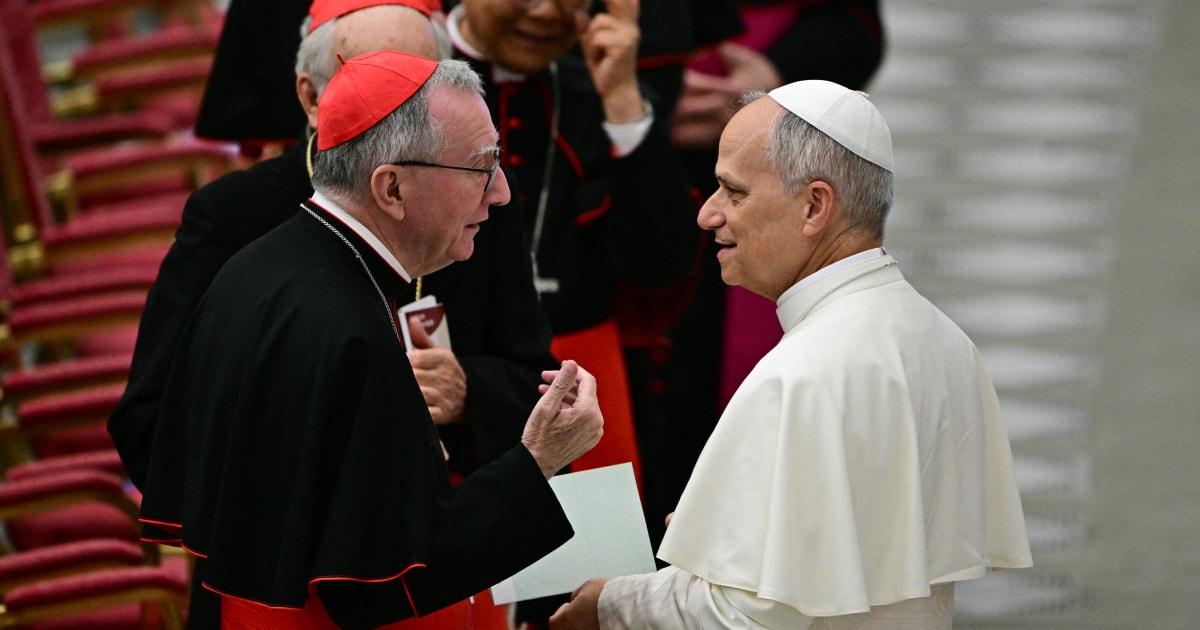
Cardinal Pietro Parolin has said that the Holy See will not take part in the Board of Peace, the international body promoted by US President Donald Trump to address conflicts including the war in Gaza.

The Vatican Secretary of State made the announcement on 17 February on the sidelines of a bilateral meeting with the Italian Government at Palazzo Borromeo, the seat of the Embassy of Italy to the Holy See, marking the anniversary of the Lateran Pacts. The decision was confirmed as President Trump prepared to preside over the first meeting of the board in Washington on 19 February.
Cardinal Parolin said that the Holy See “will not participate in the Board of Peace because of its particular nature, which is evidently not that of other States”. On 21 January, the cardinal had indicated that the Holy See was evaluating the proposal. That discernment has now concluded with a decision not to join.

Responding to questions from journalists about Italy’s decision to participate in the Board of Peace as an observer, Cardinal Parolin acknowledged that there were elements of the initiative which prompted concern in the Vatican. “There are points that leave us somewhat perplexed. There are some critical points that would need to find explanations,” he said.

He added that while it was important that attempts were being made to respond to ongoing crises, “for us there are certain critical issues that should be resolved”.

Among the concerns raised by the Vatican Secretary of State was the role of the United Nations. “One concern is that at the international level it should above all be the UN that manages these crisis situations. This is one of the points on which we have insisted,” he said.

The Board of Peace was proposed by President Trump in September 2025 and formally established during the World Economic Forum in Davos in January 2026. It was subsequently referenced in United Nations Security Council Resolution 2803, which welcomed the board in connection with reconstruction efforts in the Gaza Strip and authorised it to deploy a temporary international stabilisation force.

According to its founding charter, the board is chaired for life by President Trump, who retains sole authority to invite member states, amend the charter and create or dissolve subsidiary bodies. More than 60 countries were invited to join, with 25 reported to have signed the charter to date. Among those announcing participation are Argentina, El Salvador, Paraguay, Belarus, Bulgaria, the United Arab Emirates, Hungary, Egypt and Morocco.

The first full meeting of the Board of Peace is scheduled to take place in Washington on 19 February at the Donald J. Trump US Institute of Peace. Representatives from more than 45 nations are expected to attend.

US officials have indicated that participating countries have pledged $5 billion towards a Gaza reconstruction fund, including contributions of $1.2 billion each from the United Arab Emirates and Kuwait. The fund is intended as an initial instalment towards a much larger reconstruction effort following the devastation of the Gaza conflict.

Senior American officials have also said that several nations are preparing to contribute troops to an International Stabilisation Force envisaged under the board’s framework. The force would be tasked with maintaining security in Gaza once conditions allow.

Cardinal Parolin’s comments came as the fourth anniversary of the outbreak of the war in Ukraine approaches. “Regarding Ukraine, there is considerable pessimism,” he said. “On both sides it does not seem to us that there are real advances regarding peace, and it is tragic that after four years, we still find ourselves at this point.”

The Vatican has repeatedly called for dialogue and negotiation, while maintaining humanitarian engagement through its diplomatic and charitable channels.

At the bilateral meeting in Rome, Cardinal Parolin also emphasised the positive state of relations between the Holy See and Italy. He said there had been “above all an expression of thanks” from the Holy See for the attention given by the Italian Government to issues close to the Church’s heart.

Cardinal Pietro Parolin has said that the Holy See will not take part in the Board of Peace, the international body promoted by US President Donald Trump to address conflicts including the war in Gaza.

The Vatican Secretary of State made the announcement on 17 February on the sidelines of a bilateral meeting with the Italian Government at Palazzo Borromeo, the seat of the Embassy of Italy to the Holy See, marking the anniversary of the Lateran Pacts. The decision was confirmed as President Trump prepared to preside over the first meeting of the board in Washington on 19 February.
Cardinal Parolin said that the Holy See “will not participate in the Board of Peace because of its particular nature, which is evidently not that of other States”. On 21 January, the cardinal had indicated that the Holy See was evaluating the proposal. That discernment has now concluded with a decision not to join.

Responding to questions from journalists about Italy’s decision to participate in the Board of Peace as an observer, Cardinal Parolin acknowledged that there were elements of the initiative which prompted concern in the Vatican. “There are points that leave us somewhat perplexed. There are some critical points that would need to find explanations,” he said.

He added that while it was important that attempts were being made to respond to ongoing crises, “for us there are certain critical issues that should be resolved”.

Among the concerns raised by the Vatican Secretary of State was the role of the United Nations. “One concern is that at the international level it should above all be the UN that manages these crisis situations. This is one of the points on which we have insisted,” he said.

The Board of Peace was proposed by President Trump in September 2025 and formally established during the World Economic Forum in Davos in January 2026. It was subsequently referenced in United Nations Security Council Resolution 2803, which welcomed the board in connection with reconstruction efforts in the Gaza Strip and authorised it to deploy a temporary international stabilisation force.

According to its founding charter, the board is chaired for life by President Trump, who retains sole authority to invite member states, amend the charter and create or dissolve subsidiary bodies. More than 60 countries were invited to join, with 25 reported to have signed the charter to date. Among those announcing participation are Argentina, El Salvador, Paraguay, Belarus, Bulgaria, the United Arab Emirates, Hungary, Egypt and Morocco.

The first full meeting of the Board of Peace is scheduled to take place in Washington on 19 February at the Donald J. Trump US Institute of Peace. Representatives from more than 45 nations are expected to attend.

US officials have indicated that participating countries have pledged $5 billion towards a Gaza reconstruction fund, including contributions of $1.2 billion each from the United Arab Emirates and Kuwait. The fund is intended as an initial instalment towards a much larger reconstruction effort following the devastation of the Gaza conflict.

Senior American officials have also said that several nations are preparing to contribute troops to an International Stabilisation Force envisaged under the board’s framework. The force would be tasked with maintaining security in Gaza once conditions allow.

Cardinal Parolin’s comments came as the fourth anniversary of the outbreak of the war in Ukraine approaches. “Regarding Ukraine, there is considerable pessimism,” he said. “On both sides it does not seem to us that there are real advances regarding peace, and it is tragic that after four years, we still find ourselves at this point.”

The Vatican has repeatedly called for dialogue and negotiation, while maintaining humanitarian engagement through its diplomatic and charitable channels.

At the bilateral meeting in Rome, Cardinal Parolin also emphasised the positive state of relations between the Holy See and Italy. He said there had been “above all an expression of thanks” from the Holy See for the attention given by the Italian Government to issues close to the Church’s heart.

subscribe to
the catholic herald

Continue reading your article with a subscription.
Read 5 articles with our free plan.
Subscribe

subscribe to the catholic herald today

Our best content is exclusively available to our subscribers. Subscribe today and gain instant access to expert analysis, in-depth articles, and thought-provoking insights—anytime, anywhere. Don’t miss out on the conversations that matter most.
Subscribe