

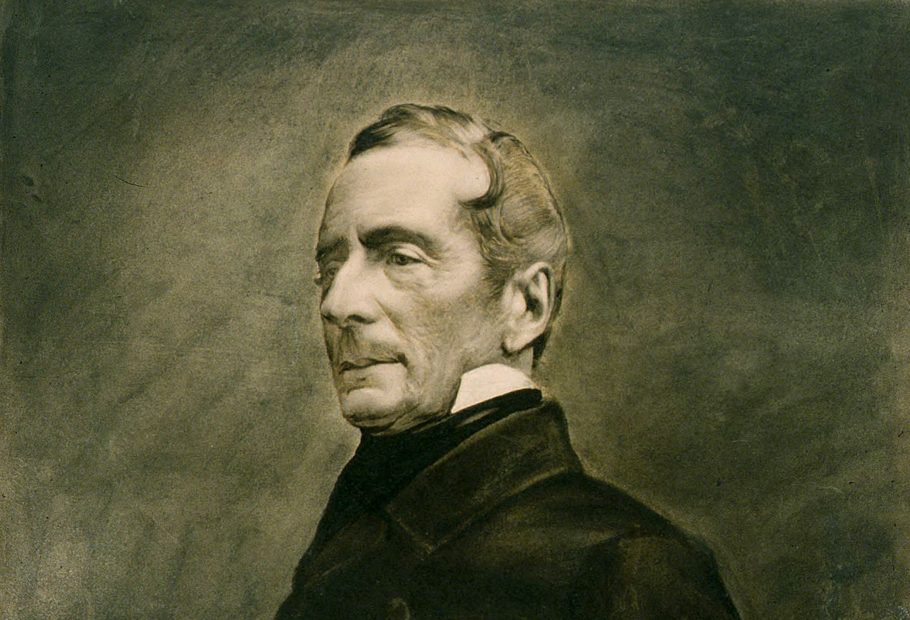
How did a much-esteemed French Catholic author ruin his career and reputation for piety? Alphonse de Lamartine (1790–1869) was a star of the early Romantic movement, appreciated for his lengthy poems and novels such as Graziella (University of Minnesota Press, 2018), typically mourning much-loved lasses who died young. Lamartine’s Romantic credentials were so strong that even today, when he is hardly read outside of academic assignments, Michel Houellebecq’s novel Serotonin (William Heinemann, 2019) termed him “basically only a kind of Elvis Presley; he had the ability to make the chicks melt”. Despite Houellebecq’s claim, Lamartine had more than just love songs to communicate. One of these, the long poem “Jocelyn”, would be put on the Vatican’s Index Librorum Prohibitorum (Index of Forbidden Books) in 1836. Cardinal Paolo Polidori (1778–1847), who drafted the fateful memorandum, granted that Lamartine’s earlier works had “shown much respect for religion”, but his latest productions “slid decidedly into the outrageous, bizarre, erratic, and doubtful in religious terms”. Where had Lamartine erred? “Jocelyn” told the tale of a young man who takes holy orders to provide a dowry for his sister, only to fall in love with a young woman. The subsequent goings-on, although chaste, were seen as an implicit argument for abandoning priestly celibacy. In the early 1800s, this was considered more shocking than another Lamartine work likewise placed on the Index, which merely expressed relative disenchantment with the Church. Travels in the East, a digressive effort almost 1,200 pages long in a recent paperback edition (Folio Gallimard) takes a comparative religion approach to touring the Holy Land. Lamartine was fascinated by the Maronites, an Eastern Catholic autonomous Church in full communion with the pope and the worldwide Catholic Church. Yet Travels in the East also expressed respect for Islam and its founder. In the book, the poet recalls how his pious mother taught him to read from a Royaumont Bible, a picture narrative first compiled for didactic purposes in 17th-century France. The engravings inspired young Lamartine to make a pilgrimage to the Holy Land in homage to his mother. Yet rather than reinforcing the simple faith of his past associated with maternal affection, the journey incited Lamartine to waver in his sense of belief, especially after his little daughter Julia, already suffering from tuberculosis, died en route. A poem included in Travels in the East, “Gethsemane: or the Death of Julia”, is intensely of its time, like all of Lamartine’s writings. His novel Graziella is much like a plot synopsis for an early Romantic ballet or opera, and his poems echo the unrestrained emoting of 19th century actors as heard on ancient recordings. For his contemporaries, most disconcerting was a sense that Lamartine distanced himself from the Catholic Church as an institution. In June 1835, Annales de philosophie chrétienne (Annals of Christian Philosophy) complained that an author once counted among staunch Catholics now expressed interest in Islam and the Quran:
2:44 PM
How a once-pious author ended up on the Index
Benjamin Ivry

4 min read



Already a subscriber? Sign in
5freearticles every month
Continue reading with a free account. No card needed.
- Five free articles every thirty days, on any device you sign in on
- The Catholic Herald newsletter, every morning
- Subscribe whenever you like for everything: every article and the magazine

subscribe to the catholic herald today
Our best content is exclusively available to our subscribers. Subscribe today and gain instant access to expert analysis, in-depth articles, and thought-provoking insights—anytime, anywhere. Don’t miss out on the conversations that matter most.
Subscribe



