




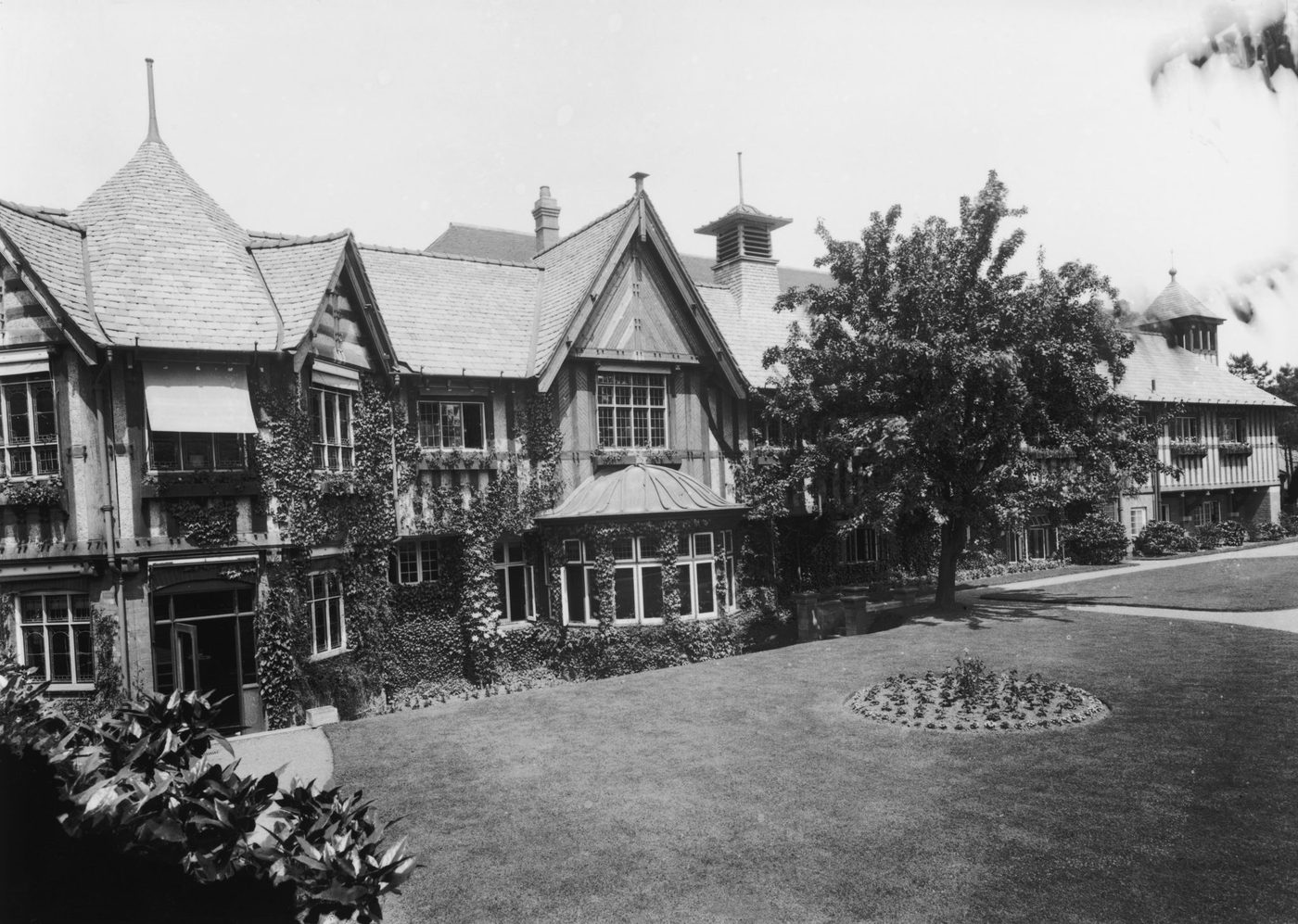
George Orwell’s Keep the Aspidistra Flying made a household plant synonymous with English suburbia. The aspidistra stood for everything pernicious, petty and pretentious about Middle England, about those with neither the unaffected simplicity of the workers, nor the effortless panache of “moneyed young beasts who glide so gracefully from Eton to Cambridge”. The lead character, Gordon Comstock, works in a bookshop which was based on the bookshop where Orwell worked in what was then a middle-class suburb, Hampstead. The class distinctions are also described in literary terms, with customers going for either lowbrow thrillers or highbrow novelists such as Virginia Woolf. Those in the middle want to seem sophisticated but aren’t. One Hyacinth Bucket-esque example, Mrs Penn (described as “middle-middle class”) poorly imitates the style of a literary review in her pronouncements. We are supposed to laugh at her when she grandly pronounces that the author of The Forsyte Saga, John Galsworthy, is “so universal, and yet at the same time so thoroughly English in spirit”. The aspidistra doesn’t have the same resonance today as it did in the 1930s. Perhaps another phenomenon with 1930s associations does: Mock Tudor architecture. This style recently made its way back into the British tabloids after the singer Liam Gallagher bought a Mock Tudor house in Highgate, and was mocked for being a “rock’n’roll hellraiser” in a house built in such a typically boring and suburban style. This style originated in the second half of the 19th century. One impressive early example is Cragside in Northumbria, which was billed as northern England’s Neuschwanstein. The style was associated with the Arts and Crafts movement, whose acolytes were attracted to the original Tudor use of handcrafted, organic material. Yes, this includes the black and white gables which are the first thing to come to mind when the style is mentioned. Originally – as with, for example, Anne Hathaway’s genuinely Tudor cottage near Stratford-upon-Avon – the panels were wattle and daub, painted white for waterproofing. The timbers were oak, containing tannic acid, which turns it black when mixed with the iron present in rainwater. Both the white and the black, then, depend for their existence on English rain. Mock Tudor is specifically English. It was supremely fashionable in the Edwardian explosion of suburban housebuilding, and then again in the 1930s expansion of the metropolis, hence the aspidistra associations. People looked back to the Tudor period because of their self-confidence in Englishness. They related to the high-water mark of the English Renaissance, and – particularly for the Edwardians – the first boisterous attempts at empire building (the East India Company was founded in 1600). The shop Liberty was built in 1924, with oak repurposed from HMS Hindustan and HMS Impregnable.
12:00 AM
In defence of Mock Tudor, a very English style
The supposedly ‘boring and suburban’ style reflects English self-confidence and a spirit of moderation, argues Jacob Phillips
Jacob Phillips

6 min read



Already a subscriber? Sign in
5freearticles every month
Continue reading with a free account. No card needed.
- Five free articles every thirty days, on any device you sign in on
- The Catholic Herald newsletter, every morning
- Subscribe whenever you like for everything: every article and the magazine


subscribe to the catholic herald today
Our best content is exclusively available to our subscribers. Subscribe today and gain instant access to expert analysis, in-depth articles, and thought-provoking insights—anytime, anywhere. Don’t miss out on the conversations that matter most.
Subscribe



