



April 30, 2026

In defence of nepotism

Delphine Chui
More
Related
Min read
share

I was at a dinner party recently when a bright, capable and ambitious friend leaned in to share news that she’s in the running for what she called her ‘dream job’. But almost as soon as she said it, she qualified the statement by telling me: ‘but it’s through my dad’.

What struck me wasn’t the fact that her father (a successful businessman) made an introduction and opened a door for her, but her apologetic embarrassment at the fact.

This discomfort is increasingly common. We live in a culture that prizes meritocracy so highly that any hint of ‘nepotism’ feels like a moral stain. We are told, implicitly and explicitly, that to be worthy we must be entirely self-made. This obsession with ‘earning your place’ means many people feel embarrassed to admit when family help them through a job connection, financial support or a step on to the property ladder. But what if so-called ‘nepotism’ is not a moral failure, but a reflection of healthy and good community ties and our deepest obligations to one another?

From a Catholic perspective, this instinct towards self-reliance is not just misguided, but reveals something deeply disordered in how we understand the human person.

The modern suspicion of nepotism stems from an exaggerated individualism; one that imagines us as autonomous units, detached from obligation, rising or falling solely on our own merit. Yet this is not how human life works, nor how it was ever intended to work. We are not self-created. We are born into families, networks of love, duty and responsibility that precede any personal achievement.

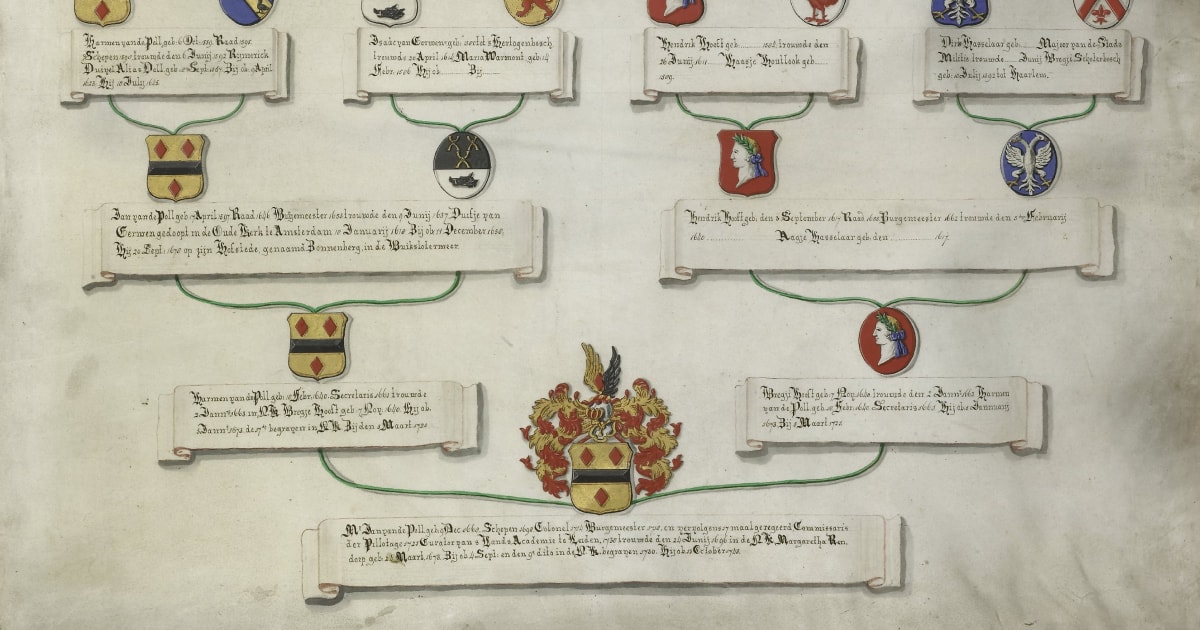
This tension is not new. A Göttingen professor writing in the 1760s complained that academic appointments involving sons-in-law should be treated ‘with suspicion’, insisting that marriage ought not to become a pathway to professional advancement. Yet even he conceded that nepotism and intermarriage flourished regardless; an admission that family ties and opportunity have never been cleanly separable, however much the moralists wished otherwise.

Catholic anthropology begins here: not with the isolated individual, but with the person-in-relation. We are not self-created. It is the family, not the career or the market, that is the fundamental fabric of our society, and it is within the family that we first receive everything: life, care, formation and often opportunity. To insist that these gifts must never advantage us is incoherent because helping one’s children is not corruption, but love expressed through responsibility.

The Fourth Commandment (to honour one’s father and mother) is often understood as a duty flowing upward. But it also implies a structure of mutual care that flows outward across generations. Parents are called not only to raise their children but to provide for them, guide them and, where possible, set them up for success through catechism, education, connections and, yes, sometimes opportunities others may not have. In this light, surely what we now call ‘nepotism’ can be better understood as fidelity to one’s natural obligations.

Of course, there are abuses and it would be naïve to pretend otherwise. It is right to condemn when positions are given to the unqualified, when justice is denied to others in favour of personal loyalty and when institutions are hollowed out by favouritism. But here the sin is not in helping your son, but in wronging your neighbour – yet we have collapsed these distinctions.

Today, even modest forms of familial support – an introduction, a recommendation or help with a deposit – are treated with suspicion. The idea of a pure meritocracy is, in truth, a myth. No one succeeds alone. Every achievement rests on a foundation laid by others, including family, community and circumstance. To single out family assistance as uniquely unjust is not a defence of fairness but a selective blindness.

What is really at stake is our understanding of inheritance. Modern culture often treats each generation as though it should begin from scratch, as though the moral ideal is a kind of perpetual reset. But this is not how human flourishing works. A healthy society is one in which goods (material, cultural and spiritual) are handed down, built upon and stewarded across time.

Generational wealth, in this sense, is not inherently greedy. It can be an expression of prudence and even charity: a way of ensuring stability, enabling opportunity and fulfilling one’s duty to those entrusted to one’s care and stewardship. The question is not whether we pass things on, but how we do so, and whether we remain attentive to justice beyond our immediate circle.

A well-ordered Christian vision of inheritance is not rooted in ruthless individualism or closed tribalism, but in love beginning with those closest to us and, crucially, never stopping there.

My friend at the dinner party had nothing to be ashamed of. She was not cheating the system but rather participating in one of the most basic human realities: that families help their own. The real tragedy would be if her father, able to help, chose not to out of some abstract commitment to appearing ‘fair’.

We should be far more concerned about a world in which no one feels responsible for anyone else. In the end, the problem is not that families pass on advantages; it is that we have forgotten why they should, and how to do so justly.

Continue reading with a free account

Create a free account to read up to five articles each month
Create free account

You have # free articles remaining this month.

Subscribe to get unlimited access.
Sign up

subscribe to the catholic herald today

Our best content is exclusively available to our subscribers. Subscribe today and gain instant access to expert analysis, in-depth articles, and thought-provoking insights—anytime, anywhere. Don’t miss out on the conversations that matter most.
Subscribe