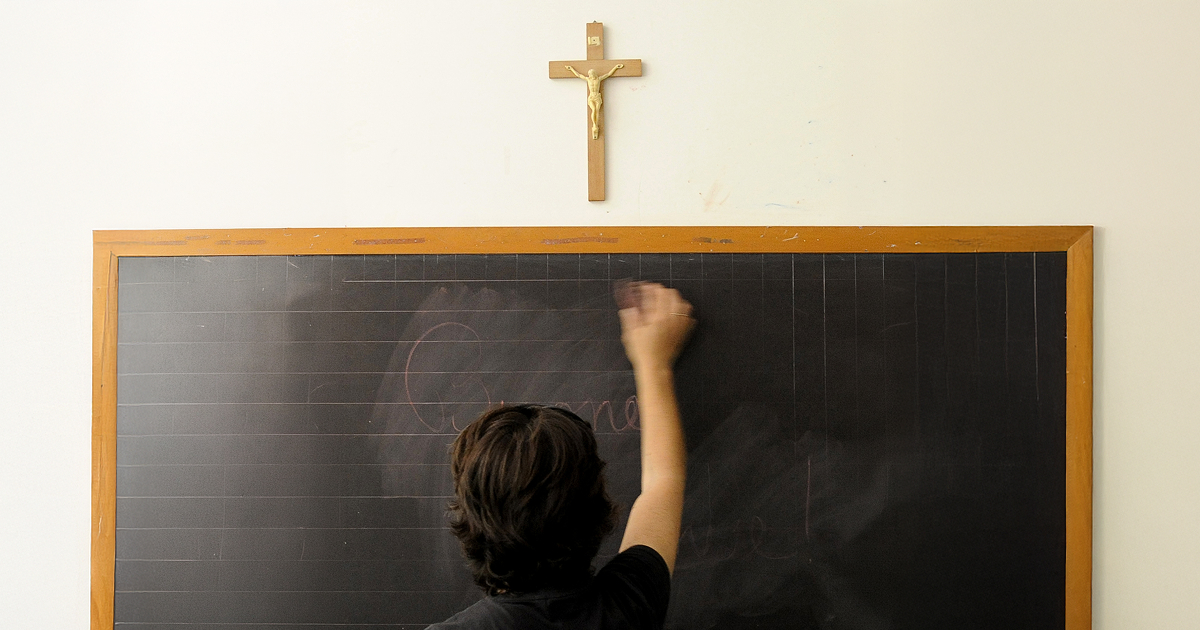


A directive issued by the Israeli Ministry of Education threatens to bar hundreds of Christian Palestinian teachers from working in Jerusalem’s historic Church-run schools.
Letters sent to school principals stipulate that, from September, teaching staff must both reside in Jerusalem and hold Israeli-recognised qualifications. In practice, the measure excludes Christian educators living in the West Bank, many of whom have for years commuted under a permit system that allowed them to work in the city’s 15 Christian schools.
The move follows legislation advanced last year by the Education Committee of the Knesset aimed at restricting the employment of Palestinian teachers trained in West Bank institutions. The policy now appears set to be enforced administratively, with work permits no longer issued to those affected, even when they hold documentation previously allowing access to Israeli-controlled areas.
According to Aid to the Church in Need, nearly 230 teachers could lose their posts. The immediate effect, school leaders warn, would be acute disruption across a network that has long depended on a cross-border workforce. Spread across the system, the shortfall would amount to roughly a dozen teachers per school, placing strain on staffing and continuity of teaching.
A representative of the General Secretariat of Christian Schools in the Holy Land said the consequences could prove structural rather than temporary: “If this decision is truly implemented, our Christian schools will find themselves in a very difficult position, which will jeopardise their sustainability and cause them to lose their Christian mission.”
The difficulty also lies in the limited pool available within the city itself. “There are not enough Christian teachers in Jerusalem to take over,” the same representative added, warning that over time the restrictions “risk permanently affecting the Christian character of our institutions and weakening the Christian faith and presence in the city.”
Christian schools in Jerusalem, many founded in the late 19th century by Latin, Eastern Catholic and Orthodox communities, have long served as both educational institutions and instruments of communal continuity. They educate not only Christian pupils but large numbers of Muslim students, and are widely regarded as among the most stable interreligious environments in the city.
The present dispute follows an earlier confrontation at the beginning of the academic year, when permits for more than 170 West Bank teachers were delayed. A week-long strike across Christian schools ensued before the authorities restored access. At the time, the schools denounced what they described as “arbitrary measures” and insisted that the ability of teachers to reach their workplaces constituted “a fundamental right that cannot be compromised”.
Critics of the current policy argue that the blanket nature of the restriction undermines its stated rationale. The Palestinian commentator Daoud Kuttab described similar measures earlier this year as a form of “collective punishment”, noting that they apply indiscriminately rather than targeting specific security concerns. Church-affiliated bodies in the region have likewise pointed to international legal frameworks, arguing that such restrictions conflict with established protections governing occupied territories.
Church authorities have indicated that they are pursuing both legal and diplomatic avenues. Contacts have been made with officials in Israel, while appeals are also being directed to the Holy See and international partners with influence in the region. “The Church will not abandon them in these difficult circumstances,” the schools’ representative said, adding that efforts to engage the authorities continue despite limited progress.
One official of the Latin Patriarchate observed in a separate interview: “targeting schools is targeting the future”.