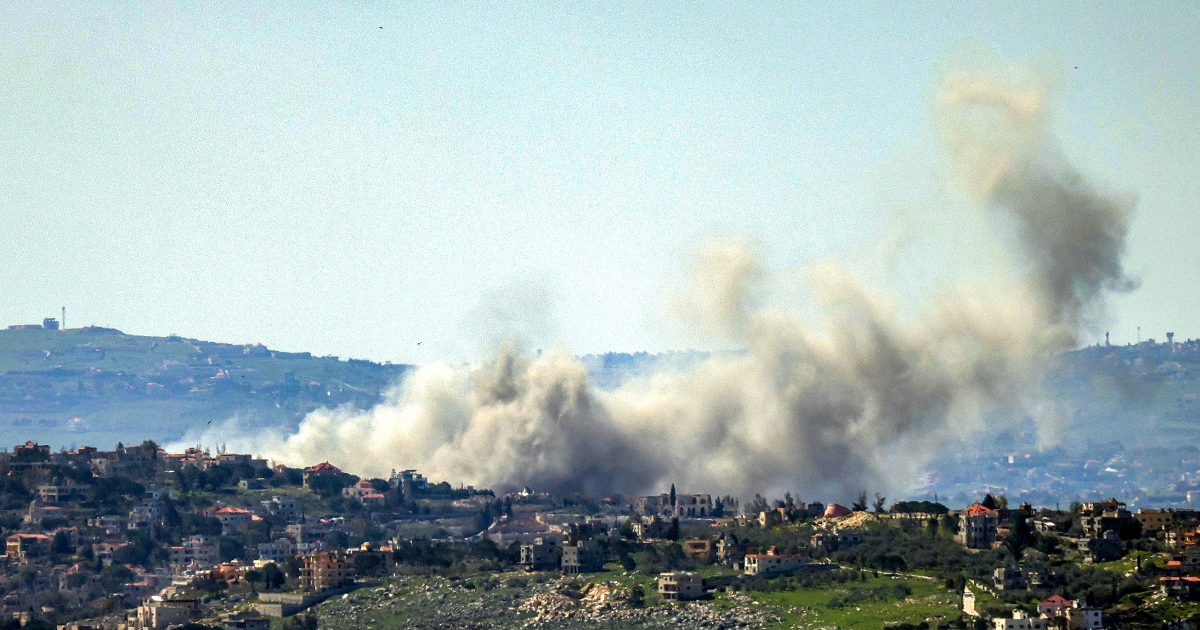


Israeli settlers renewed their assault on Taybeh on June 9, 2026, the last entirely Christian town in the occupied West Bank, setting agricultural fields ablaze, hurling Molotov cocktails at homes, attempting to burn a petrol station and opening fire on residents in the latest escalation of violence that Church leaders warn threatens to extinguish the ancient Christian presence in the Holy Land.
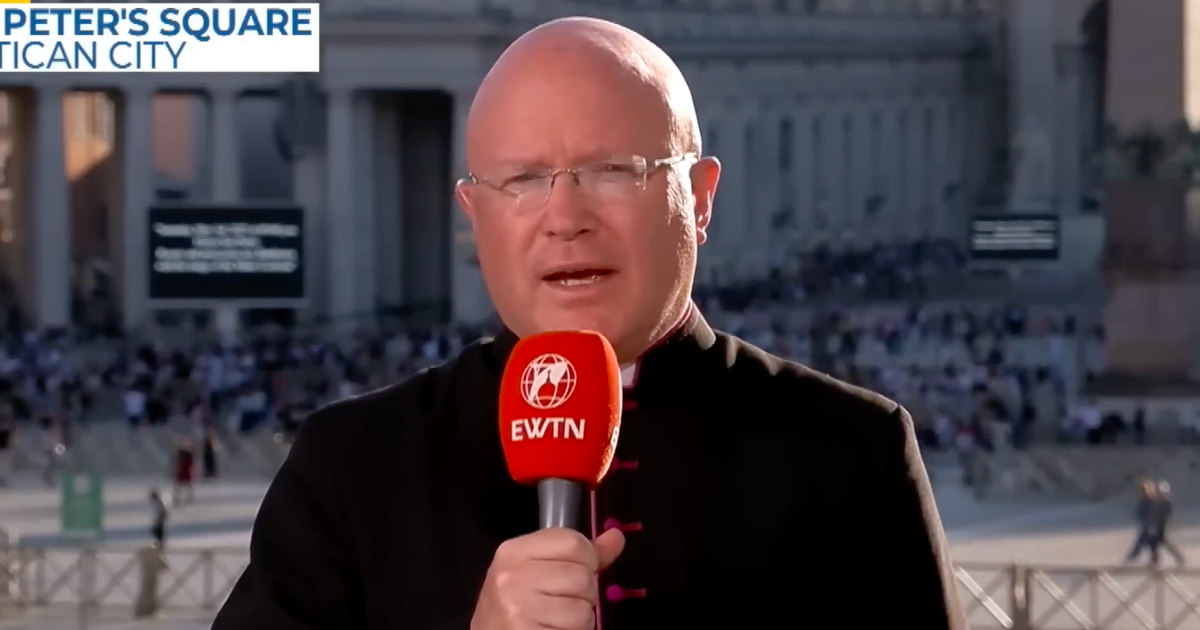
Alexandrya Pouliot, Middle East projects manager for the Vulnerable People Project, who returned from the town in late May 2026, reported on The Jason Jones Show that fear is now a constant reality. “The fear is palpable and the air is heavy with a sense of coming threat,” she said.
Fr Bashar Fawadleh, parish priest of the Church of Christ the Redeemer, told visitors and local media: “We do not live in peace but in daily fear and siege.” In the recent attack, fires surrounded the village as settlers allegedly blocked firefighters, while Israeli forces fired stun grenades during a raid.
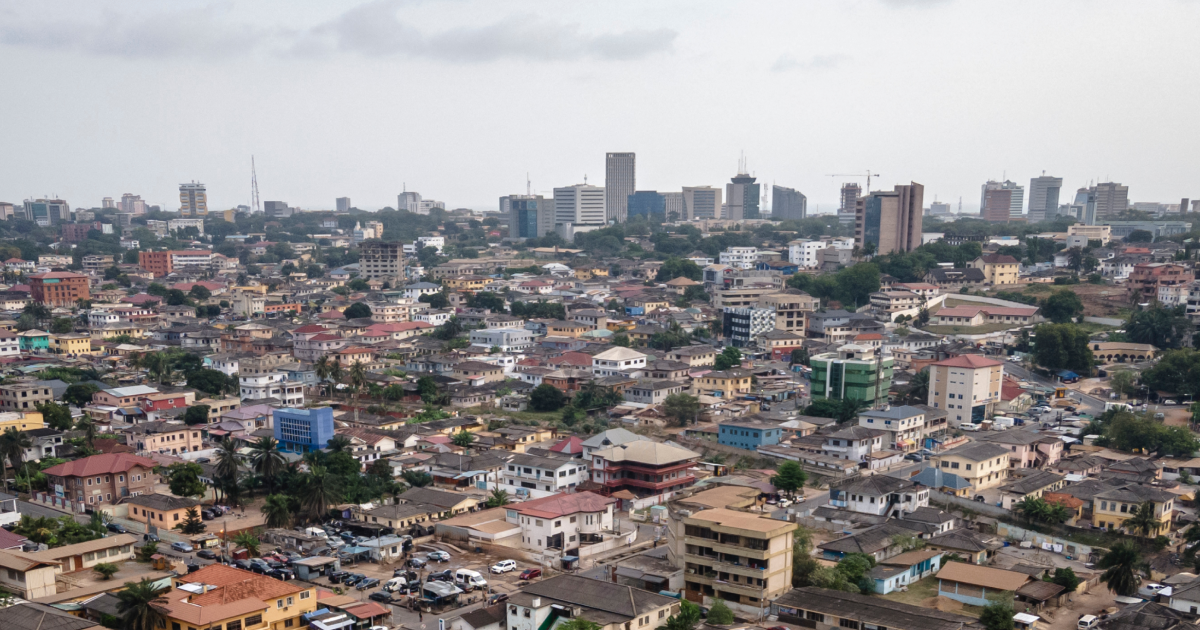
Taybeh, identified in the Gospel of John (11:54) as the biblical Ephraim where Our Lord withdrew before his Passion, has stood as a Christian centre since apostolic times. Its 1,300-1,500 residents, primarily Latin Catholic, Greek Orthodox and Melkite, have survived successive empires and occupations. Yet Fr Fawadleh and residents told Pouliot they fear that without firm diplomatic pressure, above all from the United States, the Christian presence rooted in this soil for two millennia could disappear within a generation.
The demographic collapse across Palestinian Christian communities is severe. Christians formed around 10 per cent of the population in the West Bank and Gaza in 1948. They now constitute barely one to two per cent. Bethlehem, the birthplace of Christ, has fallen from an 85 per cent Christian majority to roughly 10-15 per cent. In the West Bank, the Christian population stands at approximately 45,000-47,000 out of more than three million. Emigration from Taybeh has accelerated amid repeated violence, land loss and economic pressure.
Pouliot and Jason Jones documented direct pressures during their visit. The IDF attempted to halt a Marian festival, deploying a stun grenade until Cardinal Pierbattista Pizzaballa, Latin patriarch of Jerusalem, intervened. Pouliot witnessed five armoured vehicles and 13 soldiers at the Taybeh Brewery. One IDF soldier told a Palestinian woman: “We are the new Jew. You don’t know us yet, but we can do whatever we want.”
Pouliot has been careful to stress the importance of what she describes as an “Arab Christian bridge” between the Occident and Orient which the besieged Christian communities represent. This bridge, she explains, is “at once religious, strategic, political and historic”.
Pouliot and Jones both emphasise the strategic, symbolic and spiritual role that such ancient Christian communities serve. Arab Christians, indigenous to the region and fluent in and familiar with its languages, literature and history, are bound to the West by shared Scripture and ancient faith – yet simultaneously share significant mutual cultural understanding with the East. Christian scholars in Abbasid Baghdad preserved Greek philosophy for Europe. In the West Bank, despite tiny numbers, they have founded an estimated 40 per cent of NGOs and civil society institutions. Their potential loss, Pouliot argues, weakens prospects for diplomatic understanding and genuine peace while also representing a failure to protect the Church’s living witnesses in the land of its birth.
“If nothing changes,” she added, “there will be no Christians left at all. Without serious diplomatic pressure, specifically from the United States, to halt the new settler movements, the Christian presence in the Holy Land will be gone within our lifetime.”
Residents identify the Hilltop Youth – radical settler activists rooted in Kahanism, the ideology of Rabbi Meir Kahane advocating Arab expulsion – as the primary immediate threat. New outposts established around Taybeh as recently as April 2026 have intensified attacks, including arson on crops and vehicles, stone-throwing at homes, livestock theft and Hebrew graffiti. In July 2025, masked settlers on horseback set fires near the 5th-century Church of St George and its cemetery. Palestinian activist Ihab Hassan reported residents “terrified” as fires raged and shots were fired at homes and civilians. Violence has escalated sharply.
By April 2026, settlers had injured around 360 Palestinians in the first months of the year – nearly matching full annual totals for 2023 and 2024. UN figures show a 54 per cent rise in injuries and more than a fourfold increase in displacement linked to settler attacks compared with 2025 averages. Additionally, a March 2026 UN Human Rights Office report recorded 1,732 settler violence incidents in a 12-month period and the forcible displacement of more than 36,000 Palestinians. On top of this, some 38 communities have been entirely emptied since 2023.
In a worsening trend, recent OCHA data confirm an average of six settler attacks per day in 2026.
While some senior Israeli figures have publicly condemned “Jewish terror”, including former prime minister Ehud Olmert, Shin Bet chief Ronen Bar and former defence minister Moshe Yaalon, enforcement remains limited.
Israeli human rights groups such as Yes Din and B’Tselem report that more than 90 per cent of settler violence complaints result in no indictment. Many outposts, illegal even under Israeli law, continue to receive state infrastructure, subsidies and protection, with soldiers frequently observed standing by or shielding attackers. National Security Minister Itamar Ben-Gvir, a settler with documented past ties to Kahanist groups, holds significant influence in the current coalition. A climate of impunity nevertheless prevails. UN inquiries state Israeli authorities often shield settlers, with forces providing protection during attacks.
Public condemnations of this violence from the Israeli camp are growing, but to negligible effect. Former prime minister Ehud Olmert wrote in Haaretz: “Crimes are committed on a daily basis … by rioters who are Israeli citizens, Arab haters, with the clear intention of expelling them from their homes.” Ronen Bar, chief of Shin Bet, Israel’s internal intelligence agency, warned of “Jewish terror” causing “indescribable damage”. Former defence minister Moshe Yaalon was similarly strong in his language – speaking of “Jewish pogromists” and “Jewish supremacy” ideology that “reminds one of Nazi racial theory”, turning the nation towards “Judeo-Nazis”. Parliamentarian Meirav Cohen told the Knesset of premeditated village attacks, burned orchards and failure to arrest perpetrators.
US Ambassador Mike Huckabee visited Taybeh in July 2025 after advocacy by Jason Jones and denounced the violence as “terror”, demanding prosecutions. Attacks have continued.
The Heads of Churches in Jerusalem, meanwhile, spanning Greek Orthodox, Latin, Armenian, Coptic and Syriac traditions, have condemned the “climate of impunity” with rare unity. They identify settlement expansion as the main driver of Christian flight. Cardinal Pizzaballa has intervened directly to protect religious events. Fr Fawadleh has appealed for global Christian solidarity, urging the world not to allow Palestinian Christians to become “a memory of the past”.
Pouliot highlighted the contradiction for Christians in the West: a nation with a Christian heritage underwriting policies that contribute to the erasure of the oldest Christian communities. The post-2003 exodus of Iraq’s Christians – from roughly 1.5 million to fewer than 250,000 – stands as a stark precedent.
In Taybeh, families continue to replant scorched olive groves, celebrate the Divine Liturgy and maintain their parishes under threat. Yet residents told Pouliot they do not know how many more years they can hold. The latest attacks, torching fields that sustain the community and firing on homes, place the endurance of the Christian Palestinian presence under severe strain.