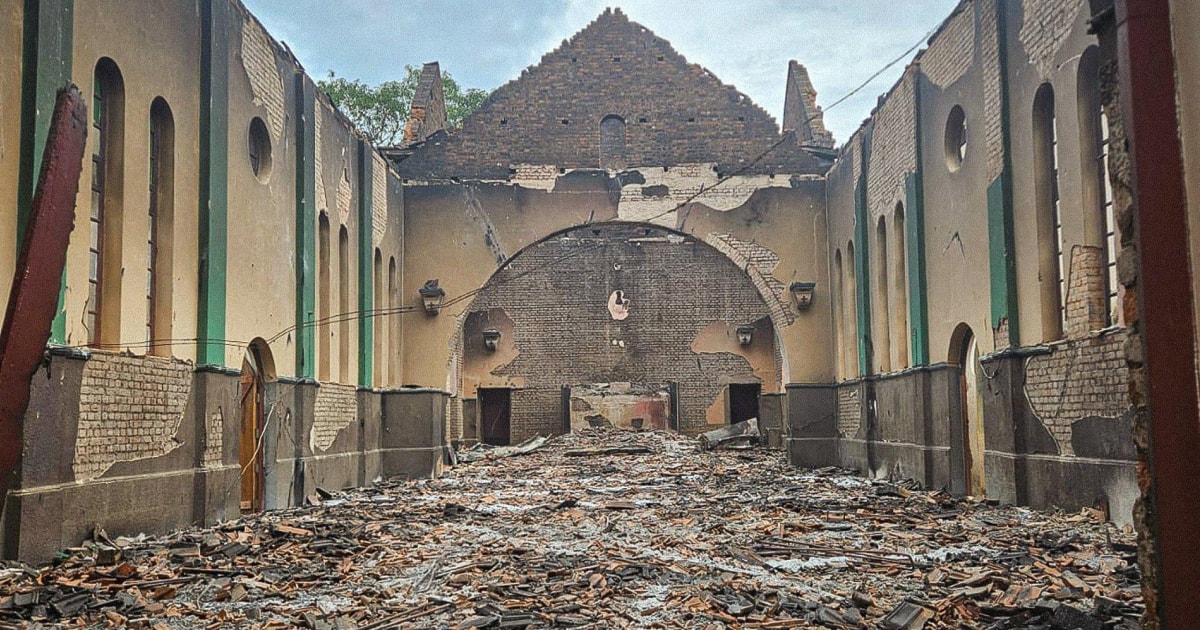



A historic Catholic church in northern Mozambique has been destroyed in an attack blamed on extremists linked to Islamic State, in the latest sign of the continuing fragility of Christian life in Cabo Delgado. The church of St Louis de Montfort in Meza was attacked on April 30, according to reports by Aid to the Church in Need.
The assault is said to have destroyed the church itself, along with parish offices and the residence used by the Piarist missionaries serving the community. A church-run kindergarten was also vandalised. Bishop António Juliasse Ferreira Sandramo of Pemba described the aftermath as “a scene of terror”, saying homes and infrastructure had been destroyed and that civilians were forced to watch and listen to speeches of hatred.
The church, founded in 1946, held particular significance for Catholics in the largely Muslim northern province. ACN reported that the missionaries attached to the parish are safe, but that the local community remains badly shaken. Bishop Juliasse appealed for solidarity from Catholics around the world, saying that although churches and chapels had been burned for years, the faith of the people would not be extinguished.
Conflict monitors have indicated that the attack fits a broader insurgent pattern. The Armed Conflict Location & Event Data project has said Islamic State-Mozambique claimed responsibility on May 1. ACLED described the assault as unusual in part because church attacks account for a relatively small share of violent incidents in the region, suggesting that this one was likely designed to attract international attention.
The wider background is grim. Islamic State-Mozambique has waged a sustained campaign of violence in Cabo Delgado since 2017, targeting both Christians and Muslims and destroying churches, mosques and other religious sites. The commission also noted that over the past two years the group has focused a number of attacks on Christian-majority areas of the province.
For the Diocese of Pemba, the destruction in Meza is part of a longer pattern of organised pressure on Catholic communities. The latest attack underlines again the vulnerability of Christian institutions in a region where insecurity, displacement and fear have become part of daily life, even as the Church continues trying to serve both the faithful and the wider population.


.jpg)
.jpg)
.jpg)
.jpg)
.jpg)