


May 9, 2026

King Charles praises Pope Leo on first anniversary

James Bradbury
More
Related
Min read
share

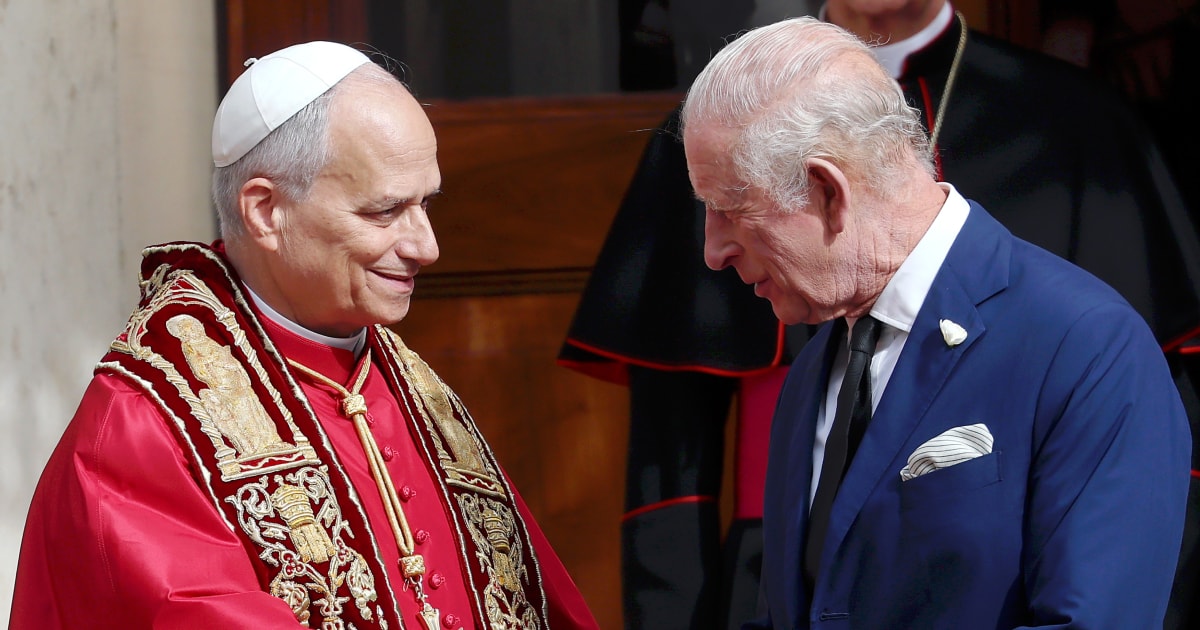
King Charles III has sent a message of congratulations to Pope Leo XIV marking the first anniversary of the Pontiff’s election, praising the “enduring friendship” between the United Kingdom and the Holy See.

In the official communication, the King reflected on his and Queen Camilla’s state visit to the Vatican in October 2025, during which they met Pope Leo shortly after the beginning of his pontificate. His Majesty also reaffirmed his commitment to closer cooperation between the two states and churches.
“This day serves as a valued opportunity to reflect upon the enduring friendship between our nations,” the King wrote. Recalling the Vatican meeting, he said that he and the Queen remembered “with great fondness” their encounter with the Pope, describing it as “a moment of great significance for us both personally and for the relationship between our respective nations and faiths”.

The King added that he was “deeply encouraged by the strength of our bilateral ties” and remained committed to “fostering even closer cooperation in the years to come”.

The letter emphasised areas of cooperation that have become increasingly prominent in relations between Buckingham Palace and the Holy See in recent years, including environmental stewardship, interfaith cooperation and international peacebuilding.

Charles praised Pope Leo’s advocacy on environmental questions, writing that humanity had obligations to future generations and describing mankind as “guardians of our precious planet” living in “Harmony with God’s creation”. He also expressed the hope that “the wisdom of religion and the knowledge of science” would help humanity pursue “enlightened and transformative action in the pursuit of peace”.

The King and Queen concluded by assuring the Pope of their “prayers for peace, prosperity and wellbeing in the year ahead”.

The message marks the latest stage in an increasingly warm relationship between the British monarch and the Vatican during Leo XIV’s first year as Pope.

Charles and Camilla’s State Visit to the Holy See in 2025 was widely regarded as historically significant, not least because the King is Supreme Governor of the Church of England. During the visit, the King and Pope took part in an ecumenical act of prayer in the Sistine Chapel — the first between a British sovereign and a reigning Pope — described by Vatican and royal officials as an important symbolic moment in relations between the Anglican Communion and the Catholic Church.

The King and Pope also exchanged rare honorary distinctions intended to symbolise the growing closeness between the Crown and the Holy See. Charles was received as a Royal Confrater of the Papal Basilica of Saint Paul Outside the Walls, one of the four major papal basilicas in Rome, while Pope Leo XIV was enrolled as a Confrater of St George’s Chapel, Windsor.

The visit also emphasised areas of practical cooperation between the United Kingdom and the Holy See, including environmental protection, humanitarian concerns and conflict resolution.

Relations between the Crown and the Papacy have changed markedly over the past century. Formal diplomatic relations between the United Kingdom and the Holy See were restored in 1914 amidst the tribulations of the First World War, while recent decades have seen increasingly frequent meetings between Popes and British sovereigns.

Queen Elizabeth II met five Popes during her reign, beginning with Pope Pius XII in 1951 when she was still Princess Elizabeth. Charles himself met Pope John Paul II, Pope Benedict XVI and Pope Francis before becoming King.

Continue reading with a free account

Create a free account to read up to five articles each month
Create free account

You have # free articles remaining this month.

Subscribe to get unlimited access.
Sign up

subscribe to the catholic herald today

Our best content is exclusively available to our subscribers. Subscribe today and gain instant access to expert analysis, in-depth articles, and thought-provoking insights—anytime, anywhere. Don’t miss out on the conversations that matter most.
Subscribe