



Numb from a whole day of news on the mass murder in El Paso and Dayton, I was surprised by my eldest son’s suggestion that we watch together that 21st century classic: Steven Spielberg’s Minority Report (2002) based on the Philip Dick short story. My son had never seen it, and I hadn’t watched it since, well, 2002. But I immediately agreed to watch it with him because I remembered that the film was also on the question I’d been thinking all day: murder, and how to avoid it. The film is set in the nation’s capital in 2054 where a new “pre-crime” division has been established to stop murders before they happen. Twin males and a third female form a trio who together have extraordinarily detailed foreknowledge of murders — and only murders. The trio’s “pre-cognitive” powers have been harnessed, and the crime division built around them is led by Tom Cruise’s character, John Anderton. Early in the film, Anderton discovers that he himself will commit a murder in the future. Believing this to be impossible, the film revolves around Cruise’s character trying to prove his innocence, seeking “a minority report” — foreknowledge of a murder that disagrees with the foreknowledge recorded by either of the other two in the pre-cog trio. The film is thus not-so-subtly pitched as a philosophical reflection on the question of whether human (or divine) foreknowledge is determinative of our actions, regardless of the choices we make, or whether we still have a choice. In the heat of one potentially murderous scene, one of the pre-cogs, Agatha, repeatedly tells Anderton: “you have a choice.” Without ruining the film for the three people who haven’t seen it yet, let it suffice to say that in the dispute between Catholic free will and Calvinist determinism, the film sides with the Catholics, and Spielberg ends the film with a kind of reverence for the capacity of the human person to choose life when everything points us towards death and destruction. Yet our culture points us constantly towards death — and not only with guns. Abortion and physician-assisted suicide stand as antiseptic terms which veil a similar kind of determinism that hovers over everyday human decisions. Just as it is true that America has an abortion problem, it is true that “America has a gun problem.” In terms of lives lost, one is utterly disproportionate to the other. But they both flow from a more primordial problem about America we must face. It’s a problem that runs deeper than abortion clinics and automatic weapons. Augustine criticized everything about Rome, and he never gave any policy proposals to the Senate. He criticized Roman fertility cults which emasculated men, prostituted and debased women, and generally tended to cut people off from the source of life itself — both in natural and supernatural terms. Like Philip Dick’s insight into the human soul in “The Minority Report,” Augustine sees the impulse towards murder as fundamental to Rome’s malaise. Behind all of Rome’s spiraling moral decline, Augustine concludes, stands a primordial murder. Rome was built on a fratricide — Remus and Romulus, the twin brothers who founded Rome, argued over the founding of the city, and Romulus killed his twin brother, and named the city for his own glory (Roma). Rome didn’t have a gun problem, but they had the same problem we have in America: we are fratricidal. And that is not owing simply to something in the founding of Rome or America, but a fratricide prior to every nation, namely Cain and Abel whom Augustine calls “archetypes” for the city whose walls are “dripping with a brother’s blood.” In the fifteenth book of his De Civitate Dei, Augustine writes:
1:00 AM
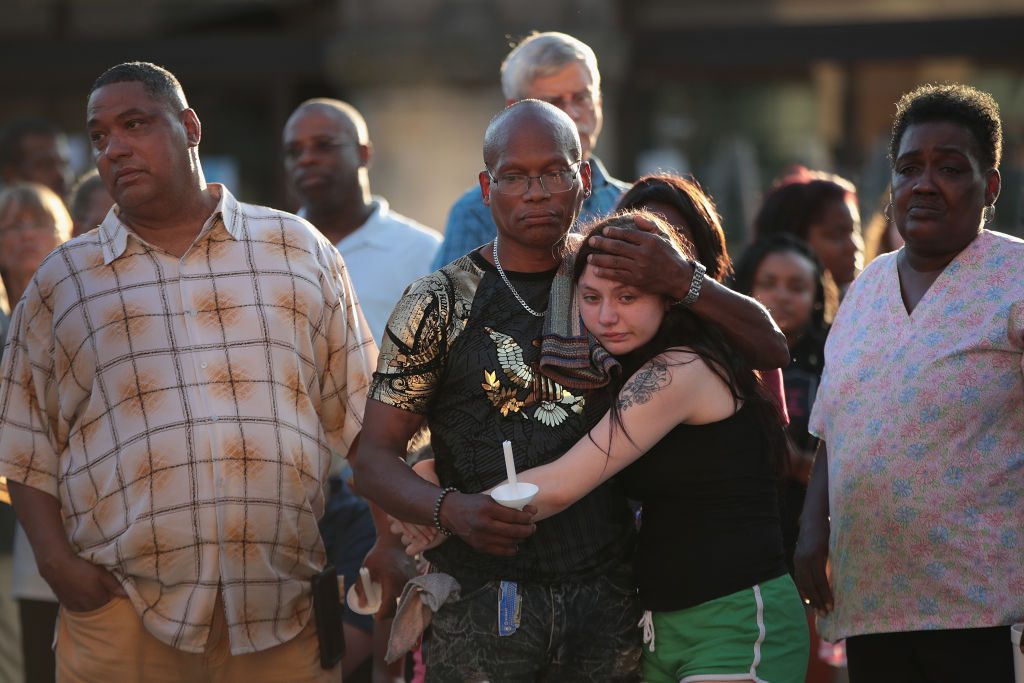
Like the Romans, Americans have become fratricidal
C C Pecknold

6 min read



Already a subscriber? Sign in
5freearticles every month
Continue reading with a free account. No card needed.
- Five free articles every thirty days, on any device you sign in on
- The Catholic Herald newsletter, every morning
- Subscribe whenever you like for everything: every article and the magazine
Related articles
 US News
US-Iran talks break down as Vance cites nuclear deadlock and Catholic voices urge peace
Marathon talks in Islamabad ended without an agreement after JD Vance said Washington had failed to secure assurances over Iran’s nuclear ambitions
The Catholic Herald US News
US dioceses report rise in Easter receptions into the Catholic Church
The Catholic Herald US News
US ambassador rejects claims over Vatican–Pentagon meeting
The Catholic Herald US News
US diocese suspends Sunday Mass obligation for those in fear of ICE raids
The Catholic Herald US News
Archbishop Cordileone endorses Singapore cardinal's defence of Latin Mass
The Catholic Herald
subscribe to the catholic herald today
Our best content is exclusively available to our subscribers. Subscribe today and gain instant access to expert analysis, in-depth articles, and thought-provoking insights—anytime, anywhere. Don’t miss out on the conversations that matter most.
Subscribe



