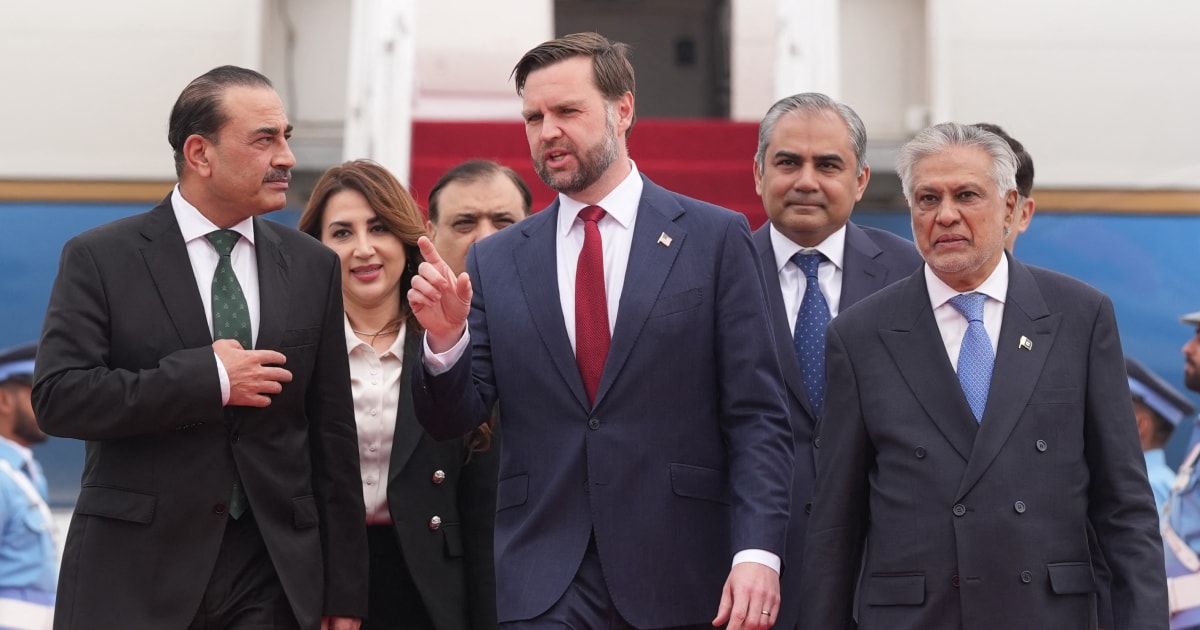


US-Iran negotiations in Pakistan ended without agreement on Sunday after a 21-hour session, with Vice President JD Vance saying the central obstacle remained Tehran’s refusal to give firm assurances that it would not pursue nuclear weapons.
Speaking in Islamabad after the talks, Vance said the outcome was “bad news for Iran” more than for the United States. He said the American side had engaged seriously, but had not obtained the commitment it regarded as essential on the nuclear question.
Vance said Washington required an unequivocal undertaking that Iran would neither seek a nuclear weapon nor retain the means to acquire one rapidly. He added that the US delegation believed it had put forward its strongest offer and would now wait to see whether Tehran responded.
Iran, for its part, has long maintained that its nuclear programme is intended for civilian purposes.
The meeting in Pakistan followed weeks of confrontation that began in late February and was followed by a precarious two-week ceasefire due to run until April 22. With no breakthrough in Islamabad, uncertainty now hangs over whether that truce can hold.
Pakistan’s Foreign Minister, Ishaq Dar, nevertheless urged both sides to honour the ceasefire and keep diplomatic channels open.
The collapse of the talks came as Catholic leaders in Rome and the United States renewed calls for peace and warned against further escalation.
At a Vatican peace vigil on April 11, Pope Leo XIV denounced the logic of war and called on political leaders to return to dialogue. He urged the parties to step back from violence and seek a path marked by mediation, coexistence and the protection of civilian life.
In Washington the same day, Cardinal Robert McElroy celebrated a Mass for peace and argued that the present conflict could not be justified under the Church’s just-war principles, especially given the suffering already inflicted on civilians and the danger of wider destruction. He called for an immediate end to hostilities and for a negotiated settlement rooted in justice and the defence of human life.
The wider Catholic response in recent days has also included appeals from Archbishop Paul S. Coakley, president of the US Conference of Catholic Bishops, who has urged the Trump administration to pull back from further military action and pursue a just peace instead.
For Catholics watching events unfold, the failed talks in Islamabad have sharpened fears that the region may be moving away from diplomacy just as Church leaders are insisting that only negotiation and restraint can avert a still graver conflict.