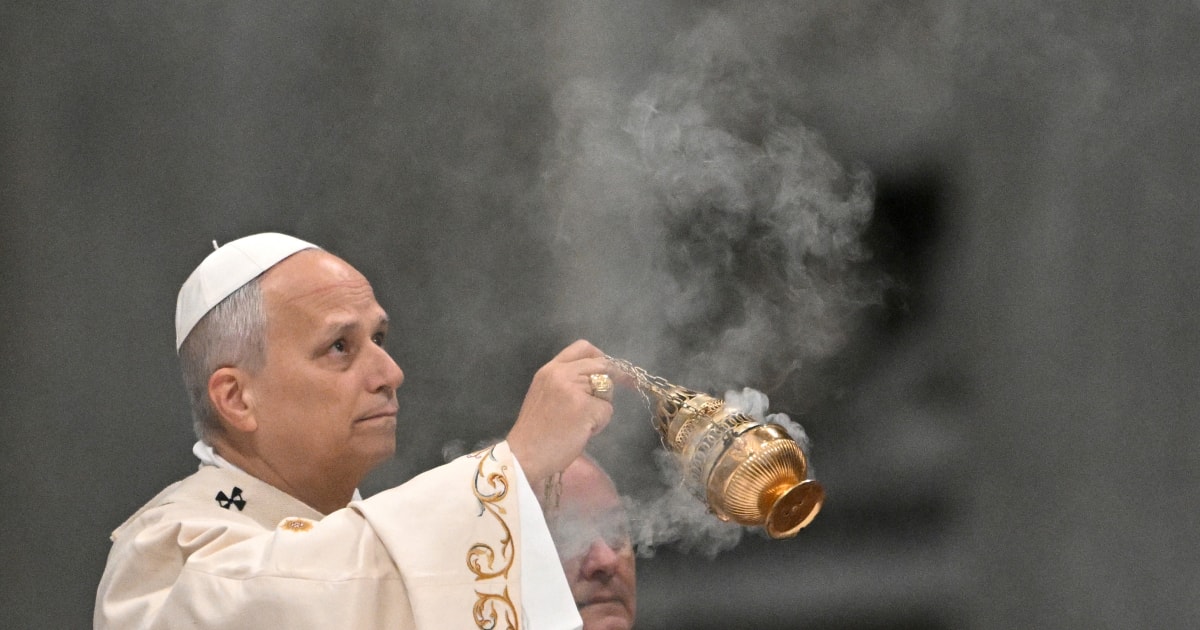
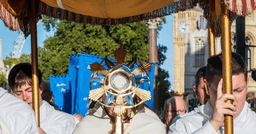
Pope Leo XIV carried the cross through all 14 stations of the Via Crucis at Rome’s Colosseum on Good Friday, leading about 30,000 people in prayer for those suffering across the world. The evening celebration on 3 April marked the first Good Friday of his pontificate and unfolded against the illuminated backdrop of the ancient arena long associated with Christian memory of Christ’s passion and the martyrs.
As darkness fell, torchlight flickered against the stone walls of the Colosseum while pilgrims and visitors filled the surrounding streets. The Pope bore the cross for nearly two hours, holding it before his face as the stations moved from Christ’s condemnation to his burial. According to Vatican archival research relayed by Matteo Bruni, director of the Holy See Press Office, it was the first time in more than three decades that a Pope had personally carried the cross throughout every station. St John Paul II was said to have done so from 1980 until 1994.
The meditations for this year’s service were written by Franciscan Father Francesco Patton, the former custos of the Holy Land. Drawing on his experience of walking the historic Way of the Cross through Jerusalem’s Old City, he presented the Via Crucis as something lived not apart from the world’s noise and confusion but within it. His text linked Christ’s passion to the daily struggle of Christians to live out faith, hope and charity amid modern pressures and distractions.
Each station included a reading from Scripture, a quotation from St Francis of Assisi, a meditation by Father Patton and a short litany. The crowd then prayed the Our Father in Latin and sang verses of the Stabat Mater. The inclusion of St Francis reflected the Church’s Jubilee Year marking the 800th anniversary of the saint’s death. Several of the quotations used in the service were taken from his Admonitions.
The texts repeatedly drew connections between the suffering of Christ and the wounds of the present age. In the first station, on Christ’s condemnation to death, the meditation reflected on the moral weight borne by those who exercise authority, whether in judgment, war, peace or the use of economic power. Later, at the 10th station, which recalls Christ being stripped of his garments, the prayers turned to assaults on human dignity in contemporary life, including the humiliation of prisoners, sexual abuse and commercial exploitation.
Across the service as a whole, prayers were offered for political prisoners, victims of war, migrants and refugees, the poor, the lonely, children robbed of their childhood, victims of trafficking, those trapped in addiction, mothers mourning lost children and those who die alone.
Earlier in the week, Pope Leo said he had chosen to carry the cross for all 14 stations as an important sign for the world. He described it as a way of expressing that Christ still suffers in the afflicted and that those sufferings are carried in prayer. He also invited all people of goodwill, believers and non-Christians alike, to walk together with Christ and to become bearers of peace rather than hatred.
The Colosseum has been bound to the Church’s Good Friday observance for centuries. Pope Benedict XIV dedicated it in 1756 to the memory of Christ’s passion and the early Christian martyrs. The tradition was later revived by St John XXIII and made a regular feature of papal Holy Week by St Paul VI.
.jpg)