



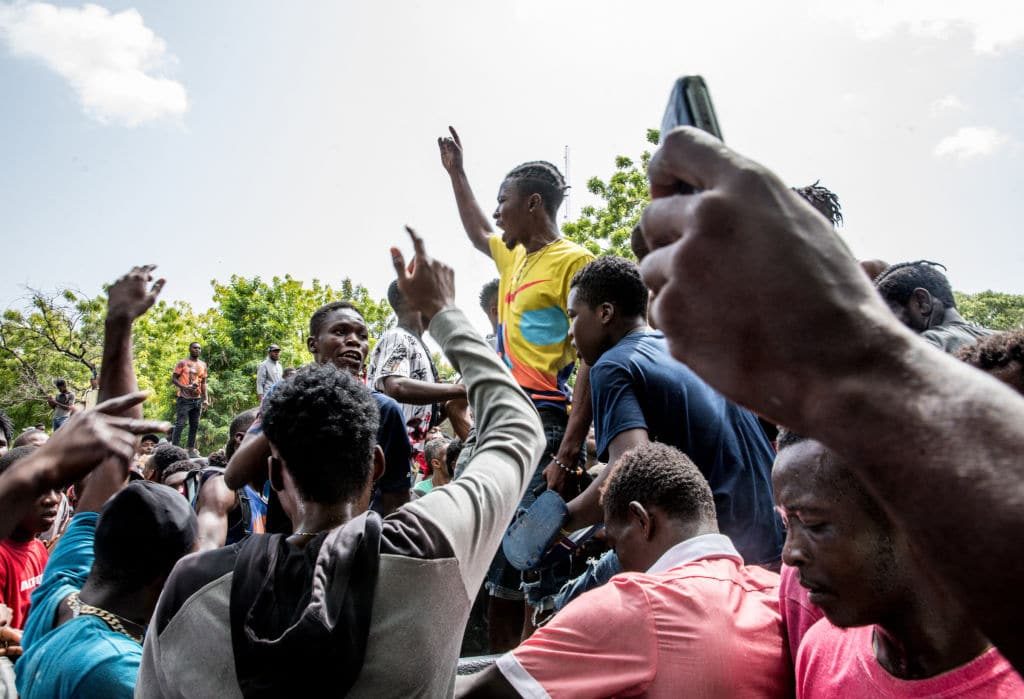
Pope Francis has expressed his "sadness" over the "heinous assassination" of Haitian president Jovenel Moïse, and condemned "all forms of violence [used] as a means of resolving crises and conflicts." The Pope's sentiments were conveyed in a telegram sent by Cardinal Secretary of State Pietro Parolin on behalf of the Holy Father. The Pope offered his condolences to the people of Haiti, and to Moïse's widow, Martine Marie Etienne Moïse, who was seriously wounded in the attack that killed her husband. The telegram said Pope Francis desires "for the dear Haitian people a future of fraternal harmony, solidarity, and prosperity," and concludes with a papal blessing for Haiti and its inhabitants. Mr Moïse was shot and killed by a group of armed men who attacked his private residence at around 1 a.m. local time on Wednesday. Authorities say at least four of the gunmen have been killed, while six others have been detained. Speaking at a press briefing on Thursday, police chief Léon Charles said, “We have the physical perpetrators in hand and we are looking for the instigators” of the attack. Acting prime minister Claude Joseph told the BBC news agency that "foreign mercenaries" were behind the attack, and suggested Mr Moïse may have been killed because he was fighting "oligarchs" in Haiti. "We don't know if there is a link between those oligarchs and the foreign mercenaries," he said. According to Haiti’s constitution, the first in the line of presidential succession is the president of the Supreme Court; however, Chief Justice René Sylvestre died of Covid-19 in June. Mr Joseph has been leading the country, despite Mr Moïse having named Ariel Henry to replace him as prime minister one day before the assassination. The UN’s special envoy for Haiti has said Joseph should remain in charge until elections could be held later this year. The political situation in Haiti was already unstable before Moïse’s assassination, with widespread protests calling for him to resign. Parliamentary elections scheduled for October 2019 have been repeatedly delayed, and Mr Moïse had been ruling by decree since that time.
12:55 AM
Pope offers condolences after assassination of Haiti's president
Staff Reporter

2 min read



Already a subscriber? Sign in
5freearticles every month
Continue reading with a free account. No card needed.
- Five free articles every thirty days, on any device you sign in on
- The Catholic Herald newsletter, every morning
- Subscribe whenever you like for everything: every article and the magazine
Related articles
 US News
US-Iran talks break down as Vance cites nuclear deadlock and Catholic voices urge peace
Marathon talks in Islamabad ended without an agreement after JD Vance said Washington had failed to secure assurances over Iran’s nuclear ambitions
The Catholic Herald US News
US dioceses report rise in Easter receptions into the Catholic Church
The Catholic Herald US News
US ambassador rejects claims over Vatican–Pentagon meeting
The Catholic Herald US News
US diocese suspends Sunday Mass obligation for those in fear of ICE raids
The Catholic Herald US News
Archbishop Cordileone endorses Singapore cardinal's defence of Latin Mass
The Catholic Herald
subscribe to the catholic herald today
Our best content is exclusively available to our subscribers. Subscribe today and gain instant access to expert analysis, in-depth articles, and thought-provoking insights—anytime, anywhere. Don’t miss out on the conversations that matter most.
Subscribe



