

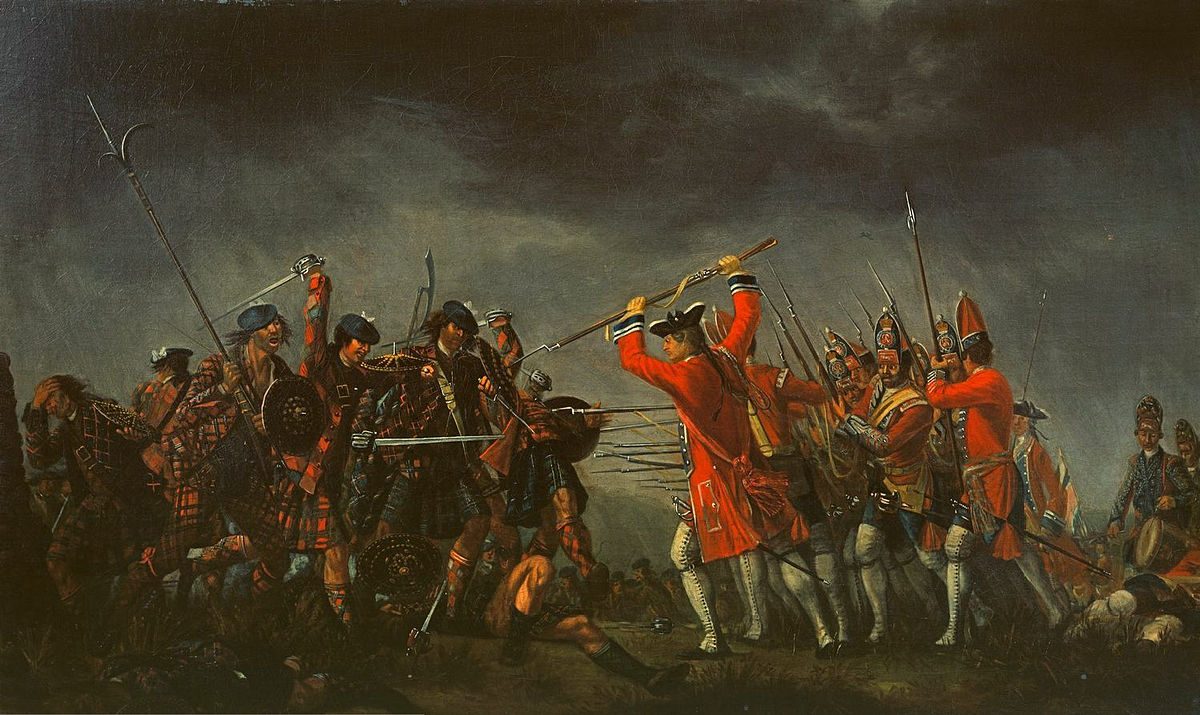
Jacobites by Jacqueline Riding Bloomsbury, £25 For doomed romance, few images rival that of Prince Charles Edward Stuart. He is an endlessly invokable symbol of a Scottish identity lost in the struggle against a remote, progressive, homogenising, slightly alien power. Given the popular sentimentality of her subject, Jacqueline Riding achieves a remarkable feat in producing a history which is both compulsively readable and factually packed. Having brilliantly toured the political situation of mid 18th-century Western Europe, she takes us along on the political (and then military) campaign trail with the Young Pretender. But the triumph of Riding’s new account of the 1745 rebellion is that, as we move from Rome, through Paris, to Scotland and England, we are taken grippingly from romance to comedy, and even high farce, before the eventual tragedy. Riding’s extensive and seamless use of first-hand accounts, letters and diaries allows her to weave an utterly convincing narrative, which at once gives us faith in her knowledge and all the colour of camp and court gossip. What emerges is a fascinatingly three-dimensional image of the Jacobite cause: part Catholic restorationist, part Scottish nationalist, part pure adventure. At the centre of it all is Prince Charles himself, who grows from privileged exile to frustrated young man, fed-up with living on the promises of others and determined to make his own luck. He arrives in Scotland with a handful of friends picked from the viciously divided Stuart court-in-exile, to be greeted by a few hundred clansmen who struggle to hide their dismay that he has arrived without a French army at his back. Yet from this humble start, Charles Stuart becomes a figure of romantic heroism, and in a matter of weeks is at the head of a small army. He defeats the only sizable British Army detachment north of the border and marches into Edinburgh, almost unopposed, to proclaim himself Regent. As he holds court to determine what to do with his unexpected success, the divisions in his own camp begin to haunt him, with his friends from exile championing a swift and decisive invasion of England, promising a popular uprising and aid from France along the way, while the Scottish clan chiefs and lords, who risked their lives and families by riding to his banner, beg him to consolidate the northern kingdom and establish a real throne for his father James. Given the place of Bonnie Prince Charlie in Scottish folklore, it is a bitter irony that he forsook Scotland, and a high chance of lasting success, for a doomed tilt at the English throne. The road south goes from heroic to comical, as the government’s propaganda campaign warning of an army of slavering Highlanders who feed, for preference, upon children and babies, is so convincing that Carlisle surrenders without a fight. Yet despite his unopposed progress, Charles finds that none know better the difference between drinking and fighting than the English Jacobites. Despite all the promises, the English uprising never materialises and French aid never comes, and Charles finds himself at the head of an exhausted force, within striking distance of London but surrounded. The grim march back to Scotland slowly builds towards a meeting with his nemesis in George II’s youngest son William, a war hero and the first British-born Hanover, at the Battle of Culloden, where the chaotic romance finally dies on the bayonets of grim reality. As Charles fades into Highland hiding, before escaping back to France, and as his remaining loyalists go to the gallows, it feels like the failure of a whirlwind courtship. You find yourself wondering how they got so far, but also at how you almost believed they could do it.
1:00 PM
Prince Charlie: from romance to tragedy
Ed Condon

4 min read



Already a subscriber? Sign in
5freearticles every month
Continue reading with a free account. No card needed.
- Five free articles every thirty days, on any device you sign in on
- The Catholic Herald newsletter, every morning
- Subscribe whenever you like for everything: every article and the magazine

subscribe to the catholic herald today
Our best content is exclusively available to our subscribers. Subscribe today and gain instant access to expert analysis, in-depth articles, and thought-provoking insights—anytime, anywhere. Don’t miss out on the conversations that matter most.
Subscribe



