


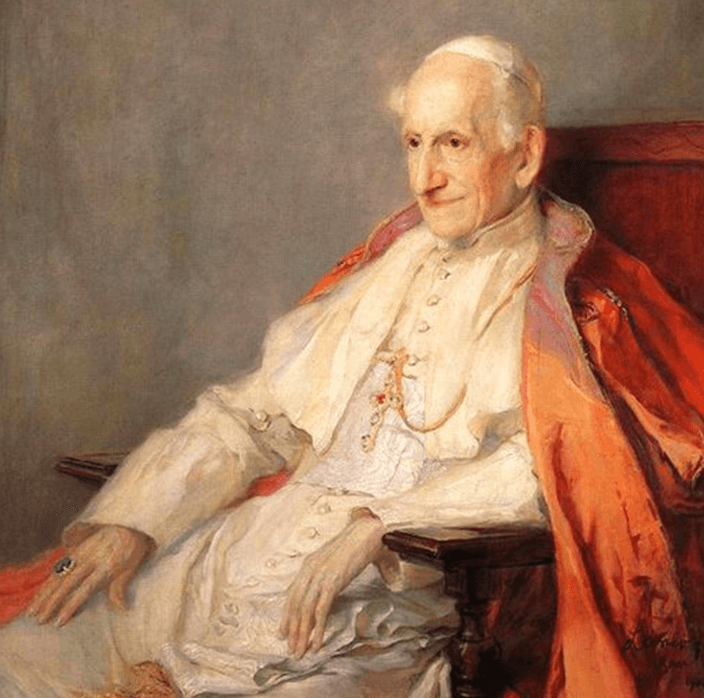
The Encyclical Letter of Pope Leo XIII, Rerum novarum, was published on 15 May 1891. There is a temptation to play down those aspects of Rermum novarum which related to private property. This encyclical was really about labour, it is argued. Or it is suggested that the right to property is only a secondary right subject to the universal destination of goods and therefore not important. Still others say it was an encyclical that, in this respect, reflected its time – a period when the Church’s property was under attack from extreme socialists. These arguments are all superficial or wrong. The word “property” appears in Rerum novarum 20 times and the words “private ownership” another six times. Not only are the words used in a positive sense, but private property, we are told, is inviolable and sacred. We should not deny, diminish or try to falsely contextualise what was a key part of the encyclical Rerum novarum. The right to property was woven into the fabric of Rerum novarum as essential for human dignity, for the common good and for human development. If we look at the security of property rights in different countries of the world today, we can see how prophetic Pope Leo XIII was. Bottom of the indices for the private property rights are countries such as The Yemen, Haiti, Venezuela, Angola and Nigeria. Top are Scandinavian countries, the Netherlands, and so on. Those countries at the bottom are very violent places. St. Thomas was right. Pivate property is essential for a peaceful order. So, what did Rerum novarum have to say? Firstly, it made a very strong claim for the natural right to property. In the early paragraphs, Pope Leo argues that, because property is accumulated out of savings from wages which the prudent family has put aside, to take away property is, in effect, to deprive the family of its wages which are now in another form. The document states that “every man has by nature the right to possess property as his own” and moves on to make the case that, because of our ability to reason, unlike other animals, we should be able to have permanent and stable possession of land and property: that way, property can continue in productive use. This is a point that should be developed in relation to conservation and the environment in modern Catholic social teaching. It is then stated explicitly that the Catholic Church’s teaching on the universal destination of goods is not a bar to the ownership of property. The idea of the universal destination of goods does not mean that all people must be able to access all goods: private ownership is a practical way to apportion the goods of this world. The principle of private property is described as having been consecrated down the ages and “pre-eminently in conformity with human nature and as conducing in the most unmistakable manner to the peace and tranquillity of human existence.” It is also clear that Pope Leo XIII regards property rights as a pre-condition for raising the status of the poor: “The first and most fundamental principle, therefore, if one would undertake to alleviate the condition of the masses, must be the inviolability of private property.” As well as private property being a practical way to apportion the goods of the world, the principle of the universal destination of goods is also brought to reality by the just treatment of workers and by charity. The language used in Rerum novarum is very strong:
2:04 PM
Property and human dignity: The prophetic message of Pope Leo XIII
the encyclical letter of pope leo xiii, rerum novarum, was published on 15 may 1891. there is a temptation to play down those aspects of rer...
Philip Booth

6 min read



Already a subscriber? Sign in
5freearticles every month
Continue reading with a free account. No card needed.
- Five free articles every thirty days, on any device you sign in on
- The Catholic Herald newsletter, every morning
- Subscribe whenever you like for everything: every article and the magazine



.png&w=3840&q=75)

subscribe to the catholic herald today
Our best content is exclusively available to our subscribers. Subscribe today and gain instant access to expert analysis, in-depth articles, and thought-provoking insights—anytime, anywhere. Don’t miss out on the conversations that matter most.
Subscribe



