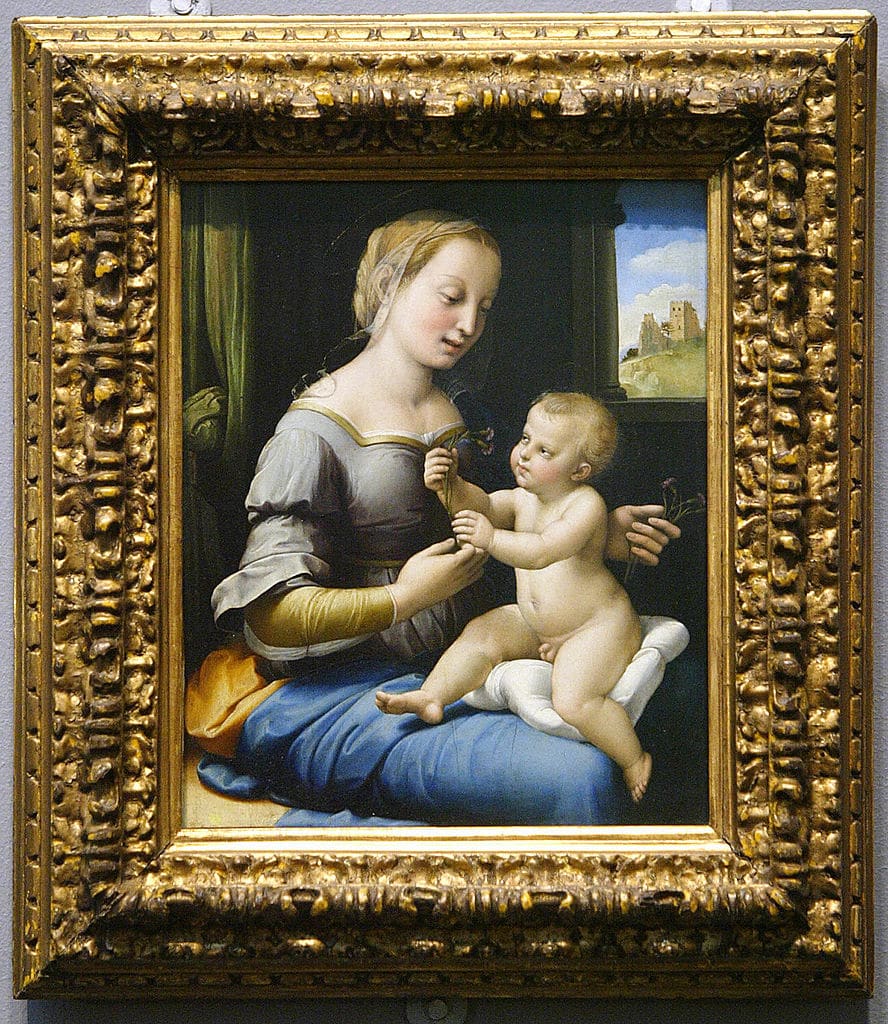


Raphael was, as Kenneth Clark put it, “one of the civilising forces of the western imagination”. For many of us, he is best known as the painter of exquisite Madonnas, which feature on artistic Christmas cards, their very familiarity preventing us from seeing them properly. Indeed, the two bored cherubs at the base of the Sistine Madonna are perhaps the most quoted figures in art, taken well and truly out of context.
The exhibition on Raphael at the National Gallery has an extraordinary room of Madonnas, some including the infant John the Baptist (patron of Florence) as well as the Christ Child. All seem serenely beautiful, until you see in the Alba Madonna that both children, and the Virgin, are looking at the little Baptist’s cross, presaging Christ’s fate. Many critics observe that Raphael’s Madonnas reflect the loss of his own mother as a child; maybe, but what’s striking is the fusion of divinity and humanity in those works.