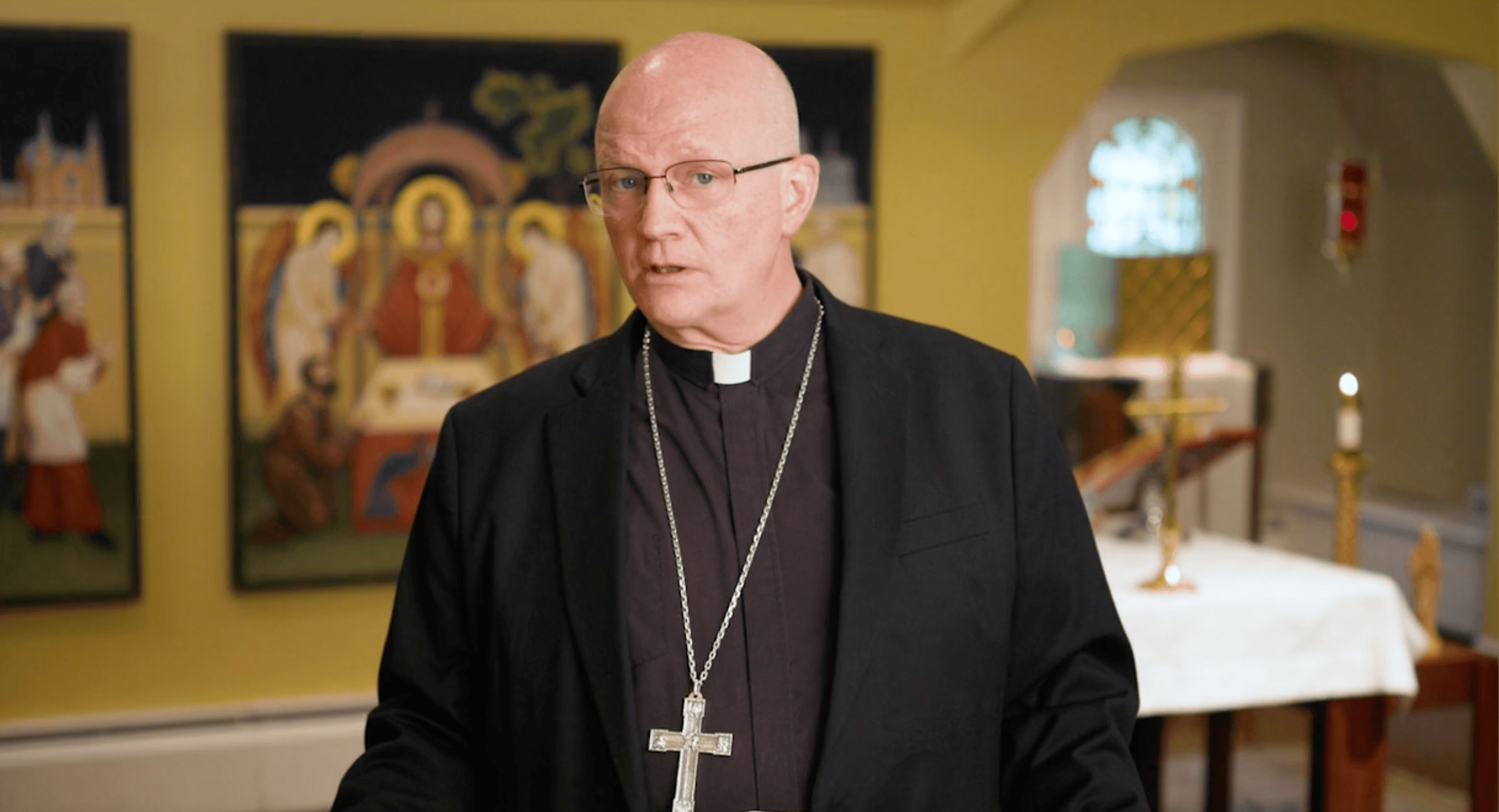



A long-running legal dispute over the Norbertine abbey in Oradea has drawn fresh attention after police and gendarmes were reportedly deployed during an effort to remove the community’s abbot from the property, prompting outrage among supporters of one of the region’s oldest Catholic foundations. The case centres on Abbot Rudolf Anzelm Fejes and the Premonstratensian house in western Romania, an institution whose origins stretch back to the 12th century.
The confrontation followed months of tension between the abbey and the local authorities in Oradea. In February, an earlier eviction attempt was postponed after crowds of Catholics gathered in support of the abbot outside the church, where he appeared in his Norbertine habit and refused to yield the site. Videos and photographs from that earlier standoff circulated widely online and turned what might have remained a local property dispute into a much broader public controversy.

More recent reports said officers entered the church precincts again during Holy Week as Mass was being celebrated, with the apparent intention of enforcing the court-ordered eviction. According to those accounts, the move caused alarm among worshippers and intensified criticism of the manner in which the authorities were handling a dispute involving an active religious community and a historic ecclesiastical property.
Yet the legal basis for the eviction has itself been challenged. In March, Romania’s State Secretariat for Religious Affairs wrote to the abbot confirming that the Norbertine house forms part of the Roman Catholic Diocese of Oradea and is recognised under Romanian law as a legal entity of public utility. The letter also stated that goods directly and exclusively dedicated to religious worship are not subject to seizure. The same position was later relayed by the prime minister’s chancellery.
That intervention from Bucharest gave fresh weight to the abbey’s claim that the municipality has overreached. Supporters of the community argue that the attempted eviction is not merely an administrative disagreement over property, but a direct threat to the continued life of a Catholic institution with deep historical roots in the region. The abbey has been described in related reporting as approaching its 900th anniversary.
The dispute has also acquired a political edge. Some advocacy groups and sympathetic outlets have alleged that anti-Catholic or ideological interests lie behind the municipality’s actions, though such claims go beyond the narrower legal findings set out in the official correspondence from the Romanian government. What is clearer from the documentary record is that central state authorities have publicly acknowledged legal protections for the abbey that appear difficult to square with efforts to remove its abbot and take control of its buildings.
For Catholics watching the case, the significance of the dispute lies in more than the fate of one abbot. It raises larger questions about the security of Church property, the autonomy of religious communities and the willingness of the state to protect places set aside for worship when they come under local political pressure. In that sense, the struggle over Oradea has become a test case far beyond the city itself.
.jpg)