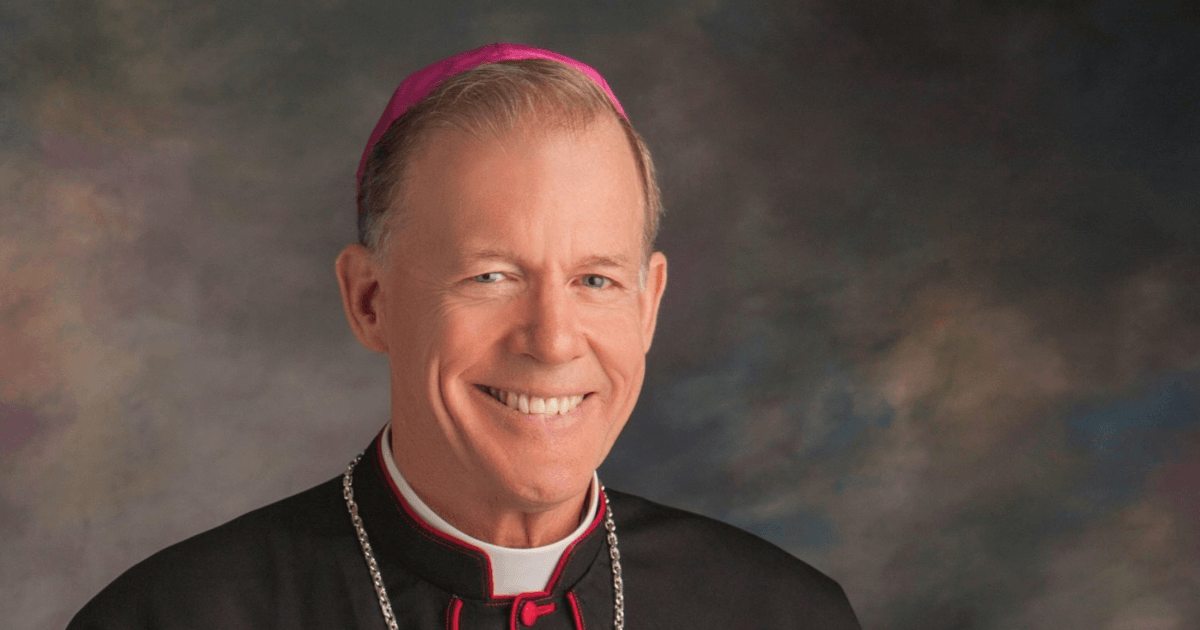



Archbishop John C. Wester of Santa Fe has urged the Church to draw nearer to LGBT Catholics, emphasising listening to their lived experiences as essential to episcopal discernment, in a reflection published in America magazine on June 2, 2026.
The archbishop described his participation in a private gathering organised by New Ways Ministry at the Siena Retreat Center in Racine, Wisconsin, in April, where bishops met theologians, pastoral workers and LGBT individuals to discuss pastoral care, moral theology and scientific understandings of gender. He framed the encounter through the biblical story of Eli and the young Samuel in 1 Samuel 3, presenting bishops as called to help the faithful recognise God’s voice in contemporary realities.

New Ways Ministry, founded in 1977 and long active in outreach to LGBT Catholics, has hosted a series of such bishop-level dialogues since 2023. The Racine meeting was the third in the series, with 17 US bishops having attended one or more gatherings to date. Archbishop Wester wrote that the time in Racine “deepened my pastoral concern, understanding and right judgement about the lives of LGBTQ Catholics” and highlighted what he sees as an urgent need for a more compassionate pastoral approach, particularly towards transgender and non-binary people who, he said, often encounter “suspicion and hostility”.
In the article, the archbishop referenced testimonies from a transgender man and the mother of a transgender girl, both describing an innate sense of identity evident from the age of three. He suggested gender identity is rooted in specialised areas of the brain and drew a parallel with early 20th-century practices of forcing left-handed children to write with their right hand. He called for dialogue between the Church’s natural law tradition and contemporary science, stating that “our theological reflection remains incomplete if it is closed to the findings of all the sciences”.
“As bishops, we offer the gentle guidance of the Church’s perennial wisdom, but we are also called to journey with individuals and families, respecting the sanctuary of the human conscience. For it is here that the individual is alone with God,” Wester added.
Archbishop Wester, appointed to Santa Fe by Pope Francis in 2015 and previously bishop of Salt Lake City, has a consistent record of public engagement on these questions. In 2021 he was among a small group of US bishops who signed a statement affirming LGBT youth with the words: “God created you, God loves you and God is on your side.” He has also served as episcopal moderator for the National Association for Lay Ministry.
The United States Conference of Catholic Bishops has previously clarified that New Ways Ministry “does not present an authentic interpretation of Catholic teaching” and cannot speak on behalf of the Church, a position first articulated by Cardinal Francis George in 2010 and never retracted. Catholic doctrine, as set out in the Catechism (2357-2359 and 2331-2336), upholds the dignity of every person while teaching that sexual relations are reserved for marriage between one man and one woman, and that the sexual complementarity of the body forms part of God’s intentional creation.
The Racine gathering and Archbishop Wester’s reflection come amid the ongoing implementation of the Synod on Synodality, whose Study Group 9 final report addressed polarisation and experiences of exclusion among same-sex-attracted believers. The archbishop cited questions raised in that document about what stories of suffering mean for the Christian community. He concluded his piece by stressing mutual listening between pastors and laity, quoting Lumen Gentium and Gaudium et Spes on the contribution of the faithful and the sanctuary of conscience.
Even the 2023 declaration Fiducia Supplicans, issued by the Dicastery for the Doctrine of the Faith with papal approval and widely regarded as the Roman document that provoked the largest and most sustained public and clerical opposition in recent Church history, explicitly reaffirmed the Church’s teaching on marriage and called for immense restraint and caution in such outreach efforts, while permitting spontaneous, non-liturgical blessings for individuals in irregular situations. The document insists such gestures must be conveyed with great care: “The Church does not have the power to impart blessings on unions of persons of the same sex” and that any blessing “should never be imparted in concurrence with the ceremonies of a civil union, and not even in connection with them. Nor can it be performed with any clothing, gestures, or words that are proper to a wedding.” It further states that such blessings are not to offer “a form of moral legitimacy to a union that presumes to be a marriage or to an extra-marital sexual practice”.
The intervention underscores continuing differences within the US episcopate and the wider Church over the proper integration of pastoral accompaniment with doctrinal clarity on human sexuality and anthropology at a time when these questions remain subjects of lively debate and pastoral challenge.

.png)


.png)


.png)