

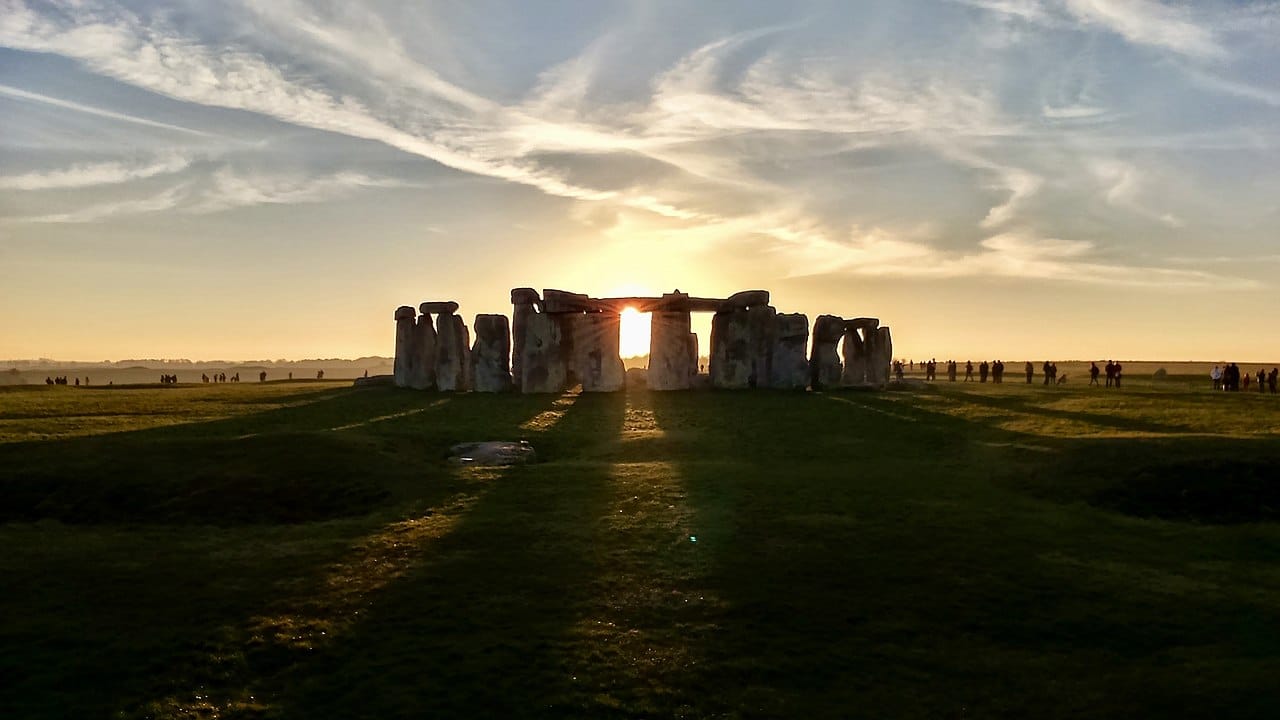
The time of the summer solstice, of greatest light and greenery, has always been one of the naturally numinous points of the year for humans living outside the tropics. Britain’s most famous prehistoric monument – Stonehenge – is orientated on the midsummer sunrise, and there is ample evidence for the celebration of the season from ancient times onwards in these islands. Today a solstice is an event which can be scientifically pinpointed to a particular minute in the calendar. Until the 19th century that was not possible, and instead it was a process. As is well known, for most of the year the sun rises and sets at different places on the horizon, which is why days get longer and shorter; but in June and December, this movement slows down. At sunset on the 20th of both months it appears to stop moving altogether for a few days, a period in which “the sun stands still”, which is what “solstice” (in the original Latin) actually means. This is an island in time, in which the normal laws of the cosmos may be suspended, and unique opportunities and dangers presented. All this enchantment was thought to increase until the final night of the solstice, Midsummer Eve, 23 June, and on Midsummer Day, the 24th, the sun seemed to start moving again and the solstice was over. As every Catholic knows, the importance of that moment was recognised after the official triumph of Christianity by dedicating Midsummer Day to one of its greatest Biblical saints, John the Baptist. Its eve, the culmination of the solstice, therefore became the Eve of St John, and what followed, St John’s Night.
9:00 AM
Sacred flames
the time of the summer solstice, of greatest light and greenery, has always been one of the naturally numinous points of the year for humans...
Ronald Hutton

4 min read



Already a subscriber? Sign in
5freearticles every month
Continue reading with a free account. No card needed.
- Five free articles every thirty days, on any device you sign in on
- The Catholic Herald newsletter, every morning
- Subscribe whenever you like for everything: every article and the magazine

subscribe to the catholic herald today
Our best content is exclusively available to our subscribers. Subscribe today and gain instant access to expert analysis, in-depth articles, and thought-provoking insights—anytime, anywhere. Don’t miss out on the conversations that matter most.
Subscribe



