




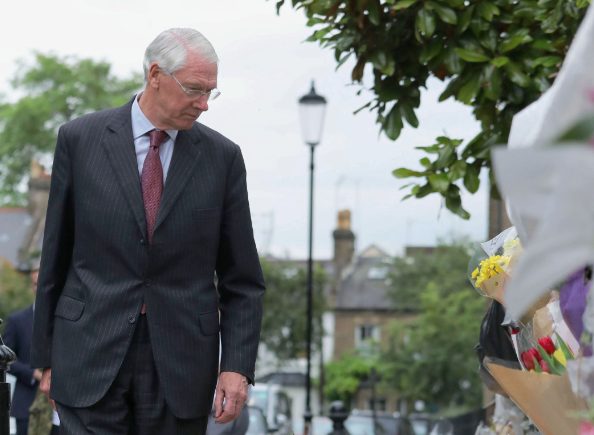
Last month the Prime Minister appointed my former judicial colleague Sir Martin Moore-Bick to chair the inquiry into the Grenfell Tower fire. The terms of reference of the inquiry have yet to be settled, but its official website states that “The purpose of the inquiry is to discover what happened at Grenfell Tower and to make recommendations to prevent a similar tragedy happening again.” It is not yet clear how much is included in “what happened”. Within days residents and others were complaining that Sir Martin was not the right person for the job, even heckling him at a meeting arranged for him to learn their views. As a judge nominated to try cases in court, he will never have faced such a response from litigants. But he may well have expected this response to his appointment to this inquiry. Why the difference? Inquiries may be conducted by retired civil servants, distinguished legal practitioners and academics, as well as by judges (who may be either still serving or retired). In recent years there has been discussion in Parliament, and among judges and academics, as to what sort of person should be appointed to chair an inquiry, and whether they should sit alone or with a panel of experts. The reason commonly advanced for appointing judges is that they have particular professional attributes and skills: impartiality, independence, knowing what to do to ensure fairness, and experience in sifting complicated evidence to establish the cause of a major fatal event. But there are skills which a judicial career does not require. Judges do not manage any large organisation or large budgets with competing priorities. They do not deal with political parties, whether locally or nationally. If an inquiry involves issues of social or economic policy with political implications, then judicial experience is less of a help. It may be a danger to both the judge and the inquiry. The judge’s undoubted impartiality and independence extends to the exercise of judicial skills. It cannot extend to social and economic issues, upon which no one is required to be impartial. Sir Martin cannot be blamed for accepting the appointment. Since he is retired, he was under no formal obligation to accept it. But judges commonly have a strong sense of public duty. They will rarely decline a request for them to perform a public duty, unless they are personally disqualified from doing it, for example by some interest in the outcome. The attacks that have been mounted against Sir Martin, some of them personal, are unfair. But they are proxies for an attack on the perceived narrowness of the question into which the official website states that he has been appointed to inquire. If the inquiry’s terms of reference (which are not settled at the time of writing) were to include matters additional to the fire itself, the constitution of the panel might need to be different. Judicial experience is of limited assistance in deciding questions such as housing policy and the funding of local authorities over the period stretching back to the construction of Grenfell Tower, or the priorities adopted by the local authority in allocating its funds and other resources to social housing, or to helping those residents bereaved and made homeless on June 14. So those who are contending for terms of reference going beyond the causes of the fire will be inclined to oppose the appointment of a chairman whose experience is relevant to a narrower range of issues. For decades there has been public discussion of the relationship between the judiciary, on the one hand, and the elected arms of the state, namely Parliament, local authorities and the government, on the other. It is argued that “unelected judges” should not make politically sensitive decisions in judicial review, and other decisions involving human rights and public authorities. Such complaints are not consistent with support for the appointment of judges to chair politically sensitive inquiries. One reason why judges are appointed to inquiries is that their unelected status gives them the impartiality which, it is hoped, may take the inquiry out of politics. But such appointments can draw the judge into politics. The appointment of judges for tasks for which they may lack some relevant experience is unfair to the judges. And, even if the judge is retired, it may undermine confidence in the judiciary. There are other options. Since the impartiality and skills of a judge are clearly required for at least the core of what are likely to be the Grenfell inquiry terms of reference, an alternative might be to appoint one or more other members to the panel, depending upon what other relevant experience may be required by those terms, whether it be in local government or disaster relief. Sir Michael Tugendhat is a retired High Court judge
1:00 PM
Sir Michael Tugendhat: Even judges need help
Sir Michael Tugendhat

4 min read



Already a subscriber? Sign in
5freearticles every month
Continue reading with a free account. No card needed.
- Five free articles every thirty days, on any device you sign in on
- The Catholic Herald newsletter, every morning
- Subscribe whenever you like for everything: every article and the magazine
Related articles
 Newsroom
Church leaders urge Drumcree dialogue: ‘Too much is at stake’
The Catholic and Church of Ireland Archbishops of Armagh have urged a renewed commitment to peace and reconciliation amid the Drumcree stand-off
Corrie Douglas-Young Newsroom
Thousands of Irish children to join global Rosary campaign
Corrie Douglas-Young Newsroom
TikTok priest urges young people to stand with persecuted Christians
Nathalie Raffray Newsroom
Baby born at 25 weeks reunites with neonatologist two years after leaving hospital
The Catholic Herald Newsroom
Joe Biden honoured by Planned Parenthood after defending abortion rights
Christine Rousselle
subscribe to the catholic herald today
Our best content is exclusively available to our subscribers. Subscribe today and gain instant access to expert analysis, in-depth articles, and thought-provoking insights—anytime, anywhere. Don’t miss out on the conversations that matter most.
Subscribe



