




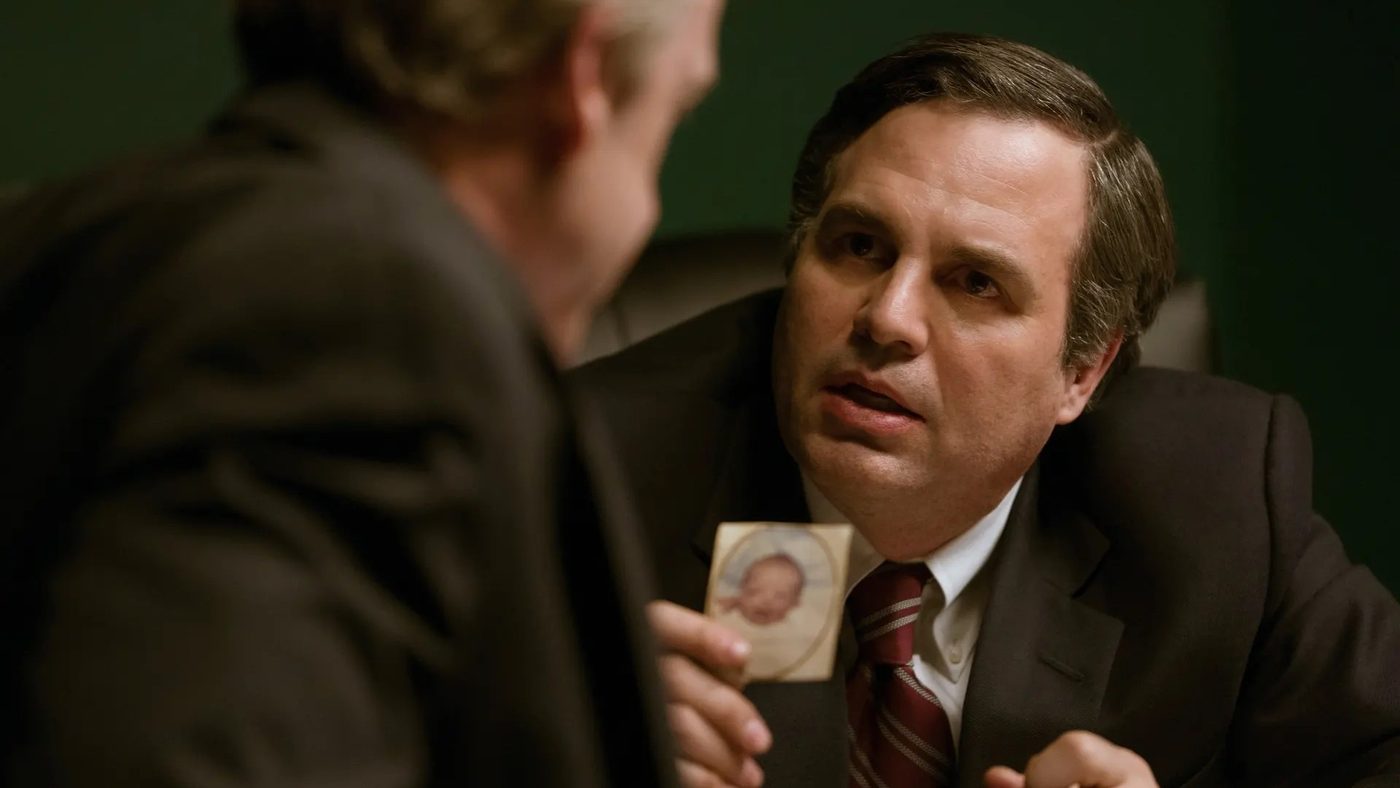
With Dark Waters, director Todd Haynes brings back to life the real story of Robert Bilott, a corporate defence attorney based in Cincinnati, who, when presented with corporate malfeasance in his hometown of Parkersburg, West Virginia, in 2001, turned into a consumer protection advocate à la Ralph Nader. The culprit was DuPont, the corporate juggernaut and mass employer of small-town America; the victims were poorly educated farmers, their families and their cattle. Bilott is played masterfully by Mark Ruffalo, who fits in with the high-powered corporate lawyers as well as with the small farmers of West Virginia. His wife Sarah, played by Anne Hathaway, is the quintessential dutiful spouse, worried about her husband and content to stay at home to raise her children. This role of the traditional wife acts as a conduit between the two worlds: the fast-paced, careerist life of Cincinnati and the mellow, ancestral existence on the farm. Initially reluctant to take on the case, Bilott’s firm lets him investigate the situation, only to find out that the Environmental Protection Agency has been outpaced by DuPont. Federal regulators are simply unable or unwilling to keep up with the chemicals created by the company, partly because the Food and Drug Administration (FDA) was only created in 1970, and DuPont is responsible for the creation of many company towns across America. Farmers in West Virginia are left to fend for themselves, often forced to sell their land once their cattle have been poisoned. Haynes makes it clear that most Americans do not like corporate lawyers. Bilott turns into a modern-day hero as he decides to defend West Virginia’s forgotten men, who simply want to remain self-reliant on their land. The dichotomy may be between past and present, tradition and modernity, but in our post-financial crisis era it is also about survival. Can corporations offer us the stability and security that we need, or should we go back to our farms and re-wild? The film is not without a dose of paranoia about the toxicity of chemicals and the ubiquity of corporate misconduct. The corporation is presented as a solely profit-driven entity and bad for ordinary people, regardless of its employment opportunities, innovative products and the progress it affords many of us. The level of chemicals present in non-stick pans, for example, is unlikely to kill anyone. Haynes has long been paranoid about modernity. His film 1995 film Safe warned us about the supposed danger of microwaves. If Haynes shows us that individual lawyers may help individual farmers, he is not kind about big structures like the government or corporations. This makes the film seem slightly dated. Many corporations have embraced sustainability and taxpayers increasingly expect more green initiatives from their elected representatives. What remains true, however, is that the ideal of self-reliance on family farms has not (yet) been restored. The over-financialisation of the economy and its consequent servitude are still the norm.
3:44 PM
Small farmers against Big Pharma
Victor Stepien

3 min read



Already a subscriber? Sign in
5freearticles every month
Continue reading with a free account. No card needed.
- Five free articles every thirty days, on any device you sign in on
- The Catholic Herald newsletter, every morning
- Subscribe whenever you like for everything: every article and the magazine




subscribe to the catholic herald today
Our best content is exclusively available to our subscribers. Subscribe today and gain instant access to expert analysis, in-depth articles, and thought-provoking insights—anytime, anywhere. Don’t miss out on the conversations that matter most.
Subscribe



