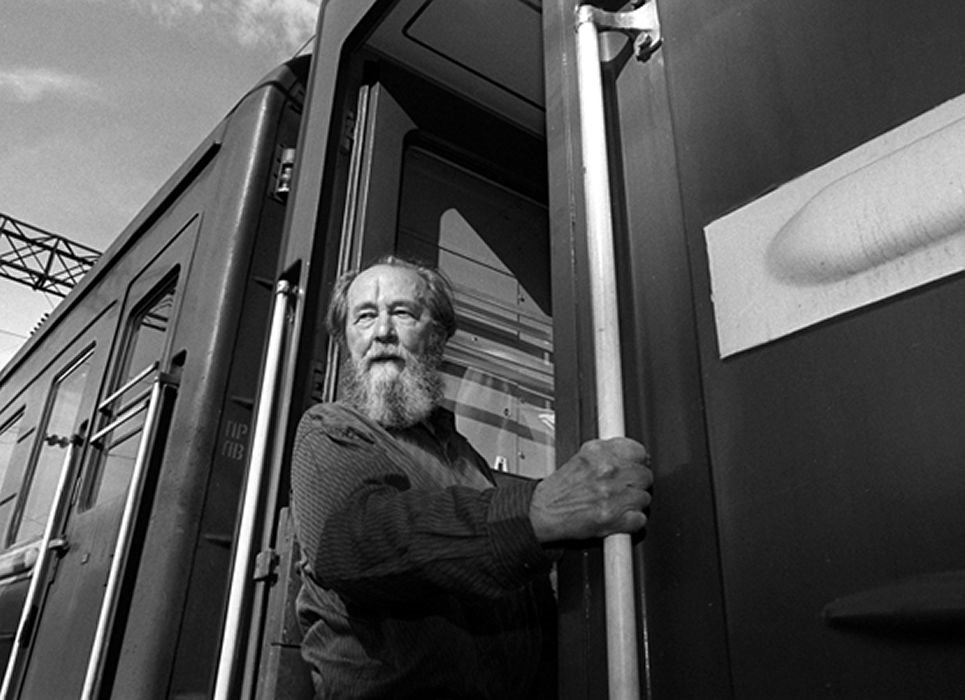


Last December saw a significant centenary: 100 years since the birth of Alexander Solzhenitsyn, the Russian writer and winner of the Nobel Prize for literature in 1970. A hugely significant figure for literature, for Russia and for his witness to Christianity, he is less remembered now than he ought to be. But two online articles, by Joseph Pearce in The Imaginative Conservative and Douglas Kries in The Catholic Thing, remind us of Solzhenitsyn’s enduring importance.
Born at the birth of the Bolshevik Revolution, he grew up in Rostov as an atheist, believing the Communist propaganda that the inevitable progress of history would mean the gradual withering away of religious belief. Then, at the end of the War in which he had fought as an officer and survived, he was sentenced to eight years’ hard labour for criticising Stalin in a private letter.