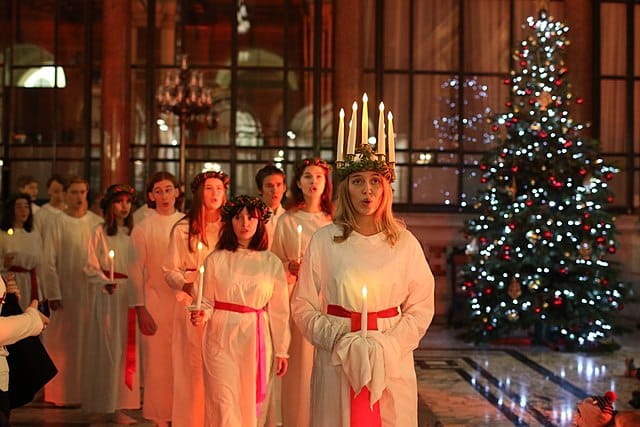




Sweden is far north, cold and secular. Yet, every year on the 13 December an Italian girl who became a canonised saint of the Catholic Church is celebrated at parties across Swedish society. Candles in the hair, St Stephen, shepherds and Christmas gnomes: a hotchpotch of cultural references that have accumulated around the Catholic saint. The tradition is now an established part of the Swedish calendar. But how did it come about? And why does it remain such a powerful cultural event?
The 13 December was traditionally the winter solstice, according to the Julian calendar. In Sweden, the shift to the Gregorian calendar came late, in the 18th century, meaning that the winter solstice now takes place on the 22 December. The feast of St Lucy had been celebrated on the winter solstice since the Middle Ages and unlike other celebrations has held its traditional date.