



February 12, 2026

The best of the web: St Bernard, Chaput, and effective preaching

Staff writers
More
Related
Min read
share

How St Bernard speaks to our time

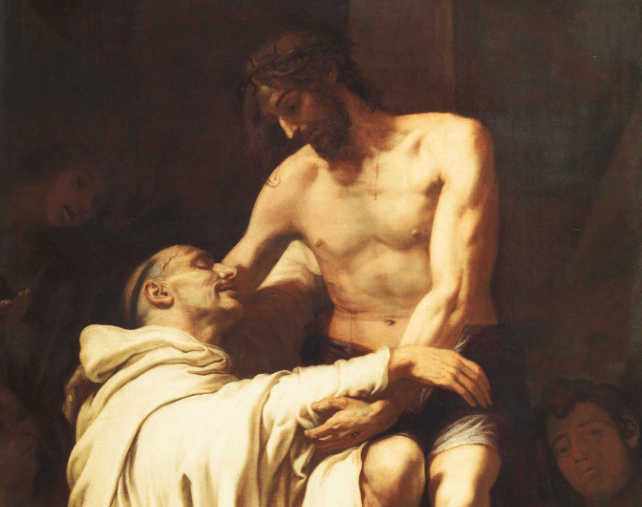
At Charlotte Was Both, Amy Welborn wrote about St Bernard of Clairvaux’s De Consideratione, a set of letters addressed to Pope Eugenius III.

Welborn wrote that St Bernard’s letters can help us understand problems of our own time – and the role of individual Catholics. “Sometimes when people allude to historical problems with the Church and papacy,” she wrote, “it becomes a silencing weapon: Calm down! See! The Spirit always brings us through! Well, here’s the thing: The life of the Church is not a performance with the Holy Spirit pulling strings and waving wands, and the rest of us watching from the audience.

“The Holy Spirit works to preserve the Church through reformers, annoying critics, weird historical events and who knows what else.”

St Bernard warns the Pope that leaders are often too ready to believe what their advisers tell them: “I have never known any of those in authority to be sufficiently on their guard.” He tells Eugenius to be serious: “Observe that it is not jests or fables but the law of God that is to be sought from the mouth of a priest.”

The saint also advised the Pope to be fatherly – serious without being forbidding: “Make thyself loved, if possible, by thy domestics; otherwise let them fear thee. It is always good to keep a guard over thy lips, yet not so as to exclude the grace of affability.”

Learning Church history, Welborn remarked, doesn’t “define the present moment in either positive or negative ways”. But it can “disrupt, challenge and point us toward reform”.

Archbishop Chaput’s three trademarks


At the Catholic News Agency, JD Flynn noted that Archbishop Charles Chaput of Philadelphia has a “polarised” reputation. “But love him or loathe him, Church-watchers generally agree that among US bishops, Chaput has been more effective than most at achieving his vision.”

How he has he done it? Partly through fostering lay leadership: the archbishop has supported lay-led apostolates, and “expanded the role of the lay-led archdiocesan pastoral council, while hiring laity for open leadership positions”.

He has also spoken out in public. In 2010, he told a reporter: “I don’t have a whole lot of concern about what people think of me.” He added: “To me, not to say something is really very destructive, because silence implies consent.”

Finally, he is very available: he replies to emails from perfect strangers, visits parishes frequently, and is known for remembering people’s names.

An Episcopalian’s advice for homilies


It’s “not often I quote Episcopalians”, wrote Fr Hugh Somerville Knapman at Dominus Mihi Adjutor. But the Episcopalian bishop John Hines offered a “useful” guiding principle: “Preaching is effective as long as the preacher expects something to happen – not because of the sermon, not even because of the preacher, but because of God.”

A homily, wrote Fr Somerville Knapman, is liturgical: “it is instructional, above all for a lived spirituality”.

How St Bernard speaks to our time

At Charlotte Was Both, Amy Welborn wrote about St Bernard of Clairvaux’s De Consideratione, a set of letters addressed to Pope Eugenius III.

Welborn wrote that St Bernard’s letters can help us understand problems of our own time – and the role of individual Catholics. “Sometimes when people allude to historical problems with the Church and papacy,” she wrote, “it becomes a silencing weapon: Calm down! See! The Spirit always brings us through! Well, here’s the thing: The life of the Church is not a performance with the Holy Spirit pulling strings and waving wands, and the rest of us watching from the audience.
“The Holy Spirit works to preserve the Church through reformers, annoying critics, weird historical events and who knows what else.”

St Bernard warns the Pope that leaders are often too ready to believe what their advisers tell them: “I have never known any of those in authority to be sufficiently on their guard.” He tells Eugenius to be serious: “Observe that it is not jests or fables but the law of God that is to be sought from the mouth of a priest.”

The saint also advised the Pope to be fatherly – serious without being forbidding: “Make thyself loved, if possible, by thy domestics; otherwise let them fear thee. It is always good to keep a guard over thy lips, yet not so as to exclude the grace of affability.”

Learning Church history, Welborn remarked, doesn’t “define the present moment in either positive or negative ways”. But it can “disrupt, challenge and point us toward reform”.

Archbishop Chaput’s three trademarks


At the Catholic News Agency, JD Flynn noted that Archbishop Charles Chaput of Philadelphia has a “polarised” reputation. “But love him or loathe him, Church-watchers generally agree that among US bishops, Chaput has been more effective than most at achieving his vision.”

How he has he done it? Partly through fostering lay leadership: the archbishop has supported lay-led apostolates, and “expanded the role of the lay-led archdiocesan pastoral council, while hiring laity for open leadership positions”.

He has also spoken out in public. In 2010, he told a reporter: “I don’t have a whole lot of concern about what people think of me.” He added: “To me, not to say something is really very destructive, because silence implies consent.”

Finally, he is very available: he replies to emails from perfect strangers, visits parishes frequently, and is known for remembering people’s names.

An Episcopalian’s advice for homilies


It’s “not often I quote Episcopalians”, wrote Fr Hugh Somerville Knapman at Dominus Mihi Adjutor. But the Episcopalian bishop John Hines offered a “useful” guiding principle: “Preaching is effective as long as the preacher expects something to happen – not because of the sermon, not even because of the preacher, but because of God.”

A homily, wrote Fr Somerville Knapman, is liturgical: “it is instructional, above all for a lived spirituality”.

subscribe to
the catholic herald

Continue reading your article with a subscription.
Read 5 articles with our free plan.
Subscribe

subscribe to the catholic herald today

Our best content is exclusively available to our subscribers. Subscribe today and gain instant access to expert analysis, in-depth articles, and thought-provoking insights—anytime, anywhere. Don’t miss out on the conversations that matter most.
Subscribe