




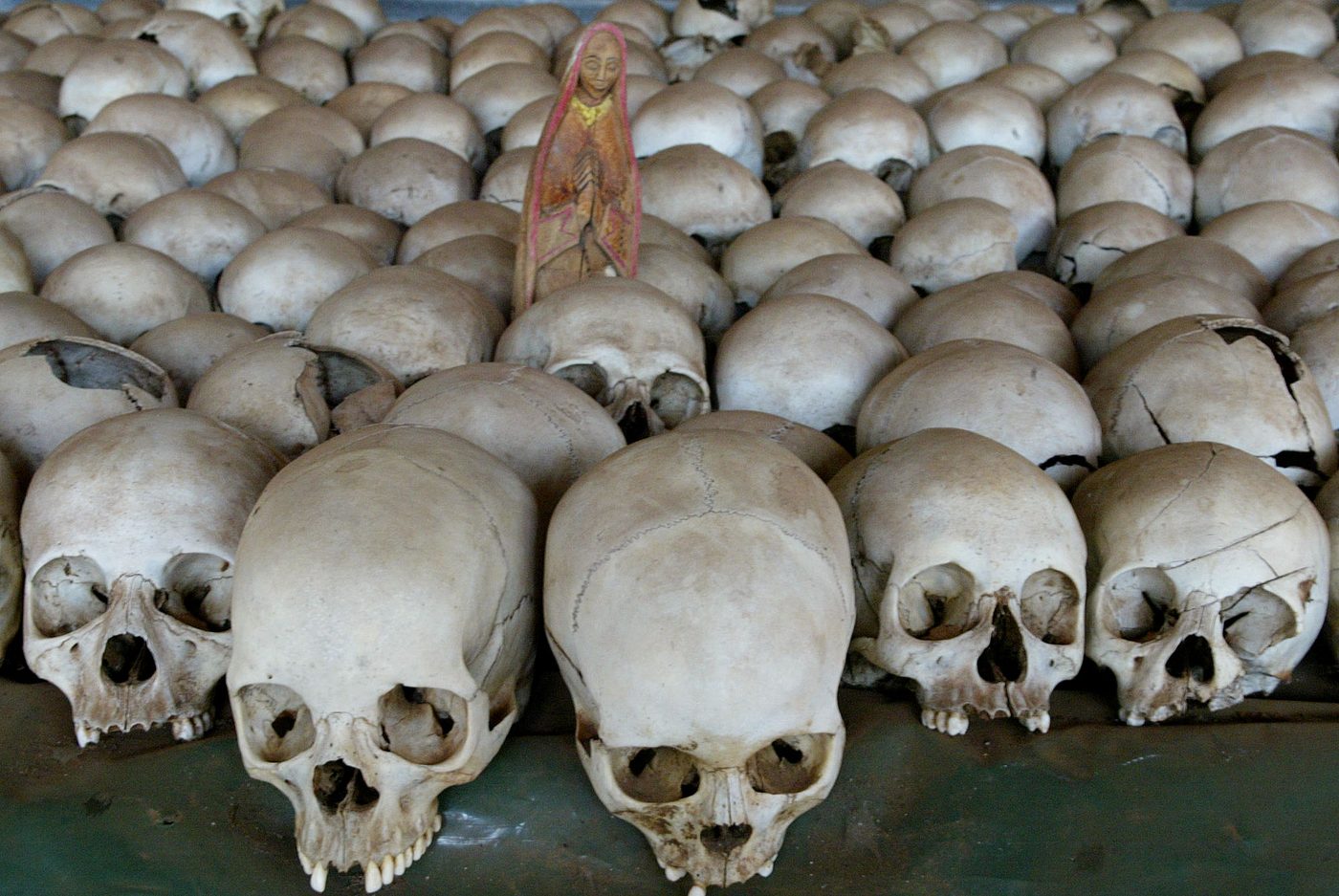
In Praise of Forgetting by David Rieff Yale, £14.99 "Never forget” is one of the most famous directives of our time and yet one of the most ignored. The phrase was formulated in response to the Holocaust and its harsh imperative was meant to act as a preventative shield against this kind of atrocity ever happening again. How little this admonition has been heeded. Since the Holocaust, we’ve witnessed the atavistic fury of the former Yugoslavia’s implosion and the homicidal bloodstorm of the Rwandan genocide. Then there is Darfur, Biafra, Congo and, currently, Syria. All prove that while we may not have forgotten the Holocaust, our memory of it has not prevented further mass murders. In this provocative new book Rieff goes further, suggesting that never forgetting may itself be the cause of continuing blood feuds and atrocity. He begins with an examination of the nature of individual memory versus the abstraction we term “collective memory”. He laments that recent thinking has prioritised memory above history, anecdote over fact and emotion over critical thinking, rightly seeing this as a dangerous and very slippery slope. Rieff also surveys theoreticians of atrocity such as Tzvetan Todorov and Hannah Arendt, interrogating the formulations of “memory culture” that structure our modern sense of identity. Todorov recognises the dangers and entreats readers to “ensure that collective memory contributes to the liberation rather than the enslavement of mankind”. But history and its unruly stepbrother, myth, are not as firm and factual as we like to believe. They are often used selectively by politicians and religious leaders to justify their own ahistorical desires. Hitler’s use of Versailles and an alleged global Jewish conspiracy, and the Muslim world’s fixation with seeing all Westerners as “Crusaders”, are familiar examples. But this kind of selective history manifests itself in all places at all times, perhaps nowhere more so than in the Soviet Union’s dark days of Stalin. Rieff seeks to disentangle memory from history and to ask whether forgetting history may be better for our psyches and national narratives than our current knee-jerk response to glorify and avenge it. He looks at the Serbian miasma of self-pity and bitterness that followed their defeat in the battle of Kosovo in 1389 and how its collective memory, stoked by mass media, was one of the major factors in the war against Kosovo in 1999. Rieff also surveys Ireland’s long history with martyrology, grievance and victimhood – the memory of past injustices leading to new injustices, resulting in a circle of violence and revenge that is almost impossible to stop. He demonstrates how the same dialectic works in the modern Middle East, where memories of past defeats stoke up feelings of humiliation and are used by despotic dictators to turn the seething anger of the crowd away from them and towards foreign scapegoats. This is the narrative of al-Qaeda and ISIS, and it is extremely potent. In conclusion, Rieff says that while a complete amnesia of history is obviously something to be avoided, sometimes forgetting the past is the only viable path to forgiveness and peace. This isn’t the first time such a theory has been proposed. In his Edict of Nantes of 1598, Henry IV of France urged his subjects, Catholic and Protestant alike, to make sure that “the memory of all things that took place on one side or the other from March 1585 ... and in all the preceding troubles, will remain extinguished, and treated as something that did not take place”. Unfortunately, not everyone agreed and Henry was assassinated in 1610 by a Catholic fanatic opposed to the edict.
1:00 PM
The case for turning a blind eye to history
Stav Sherez

3 min read



Already a subscriber? Sign in
5freearticles every month
Continue reading with a free account. No card needed.
- Five free articles every thirty days, on any device you sign in on
- The Catholic Herald newsletter, every morning
- Subscribe whenever you like for everything: every article and the magazine



subscribe to the catholic herald today
Our best content is exclusively available to our subscribers. Subscribe today and gain instant access to expert analysis, in-depth articles, and thought-provoking insights—anytime, anywhere. Don’t miss out on the conversations that matter most.
Subscribe



