
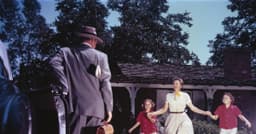

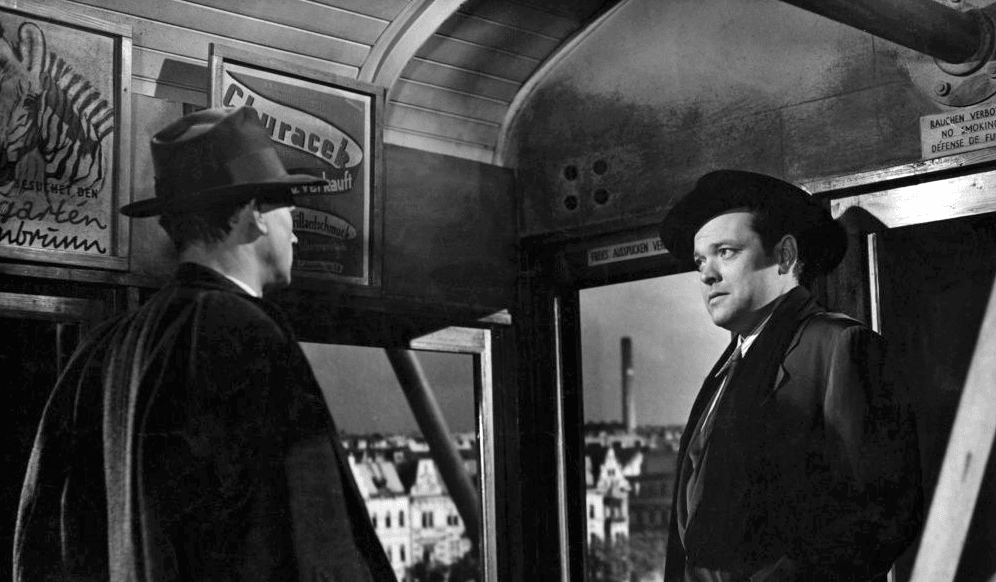
It’s considered by some as the best film noir ever made – and it is celebrating its 70th anniversary this year. The Third Man, starring Orson Welles, was rendered especially compelling by Anton Karas’s mesmeric Harry Lime Theme, played on the zither. The movie, directed by Carol Reed, is a haunting thriller set in the dark and threatening world of post-war Vienna. It produced the oft-quoted social comparison between Italy and Switzerland. At one point, Welles – speaking as the elusive crook Harry Lime – proclaims: “In Italy for 30 years under the Borgias, they had warfare, terror, murder, bloodshed – they produced Michelangelo, Leonardo da Vinci and the Renaissance. In Switzerland, they had brotherly love, 500 years of democracy and peace – and what did that produce? The cuckoo clock.” I remember that being recited to me, as a schoolgirl in Dublin back in the 1950s, by a neighbouring schoolboy who was reckoned to be sophisticated in his knowledge of movies and politics. It was a quotation that had strong appeal to the adolescent mind – the idea that drama and mayhem are more conducive to creativity than order and peace. It’s now suggested that The Third Man, from the book by Graham Greene, was not just a thriller, but also a morality tale, which is the product of Greene’s sometimes anguished Catholic conscience. The writer Ian Thomson, who has published a collection of Greene’s journalism (as well as an award-winning book about Dante), claims that the film pivots on both Greene’s Catholicism and his religious doubts. “Greene had found in Catholicism a sense of melodrama – an atmosphere of good and evil – that served him well for a film shadowed by the atom bomb and the brutality of Stalin’s technocratic Russia,” he says. I would say an “awareness” of good and evil, rather than an “atmosphere”, but faith surely helped Graham Greene to ponder on the great issues of moral choice. Thomson claims that the key passage in the film is when Harry Lime – who is selling fake medicines that will result in death or brain damage to children – looks down on nameless crowds from Vienna’s Ferris wheel and asks whether it really matters if unimportant people die. “Nobody thinks in terms of human beings,” Lime says of the masses. Seventy years on, it remains a classic movie. It also raises serious moral issues. Whether Switzerland’s or Italy’s history is to be preferred is less significant than whether we respect every human being as a unique and significant person; even if, to a devilish cynic, they are just “dots” on a map.
12:00 AM
The Catholic conscience of a noir classic
it’s considered by some as the best film noir ever made – and it is celebrating its 70th anniversary this year. the third man, starring orso...
Mary Kenny

4 min read



Already a subscriber? Sign in
5freearticles every month
Continue reading with a free account. No card needed.
- Five free articles every thirty days, on any device you sign in on
- The Catholic Herald newsletter, every morning
- Subscribe whenever you like for everything: every article and the magazine

subscribe to the catholic herald today
Our best content is exclusively available to our subscribers. Subscribe today and gain instant access to expert analysis, in-depth articles, and thought-provoking insights—anytime, anywhere. Don’t miss out on the conversations that matter most.
Subscribe



