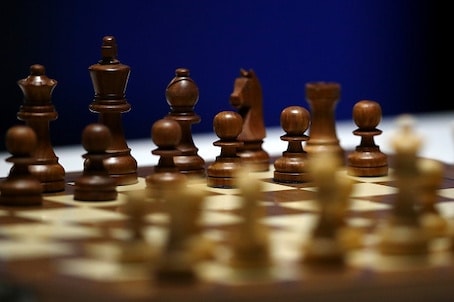





For most of us, chess is a leisurely activity - a source of amusement and mental distraction. But as we speak it is being played out at the highest levels in the World Chess Championship between Russian Grand Master Ian Nepomniachtchi and his Chinese counterpart Ding Liren. A game, innocent though it may seem, is often tied up with a variety of social, political and religious issues. Even within the Catholic Church, chess has been surrounded by controversy.
One of the earliest mentions of chess in the Catholic world comes in 900 AD when the Bishop of Asorga was introduced to the game, which originally hails from ancient Persia or India (accounts vary). after he was canonised as a saint, the bishop’s disciples referred to his chess-playing as “an approximation to God”. Roughly one hundred years later, in 1061, a letter was sent to the pope-elect Alexander II, complaining that priests were playing chess in public! The letter was signed by the Italian cardinal-bishop of Ostia, St Peter Damian (1007-1072), who - by all accounts - wasn’t very knowledgeable about the game himself.