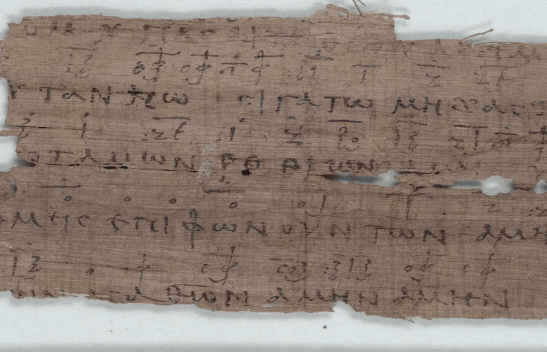



The city of Oxyrhynchus is in central Egypt, south of Cairo, west of the Nile, and bears its Greek name from the time of Alexander the Great’s conquest in 332 BC. In 1896, two young classicists from Oxford University, Bernard Grenfell and Arthur Hunt, came to Oxyrhynchus to excavate the ancient, undisturbed rubbish mounds circling the city.
What Grenfell and Hunt found when they started digging would occupy them for most of the rest of their lives: thousands of Greek and Latin documents from the 1st century to the 6th. Whether in whole or in part, there were works by Pindar, Sappho, Euripides, Euclid and countless others. There were fragments of early non-canonical Gospels, parts of Matthew, the First Epistle of John and an entire work, Against Heresies, by the Church Father Irenaeus. In the words of Grenfell himself: “The flow of papyri soon became a torrent. Merely turning up the soil with one’s boot would frequently disclose a layer.”