

The so called Apocryphal Gospels, edited a century ago by M. R. James, abound in weird and wonderful stories of the boy Jesus.
For example, he takes a salted fish and tells it to swim around, or strikes another boy dead and then revives him. Some of these stories are charming, for example Jesus shaping twelve birds out of clay; he claps his hands and they all fly away. Others, about miracles worked by a flannel that has contacted the infant’s bath water, are less charming. The range and number of such stories has been greatly increased by manuscript sources discovered in 1945 at Nag Hammadi. But how reliable are they? Comparisons with the canonical gospel stories may help.
For instance, the account of the Ascension in Luke has striking resemblances to the story of Elijah’s elevation to heaven. Just as Elijah bids farewell to his disciple, who then receives his prophetic spirit in the form of Elijah’s cloak, so the disciples are told to go to Jerusalem to see Jesus departing into heaven and to receive his Spirit in the form of the rushing wind of Pentecost.
So too the death of John the Baptist. The Jewish historian Josephus tells us that Herod took John into custody for fear that he might spark a rebellion. Mark 6.17–29 fills this out by means of the story of Naboth’s Vineyard. Herod plays the part of the hen pecked king, his wicked foreign wife plays the role of plotting Jezebel, and her attractive dancing daughter echoes the comely Esther, to whom the king promises half his kingdom. For those who like long words, the technique is called imitative historiography.
For the infancy stories of the gospels, the most important precedent is a whole series of biblical accounts of the announcement of special births of an important figure despite difficulties. Thus Abraham is visited by three, or one, angelic or divine figures who promise an heir despite the advanced age of both Abraham and Sarah. In the Book of Judges, the mother of Samson receives a divine visit with a promise of a saviour to be born to rescue Israel from the ravages of the Philistines.
Perhaps the most important is the promise to the barren mother of Samuel in 1 Samuel 2. Overjoyed at the news, she rejoices in a canticle which served as the model for Mary’s Magnificat, for the Benedictus, and for the heavenly canticle of the angels sung over the shepherds at Bethlehem, and for Simeon’s Nunc Dimittis. It is as though at the birth of Jesus the whole world bursts into song in an echo of Hannah’s response. The presence of all these songs in Luke’s account is itself a strong argument that they all have the same author, especially in view of the pairing of male and female figures such as Zachariah and Mary, Simeon and Anna, which later becomes so important in Luke’s presentation. The raising of the son of the widow of Naim is paired with that of the daughter of Jairus, the woman’s lost coin with the man’s lost sheep, and Ananias with Sapphira.
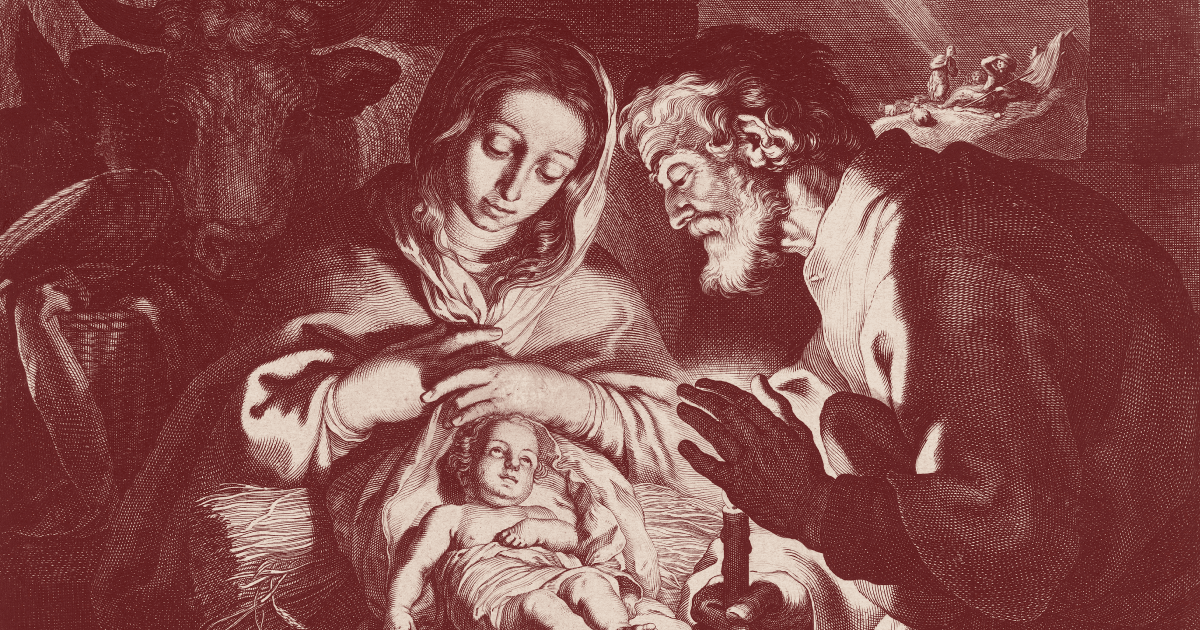
Once the principle has been established that the infancy gospels are more than mere reportage, the door is opened to valuable discoveries, such as the careful contrast between the announcements, births and presentations of John the Baptist and Jesus.
Luke is writing primarily for Christians whom we may imagine as disciples of Paul, drawn chiefly from the communities to which he wrote among the Churches of Asia Minor. Matthew, on the other hand, is writing for Christians sprung from Judaism. For him, Jesus is a second Moses, the founder of the new People of God. He goes up the mountain to give his New Law, the Sermon on the Mount, as Moses did on Mount Sinai. Nowhere is this aspect clearer than in the infancy stories. The annunciation message conforms to the classic pattern, a message to the father, though with the necessary adjustment that Joseph is father by adoption rather than by blood, but still a perfectly valid form of paternity. As a baby, Jesus is persecuted by Herod along with his fellows, just as Moses and his fellows were by Pharaoh. Just as Moses was forced to escape by going into exile, so also Jesus. The clinching proof is the angelic message of return to each, that it is now safe, “for those who sought to kill you are dead” (Ex 4.19; Mt 2.20). It is a fortunate extra that King Herod made no bones about killing even his own sons on suspicion that they were plotting to usurp the kingship.
The visit of the Wise Men from the East keeps to the same imitative pattern, drawn from the visit of the Queen of Sheba, model of wealth and wisdom, to King Solomon, an obvious tribute to the newborn King.
It is often thought that the infancy stories of the canonical gospels are only a step away from the Apocryphal stories, late and fanciful additions to the accounts of Matthew and Luke. No. Luke and Matthew teach us about the Lord Jesus, and they use venerable biblical traditions to do so.
.png)